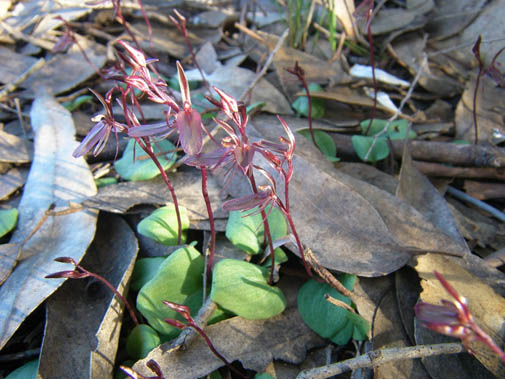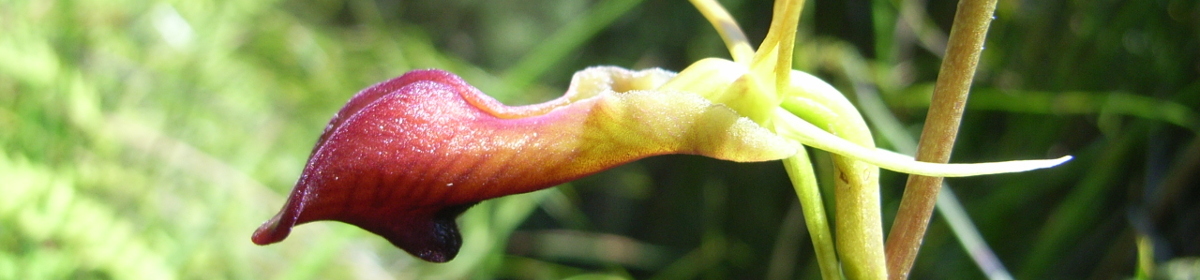
Part One covered hints for photographing orchids so as to be able to identify the plant. Part Two gives an example with Cyrtostylis robusta (Winter Gnat Orchid) and C. reniformis (Small Gnat Orchid).
Although the flowering times are different – C reniformis is spring flowering and C. robusta is winter flowering – there is a slight overlap in August when it is possible for both to be flowering at the same time and in the same place.
The flowers are very similar but major difference between the two species is the leaf. Both leaves are roughly kidney shape but C. robusta is pale green with pale , almost undistinguished veins, silvery underneath whilst C. reniformis is heavily veined, blue-green above and green below.
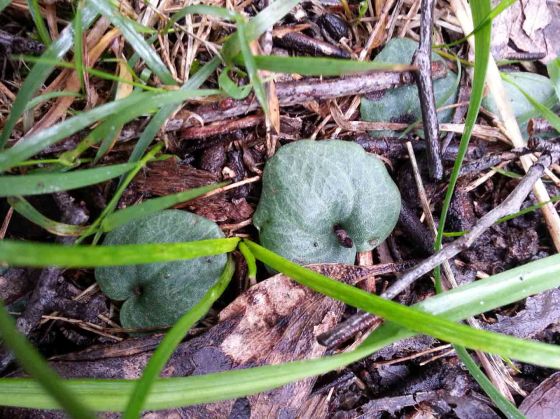
The other differences are more subtle.
- C. reniformis has dark buds and the apex of the labellum tends to be rounded rather than pointed
- C. robusta has pale reddish buds and larger flowers, labellum crenulated (slightly wavy) and a fine point at the apex.
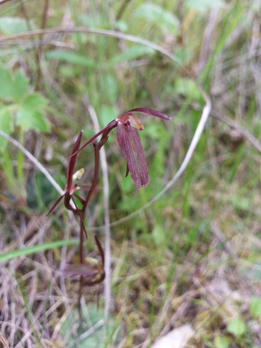
Consequently, it is important that photographs of the flowers clearly show the labellum – pointed labellum apex for C. robusta compared with the rounded labellum tip of C. reniformis.