So many of us are interested in preserving our native flora and fauna, and for NOSSA it is the native orchids. But many of us may not be aware of how we can play a significant role in minimising our impact upon the environment so that they are still around for our children and grandchildren
The following video is a brief overview of two documents that NOSSA has produced. They are guidelines to help individuals know how they can minimalize their impact on the environment and so assist in the conservation of our beautiful and unique native orchids.
Below are the links to the documents referred to in the video:
When I first joined NOSSA many years ago, I was very much interested in the conservation side of Australian orchids. But over the years I have come to appreciate the growers and their orchid knowledge.
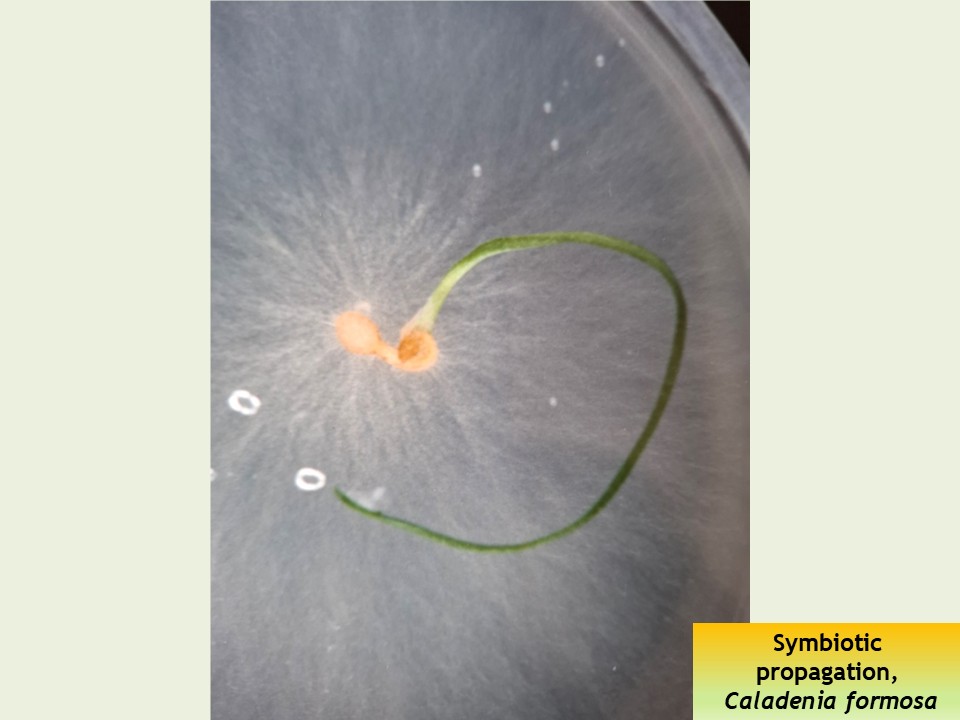
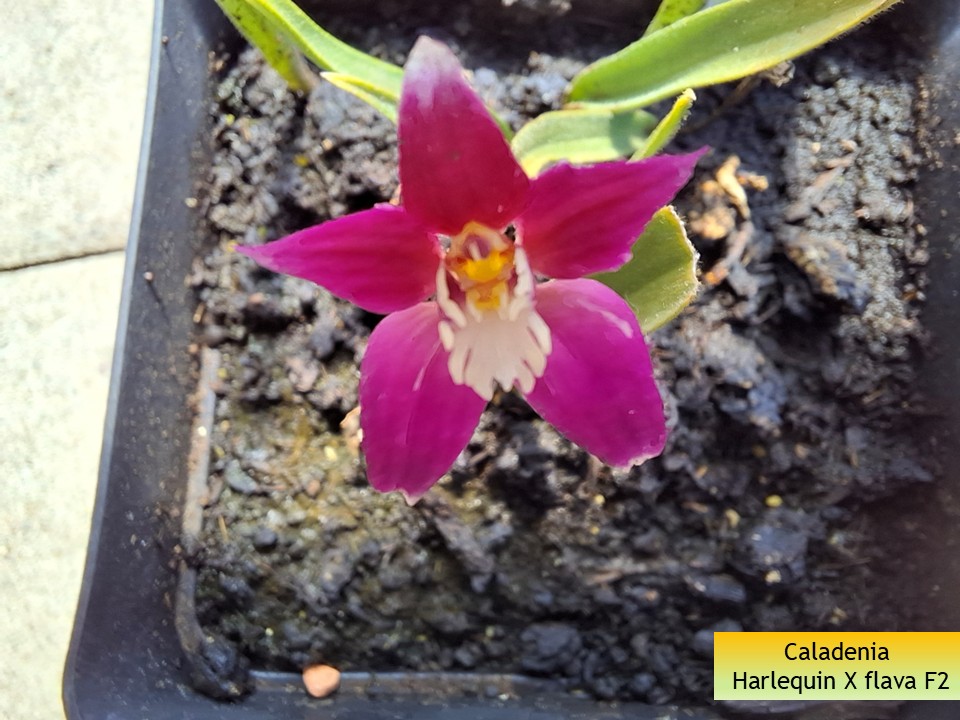
This was quite evident when Dr Heinrich Beyrle, a long time researcher, gave his talk to the October 2025 NOSSA general meeting on orchid mycorrhizal and growing terrestrial orchids. As I listened to his explanation of how the mycorrhiza interacts with the orchid and saw the hybrids that he created, I saw glimpses of how this information relates to conservation.
So one of the things was to consider when out in the field, is the question: am I looking at a variation, a second generation hybrid or a new species?
Growers have the advantage of being able to observe a plant throughout the whole of its life cycle as well as the variations that occur in the same plant or population over several season, a thing that is not so easily observed by those of us visiting several different sites in one season and maybe not being able to get back to them in the next season.
I highly recommend Dr Heinrich’s talk “Orchid Mycorrhizal: From a Gardener’s Perspective” on the NOSSA Youtube channel.
Established in 1976, the Australian Orchid Foundation (AOF) was formed to protect and propagate orchids; support and conduct orchid research; to educate and encourage orchid study and related sciences.
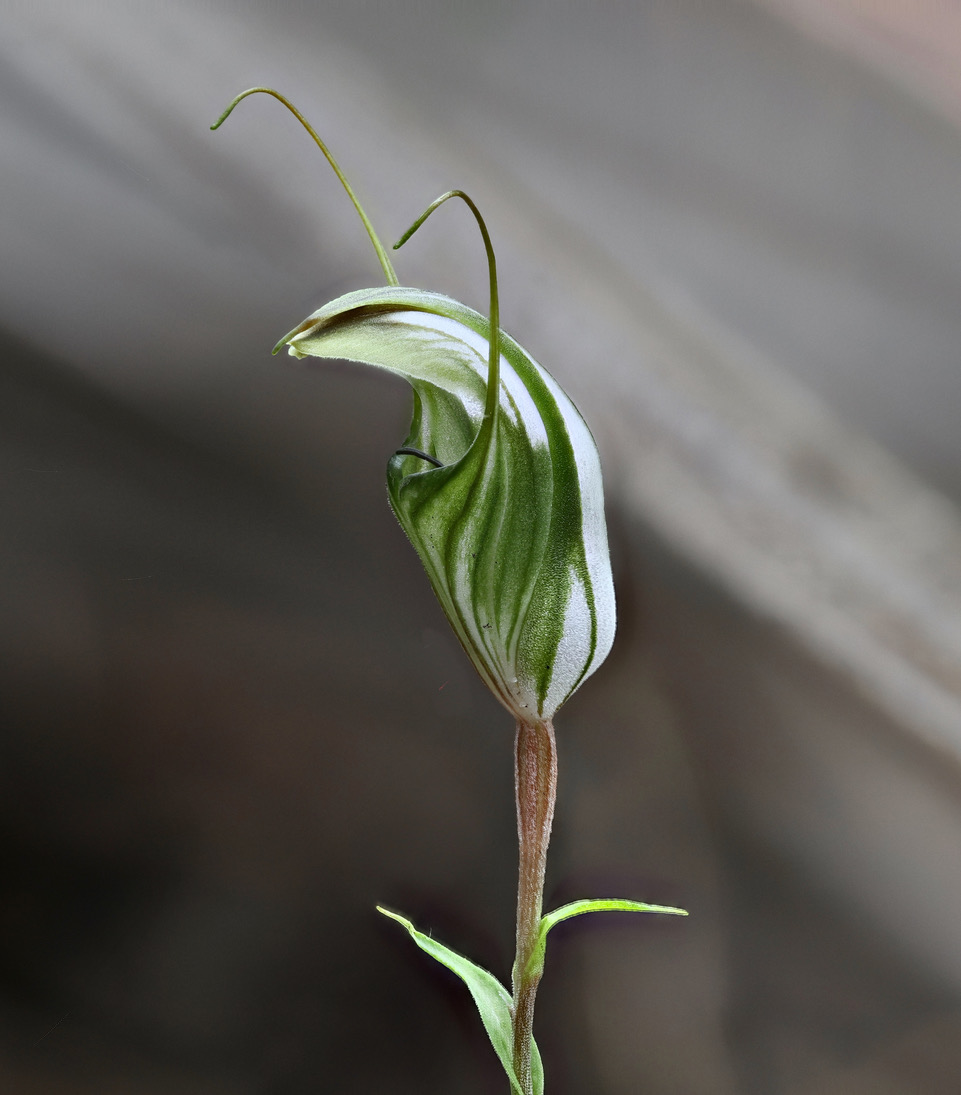
Diplodium aff alatum sp Hills – Scott Conservation Park-12/6/21 Now D clivoum
In keeping with their aim of research and education, the AOF has published various volumes of the Australian Orchid Research wherein, amongst other things, new orchid species are described. Over the years, beginning in 1989, six volumes have been produced.
Now Volume 7: More New Taxa of Australasian Orchidaceae, is available from their website.
For South Australians, this is as significant volume with the publishing of 52 species, many of which we have been waiting for many years to have described.
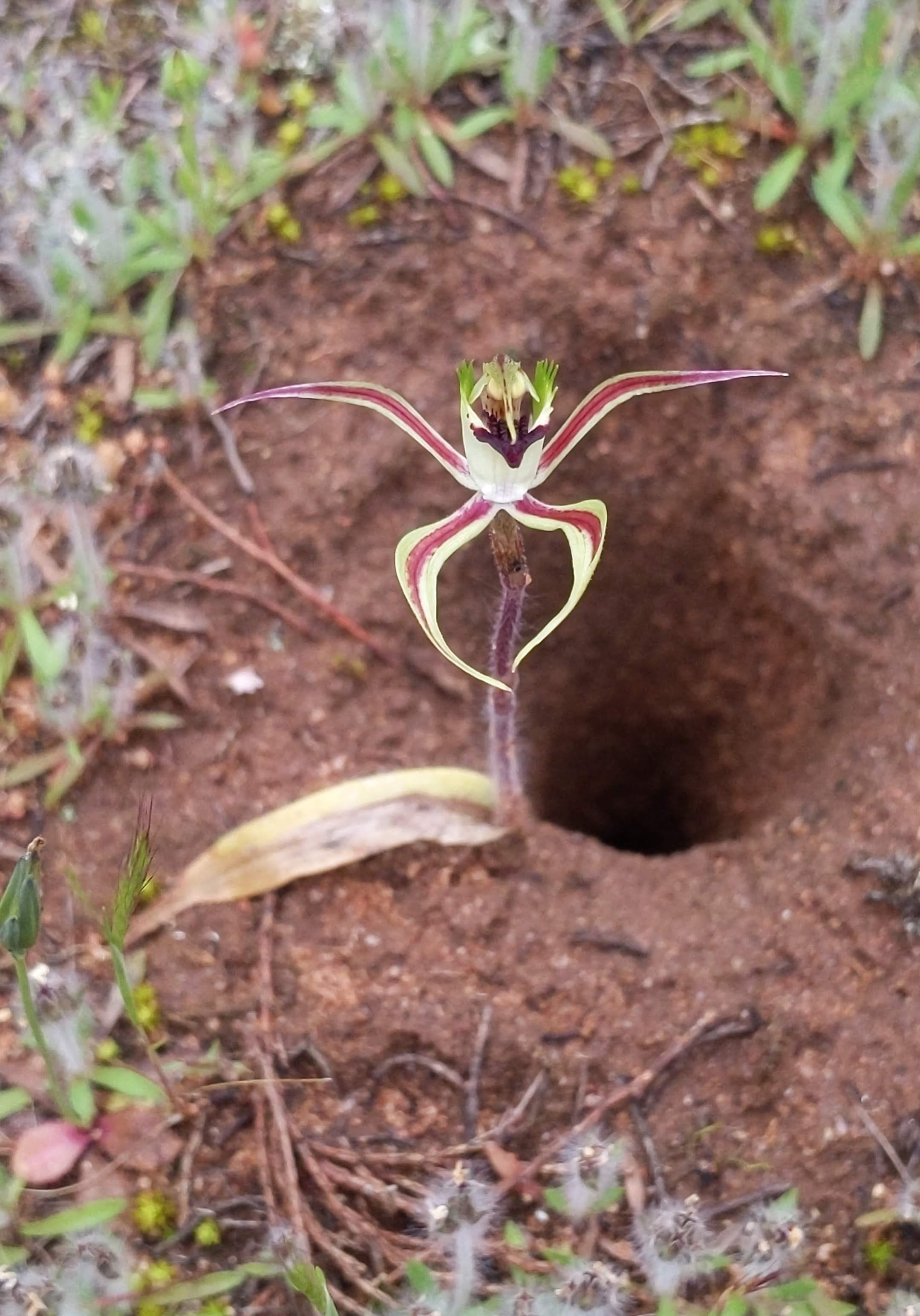
Previously Corunastylis sp Adelaide Hills, now C occidua Photographer: Robert Lawrence
As many of them have appeared in Native Orchids of South Australia: A Field Guide, the author, June Niejalke, for her own cross-referencing she has attempted as best as possible to map the names and page number of both volumes. This was based upon the Illustration section of the description as found in Volume 7.
As there is no index, she has kindly made this available for other orchid enthusiasts.
Recently, Jodie Hamilton (ABC reporter) wrote a good orchid article highlighting the importance of and threats to orchids. Click on the link to read her article – Orchid enthusiasts call for greater protection for native species facing habitat threats When she emailed me with some orchid questions (28 November 2025), I gave a comprehensive answer from which she was able to take what she needed for her article.
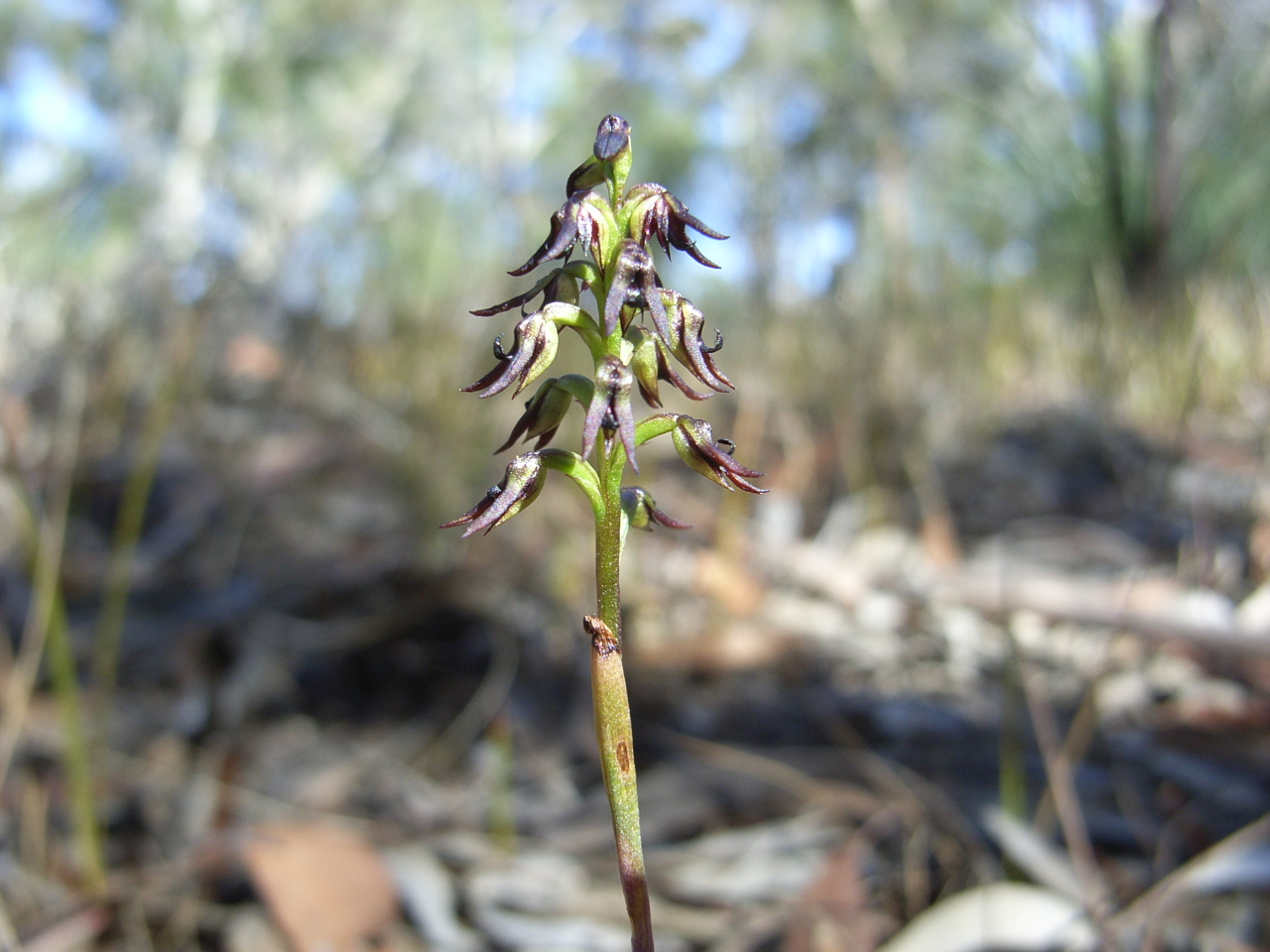
Possibly Genoplesium nigricans (Photo June Niejalke)
As there is additional information in my answer, I thought others might be interested in my reply. Here it is –
“Hi Jodie,
As to numbers, the answer to some of your questions depends upon who you ask. So the figures will vary. Orchid taxonomy is being reviewed with several researchers looking into South Australian orchids and in coming years we will see the numbers change. But regardless of the detail, it can be confidently said that over half of South Australian orchids are threatened. Threats are clearance & development, weeds, herbicide, overgrazing, isolated “island” population (orchids need room to spread).
So having said that, looking at the Atlas of Australia (ALA), there are 4,470 observations of 141 species of orchids in EP collected between 1850 and 2025. Since 2015, iNaturalist, a citizen science project, 117 observers have collected over 1,200 of those ALA observations. iNaturalist is significant because in recent years individuals are adding observations exponentially to the database, a thing we have not been able to do in the past. The more people that get involved with iNaturalist, the more data we will have and be able to have a better understanding of not only orchids, but all our other species.
My numbers are more aligned to the herbarium numbers. Approximately 12 species are endemic to EP (~162 species for the whole of SA).*
As to why orchids are important, the following information is taken from a talk I gave earlier this year – Orchids are bio-indicators of the health of the bushland. Because they have great visual appeal, we notice them and when aware of them we are able to use their presence to determine what is happening.
They have a low tolerance for change/disruption whereas other plants will show stress signs later, making them an early indicator of what’s happening.
Pollinated orchids indicate pollinator presence i.e. insects as many orchids do not provide food for the pollinators.
They have a strong reliance upon mycorrhizal fungi from germination and with some species through the whole of their life cycle.
The significance of the fungi is that they contribute to the soil health, are involved in nutrient recycling and contribute to plant growth.
This makes orchids a potential flagship for conservation work. I’ve attached a pdf of the talk.
Fun Fact you might like.
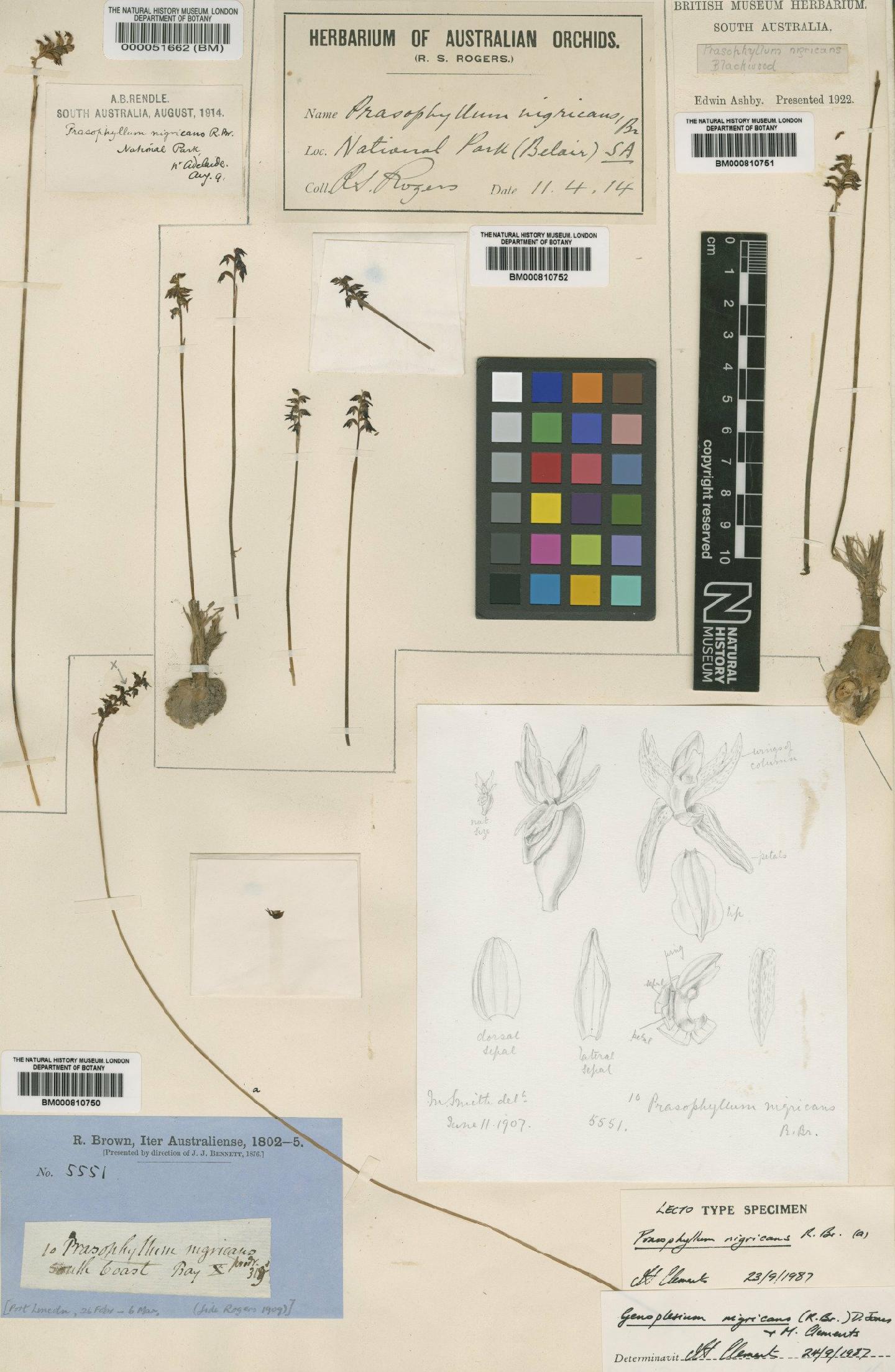
The first orchid found in South Australia was March 3,1802 by Robert Brown, botanist on the Investigator with Matthew Flinders. This was at Port Lincoln. Initially it was called Prasophyllum nigricans but today is known as Genoplesium nigricans. I find it amazing that he managed to find such a small sticklike orchid which often gets overlooked in our modern species lists.
June Nieljalke would also be able to help you.”
Close up (Photo June Nieljalke)
In giving Jodie the fun fact about the first orchid found (or rather I should say first documented), I went down a bit of a rabbit warren on the ‘net as I couldn’t find my original research material for a 2019 talk and wanted to double check the accuracy of my information.
So, I typed into Google “when was the first orchid found in south australia” only for it to give a wrong answer. I do appreciate that the Google AI gives references (other ChatBots such as Co-Pilot do not). This is important as it pointed me to an article I’d written about Caladenia cardiochila which was a few decades after settlement and therefore unlikely to be correct as other orchids would have been found before that.
Screenshot of Google’s AI reply
As a tool, AI does not do research, let alone original research. It does not understand concepts but recognises individual words and word patterns. The words it picked was “first”, “orchids” “found” and “south australia”. All four words were in the article but the concept was about when Caladenia cardiochila was first described but it was not the first orchid found in South Australia which is what the question was about.
As AI did not have a summary, it meant I needed to do some research, potentially looking for original material. This took me to the Internet Archive, the Biodiversity Heritage Library (a very useful source as it contains a lot of original source material), Digital Herbariums, etc from which I was able through deduction to come to the answer of “when was the first orchid found in south australia”
Now when you type in the same question, Google hopefully will give the correct answer.
Lectotype for Prasophyllum nigricans – note Brown’s handwriting is on the blue slip
Personal correspondence Jurgen Kellermann, South Australian Herbarium
*My figures for the endemic species numbers came from a spreadsheet, I’d initially complied years ago based upon 2011 Native Orchids of South Australia and updated.
I put together this NOSSA presentation as I thought it would be interesting to understand how orchid distribution is related to geology and evolution. My background is in the oil and gas industry, having studied geology at Flinders University. I am the current President of the Field Geology Club of South Australia. I am also interested in evolution, particularly of marine molluscs. I am the President of the Malacological Society of S.A., member of the Flinders University Paleontology Society and a volunteer in the South Australian Museum in the marine invertebrates department. So I have a good understanding of geology, and a reasonable understanding of evolution, but I had no knowledge of how these two topics relate to orchids. With this in mind, I started my research in ‘A Complete Guide to Native Orchids of Australia’ by David L. Jones, 3rd Edition – Revised, 30 July 2024. This book referred to (Givnish et al.2016) and stated that: • Orchidaceae originated 80 – 120 million years ago (mya). • Originated in Australia 112 mya then migrated to South America via Antarctica.
To further research this topic I had to seek out the scientific literature as there is limited information in general orchid books. My first reference was: ‘Terrestrial Orchids Speciation across the Earth Driven by Global Cooling’, Jamie B. Thompsona,1 , Katie E. Davisb, Harry O. Dodda , Matthew A. Willsa, and Nicholas K. Priesta, Edited by Nils Stenseth, University of Oslo, Oslo, Norway; received February 7, 2021; accepted June 3, 2023.
Charles Darwin proposed that orchids adapted gradually through natural selection to attract different pollinators. It is now known that evolution is not a gradual process but can occur very rapidly at times.
In this study, the analysis of DNA of 1,475 orchidoid taxa produced a phylogeny chart against the geological time scale. It found that global cooling has been responsible for the rapid speciation across Orchidoideae in the last 5 million years.
The study stated that it is not clear how global cooling drives evolution and diversification. A possible explanation is that Milankovitch (orbital) cycles change the exposure to annual solar energy in predictable ways. The relatively short-term oscillations in global temperature occurring during longer- term trends of global cooling.
It was the geologist Reg Sprigg who first noticed the relationship between Milankovitch cycles and the series of ancient barrier shorelines now preserved as sand dunes in the South East of South Australia. The modern Australian coastline has only existed in its present general form since the sea surface attained its current level about 7000 years ago. 22,000 ago, at the height of the Last Glacial Maximum, most of the continental shelf was exposed as dry land. There would have been a larger area of potential habitat for orchids. The global expansion of grasslands which peaked 4 to 8 mya could also have contributed to more recent orchidoid speciation by creating new habitats.
The next paper I looked at was: ‘Tracing the origin and evolution of the orchid family through genes and trees’, release date 22 February 2024. This study presented a new Orchidaceae phylogeny based on DNA sequencing data, covering all 5 subfamilies, 17/22 tribes, 40/49 subtribes, 285/736 genera,1921 of the 29,524 accepted species (7%).
This study’s conclusions were: • Orchidaceae evolution commenced 120 +/- 6Ma (Early Cretaceous). • Ancestral area estimations revealed that the most recent common ancestor of extant orchids originated in Laurasia ~83 Myr ago (+/-10 Ma). This result contradicts the Neotropical-Australian estimation of Givnish et al. (2016). • Highest current diversification (speciation) rate of orchids is Southern Central America (not Southeast Asia).
Leaves of Pyrorchis nigricans (L) with Leporella fimbriata (R)
The next paper I researched was: ‘Evolutionary Relationships and Range Evolution of Greenhood Orchids (Subtribe Pterostylidinae): Insights’ From Plastid Phylogenomics.
Australia’s high rate of endemic species is due to geographic isolation. 110 mya Australia/Antarctica separated from Gondwana. 55 to 35 mya Australia separated from Antarctica.
The study’s conclusions were: • Divergence between Pterostylidinae and the remainder of the tribe occurred in the early Oligocene, 32 mya • Divergence of all major lineages occurred during the Miocene, 15 mya. • Accompanied by increased aridification and seasonality of the Australian continent. • Resulted in strong vegetational changes from rainforest to more open sclerophyllous vegetation. • Greenhood orchids evolved mainly within their ancestral range in eastern Australia, and then moved to South West Australia. • Modern distributions of greenhood orchids in other Australasian regions, such as New Zealand and New Caledonia, are of a more recent origin, resulting from long-distance travel of tiny dust-like seeds over the Pacific Ocean.
On the question of orchid relationship to geology, it is known that orchids are found on a wide range of geological substrates. They include igneous, metaphoric, and sedimentary rock substrates, which in turn influences the soil profile.
3. Caladenia sticta
Looking closely at orchids’ relationship to soil type in the field can be illuminating as to the harsh conditions orchids can thrive in. Large areas of South Australian have soils that are very nutrient poor with a high sand and/or calcareous content. This is often the case on Yorke Peninsula and in the South East of S.A.
Orchids can also become geographically isolated by geological processes as is the case in the Grampians, Victoria.
So in conclusion: • Orchids have been around since the Early Cretaceous (120 mya). • Orchid evolution has not been linear – most orchid species originated over the past 5 million years. • Southern Central America has the highest current diversification (speciation) rate of orchids. • The initial diversification of orchids occurred in Laurasia (now North America in the Late Cretaceous (83 mya). • Global distribution is primarily controlled by temperature and rainfall. • Local distribution is also controlled by the physical, chemical, and biological properties of soil (which is functionally of rock type / geology). • Local distribution is also controlled by geography, (which is function of rock type / geology).
As one of the principle founders of NOSSA back in 1977, Les has worked tirelessly and continuously with cultivation and conservation of our native orchids. It was a delight to see Les’ work recognized earlier this year for his work with the next generation of orchid growers and conservations.
Along with all the others, we too at NOSSA add our congratulations.
Congratulations Les Nesbitt! A true legend and mentor, Les has been awarded Volunteer of the Year 2025 by Catholic Education SA! Since 2014, Les has generously volunteered at Kildare College, inspiring students through hands-on workshops in native orchid ecology and conservation. His work led to the creation of a full tissue culture lab and multiple student wins at the Royal Adelaide Show! Beyond the classroom, Les’s impact includes groundbreaking conservation work with the Native Orchid Society of SA and the development of a germination kit for endangered orchids. Thank you, Les, for your dedication, passion, and for cultivating the next generation of environmental stewards.
Reshared from Gawler Districts Orchid Club Inc. Facebook page
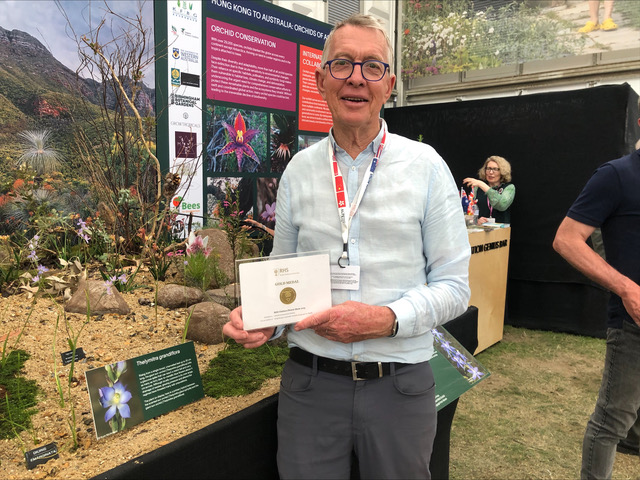
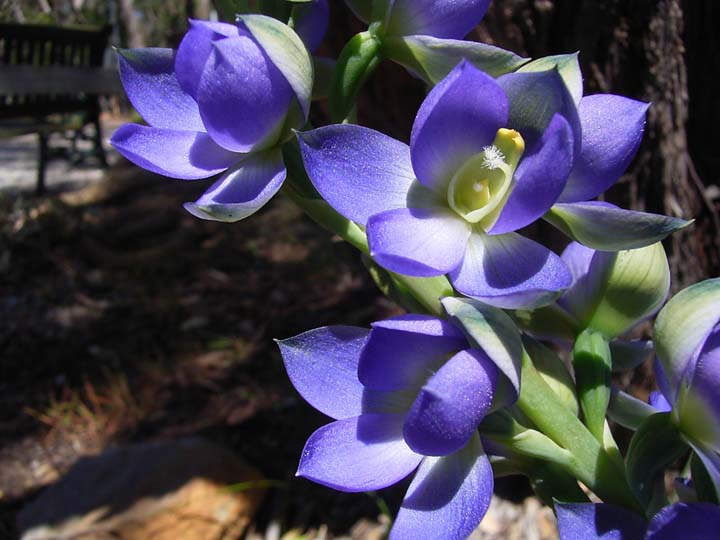
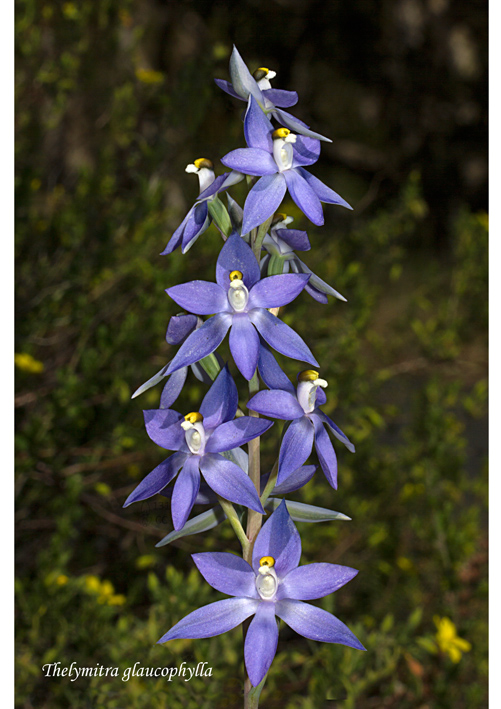
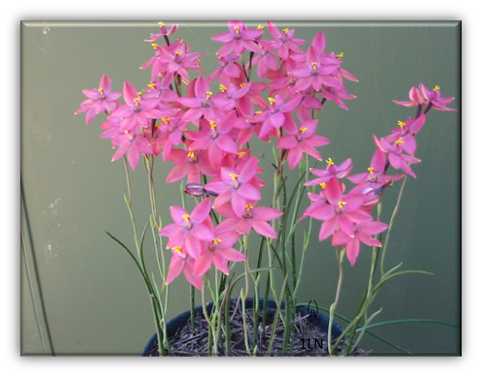
So the news is out – Aussie orchid (as part of a display with South east Asia and the Pacific) wins Gold Medal for conservation at the 2025 Chelsea Flower Show and according to Professor Kingsley Dixon this is the equivalent to winning Gold at the Olympics. One orchid was a hybrid, Thelymitra glaucaphylla x grandiflora.
Professor Kingsley Dixon (Image from Australian Orchid Foundation)
The Chelsea Flower Show is a prestigious event managed by the Royal Horticulture Society (RHS) who’s beginnings start with the presentation of a potato at a 1805 meeting. Over time, various exhibitions were developed with the Flower Show Fete first held at Cheswick in 1827 and moving to Chelsea Hospital in 1913 where it became known as the Chelsea Flower Show. The show was popular with exhibitors but only half of the applicants were accepted that first year. But in that group, McBean Orchids (Britain’s oldest orchid nursery) was one of the fortunate exhibitors and so orchids have always been present at the Show, though they were generally not terrestrial orchids.
Image from Australian Orchid Foundation
To win such an award, the team needed to put together a meticulously curated display to meet the RHS stringent standards; even a wrong font can result in disqualification. But there were other barriers to be overcome. Australian terrestrial orchids are not easy to grow. They require skill and attention to detail. Not many people are able to grow this exquisite orchid. In fact less than 10% of our orchid species are in cultivation. So this was quite an achievement in itself.
Thelymitra grandiflora (Photographer Robert Lawrence)
Over 90% of Australian orchids are unique to Australia with about half considered threatened; and so though T glaucophylla does not have a rating, it is still under threat being uncommon. T grandiflora is rated rare. Both are endemic to similar limited areas in South Australia. That is the Southern Mt Lofty Ranges and the Southern Flinders Ranges. Both are under threat from habitat loss, weed invasion, grazing, trampling, etc. So in-situ conservation is important if these, as well as other orchids, are to survive.
Working toward conservation of Australian orchids is a major pillar of NOSSA and it was encouraging that two of South Australian endemics played a part in this display. Congratulations for the immense effort that Kinsley Dixon and his collaborators have put into bringing orchid conservation awareness to the Chelsea Flower Show and to the world.
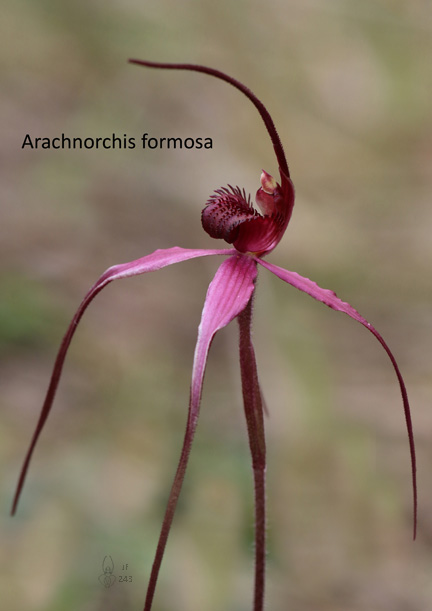
Orchid taxonomy can take some interesting turns. This has just happened to Caladenia haemantha. Based upon the examination of the type specimens collected for C haemantha and C formosa, authors Andrew McDougall & Timothy Hammer have just published an article reinstating C haemantha as C formosa.
Soon after C formosa was described and named in 1991 by GW Carr, David L Jones came along and described and named C haemantha; but in 1993, Mark Clements took a look and listed it as a synonymy of C formosa, where is stayed for many years until 2021 when Jones reinstated it as C haemantha.
But, through the beauty of science, along comes Andrew and Tim to have a closer look at the two type specimens. Meticulously they counted the details and duly documented their findings. Their conclusion – C haemantha is a synonym of C formosa.
To read more of the detail in Swainsona, click on the image below –
From time to time, NOSSA receives overseas requests from individuals wanting to purchase some of our beautiful orchids. Unfortunately, NOSSA does not sell overseas due to the various legal and administrative issues involved. For internationals wanting to buy Australian orchids, go to OrchidWire which is a directory ‘connecting a world of orchids’. On their site is a list of orchid vendors.
Live orchid plants coming into or leaving Australia must be accompanied by an Australian wildlife trade permit.
Permit rules apply, unless the live orchid plants meet permit exemption criteria listed on the back of this card.
This means you need to get a wildlife trade permit before you move your orchids—whether you intend to carry the orchids with you or you plan to send them by post or freight.
Without a permit, you may be breaking the law. You could be liable for significant penalties including seizure of the orchids and fines.
Apply for a wildlife trade permit from the Department of the Environment and Energy at: International wildlife trade
All permit applications are processed as quickly as possible. The timeframe for assessing permit applications varies based on the volume of applications received. Please allow up to 40 business days for your permit application to be processed.
10 Diuris behrii
Permit exemption criteria
Under Australian law, Australian wildlife trade permits are not required for the following:
Orchid seeds, spores and pollen
Orchid seedling or tissue cultures/flasks
Cut flowers of artificially-propagated orchids
Artificially-propagated hybrids of Cymbidium, Dendrobium, Phalaenopsis and Vanda species if they meet all of the following criteria:
All specimens must:
be recognisable as artificially propagated
be healthy with no signs of damage
look uniform in size and shape.
When shipped in a flowering state:
each plant must have at least one fully open flower
plants must be professionally processed for retail sale—i.e. labelled with printed labels or packaging indicating the name of the hybrid and the country of final processing.
When shipped in a non-flowering state:
each container* must have 20 or more plants of the same hybrid type (e.g. V. Kru Chon ‘Dark Knight’)
each shipment must include an invoice or other document that clearly states the number of plants of each hybrid in the shipment.
* ‘Container’ includes cartons, boxes, crates or individual shelves of CC-Containers (Container Centralen or Danish Trolley).
It is well known that many of our Australian orchids are facing extinction. But across the nation, there are many groups actively seeking to save them. One such group being the Nillumbik Shire near Melbourne with their Nillumbik Threatened Orchid Recovery Team. Effort has been preventing extinction of very threatened orchids – Charming Spider-orchid (Caladenia amoena) and Rosella Spider-orchid (Caladenia rosella). Both these species have highly restricted populations with less than 150 wild plants each. The shire has teamed up with the Royal Botanic Gardens Victoria’s Orchid Conservation Program to propagate and return to the wild plants of these beautiful orchids.
The following article by Rosalie Lawrence appeared in the electronic version of the Native Orchid Society of South Australia Journal, Vol 47 #6 July 2023. For the purpose of this article, the segregate genera Bunochilus was used to narrow it down and differentiate it from the rest of the Pterostylis genus. This article includes additional information not in the Journal article
Recently Robert & I visited Diamond Creek, Victoria where we photographed a Bunochilus which we thought looked remarkably similar to our hills B viriosus. Anyway it was subsequently identified on iNaturalist as B smaragdynus. In the iNats comments, the Victorians often mentioned the meeting together of the broad basal flanges within the flower as an identifying feature.
So on our recent NOSSA trip to Hardy’s Scrub, Robert made it a point to photograph the basal flanges of the Bunochilus. I too did the same. Lo and behold, we had flowers with the flanges touching and others where it did not! So did we have two species of Bunochilus at Hardy’s Scrub?
Well when we get home we read June’s descriptions for the two species and note that she has underlined the touching of the basal flanges for B smaragdynus but mentions in the description of B viriosus that they can also touch. Puzzlement! Solution – give June a call! It’s always great chatting with June because it is hard to get everything into one small volume and with talking a better picture emerges.
After talking to June, keeping in mind what we discussed, I then spent time on iNaturalist viewing all 285 observations of B smaragdynus and 115 B viriosus observations but I soon noticed from the Victorian commentators that I also needed to look at the 41 B chlorogramma and some of the B melagramma observations (1,619 was way too many to go through!). I also viewed Vicflora pages on the description of their three species.
Basal flanges of Bunochilus viriosus not touching
Photographer Robert Lawrence
The following is what I noticed
The Victorians were often using the flanges as an identifying feature for identifying B melagramma
There was great difficulty in separating out B chlorogramma from B smaragdynus. To quote one Victorian – ‘It is notoriously difficult to tell the difference between P smaragdya & P chlorogramma’
B melagramma has small basal flanges (appear parallel) and never touch but the other three species have well developed basal flanges (triangular shaped) and may or may not touch (see Vicflora’s descriptions).
Published descriptions of the species occurred
~ Pterostylis smaragdyna 1993
~ B chlorogramma 2002
~ B melagramma 2002
~ B viriosus 2006
But it was the differences between B smaragdynus and B viriosus that I needed to look up and particularly whether the flanges were of significance or not. Also, June has always stressed that features are not hard and fast, so I needed to keep that in mind as I made my comparison.
My general observations of the observations of B smaragdynus and B. viriosus are~
B smaragdynus
Although most flowers opened at once, there was still a large proportion that didn’t
Flowers mainly a few and tended to be top heavy
There were some pollinated flowers
Along the way, I noticed the growth habitat (when I could see the background), was at the most one or two, or to quote Gary Backhouse – “small, sparse colonies”
Basal flanges did not always touch but were always a wedge shape
B viriosus
Most flowers opened consecutively but there were some where all the flowers opened at once.
Mainly lots of flowers on an inflorescence but there was a reasonable amount with just one or two flowers.
Growth habit, probably the most notable difference, colonies consisted of several flowering plants (sparse would not be the word to apply!)
Did not see any pollinated flowers
Rare to find an image of the flanges, but they were variable concerning touching yet always wedge shape
Basal flanges of Bunochilus viriosus touching
Photographer Rosalie Lawrence
Conclusion
There doesn’t appear to be a reason to include observing the flanges as there is no difference between these two species. But when there is a possibility of B melagramma being present such as in the South East and on Kangaroo Island, then it becomes necessary to include looking at the flanges when making an observation.
A surprise was to notice that the growth habit is significant point of difference between B viriosus and B smaragdynus as I was mainly looking at the flanges. Of course, there are some other features to be considered but that is for another time.
A curiosity, whilst researching this article I discovered that Diamond Creek is the type location for B smaragdynus
For images of basal flanges see page 202 of June’s book.











 NOSSA
NOSSA 