Orchids, Geology and Evolution’ by Mike Burrell

Article by John Eaton from the NOSSA, general meeting held 23rd Sept ‘25, Published in the NOSSA Journal Volume 49 No 10

(Video of the complete talk is here)

I put together this NOSSA presentation as I thought it would be interesting to understand how orchid distribution is related to geology and evolution. My background is in the oil and gas industry, having studied geology at Flinders University. I am the current President of the Field Geology Club of South Australia. I am also interested in evolution, particularly of marine molluscs. I am the President of the Malacological Society of S.A., member of the Flinders University Paleontology Society and a volunteer in the South Australian Museum in the marine invertebrates department. So I have a good understanding of geology, and a reasonable understanding of evolution, but I had no knowledge of how these two topics relate to orchids. With this in mind, I started my research in ‘A Complete Guide to Native Orchids of Australia’ by David L. Jones, 3rd Edition – Revised, 30 July 2024. This book referred to (Givnish et al.2016) and stated that:
• Orchidaceae originated 80 – 120 million years ago (mya).
• Originated in Australia 112 mya then migrated to South America via Antarctica.

To further research this topic I had to seek out the scientific literature as there is limited information in general orchid books. My first reference was: ‘Terrestrial Orchids Speciation across the Earth Driven by Global Cooling’, Jamie B. Thompsona,1 , Katie E. Davisb, Harry O. Dodda , Matthew A. Willsa, and Nicholas K. Priesta, Edited by Nils Stenseth, University of Oslo, Oslo, Norway; received February 7, 2021; accepted June 3, 2023.

Charles Darwin proposed that orchids adapted gradually through natural selection to attract different pollinators. It is now known that evolution is not a gradual process but can occur very rapidly at times.

In this study, the analysis of DNA of 1,475 orchidoid taxa produced a phylogeny chart against the geological time scale. It found that global cooling has been responsible for the rapid speciation across Orchidoideae in the last 5 million years.

The study stated that it is not clear how global cooling drives evolution and diversification. A possible explanation is that Milankovitch (orbital) cycles change the exposure to annual solar energy in predictable ways. The relatively short-term oscillations in global temperature occurring during longer- term trends of global cooling.

It was the geologist Reg Sprigg who first noticed the relationship between Milankovitch cycles and the series of ancient barrier shorelines now preserved as sand dunes in the South East of South Australia. The modern Australian coastline has only existed in its present general form since the sea surface attained its current level about 7000 years ago. 22,000 ago, at the height of the Last Glacial Maximum, most of the continental shelf was exposed as dry land. There would have been a larger area of potential habitat for orchids. The global expansion of grasslands which peaked 4 to 8 mya could also have contributed to more recent orchidoid speciation by creating new habitats.

The next paper I looked at was: ‘Tracing the origin and evolution of the orchid family through genes and trees’, release date 22 February 2024. This study presented a new Orchidaceae phylogeny based on DNA sequencing data, covering all 5 subfamilies, 17/22 tribes, 40/49 subtribes, 285/736 genera,1921 of the 29,524 accepted species (7%).

This study’s conclusions were:
• Orchidaceae evolution commenced 120 +/- 6Ma (Early Cretaceous).
• Ancestral area estimations revealed that the most recent common ancestor of extant orchids originated in Laurasia ~83 Myr ago (+/-10 Ma). This result contradicts the Neotropical-Australian estimation of Givnish et al. (2016).
• Highest current diversification (speciation) rate of orchids is Southern Central America (not Southeast Asia).

Leaves of Pyrorchis nigricans (L) with Leporella fimbriata (R)


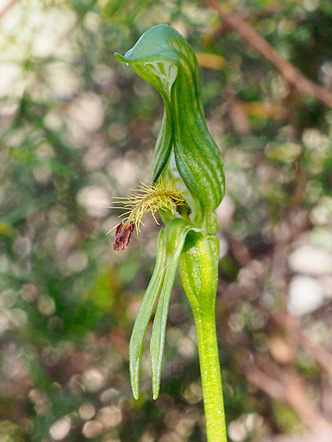
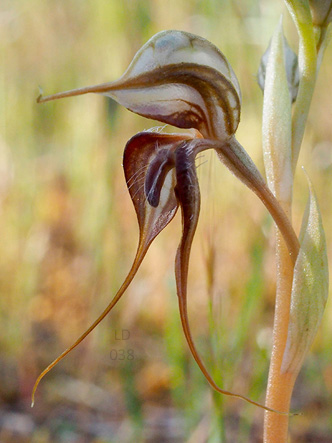
The next paper I researched was: ‘Evolutionary Relationships and Range Evolution of Greenhood Orchids (Subtribe Pterostylidinae): Insights’ From Plastid Phylogenomics.

Australia’s high rate of endemic species is due to geographic isolation. 110 mya Australia/Antarctica separated from Gondwana. 55 to 35 mya Australia separated from Antarctica.

The study’s conclusions were:
• Divergence between Pterostylidinae and the remainder of the tribe occurred in the early Oligocene, 32 mya
• Divergence of all major lineages occurred during the Miocene, 15 mya.
• Accompanied by increased aridification and seasonality of the Australian continent.
• Resulted in strong vegetational changes from rainforest to more open sclerophyllous vegetation.
• Greenhood orchids evolved mainly within their ancestral range in eastern Australia, and then moved to South West Australia.
• Modern distributions of greenhood orchids in other Australasian regions, such as New Zealand and New Caledonia, are of a more recent origin, resulting from long-distance travel of tiny dust-like seeds over the Pacific Ocean.

On the question of orchid relationship to geology, it is known that orchids are found on a wide range of geological substrates. They include igneous, metaphoric, and sedimentary rock substrates, which in turn influences the soil profile.
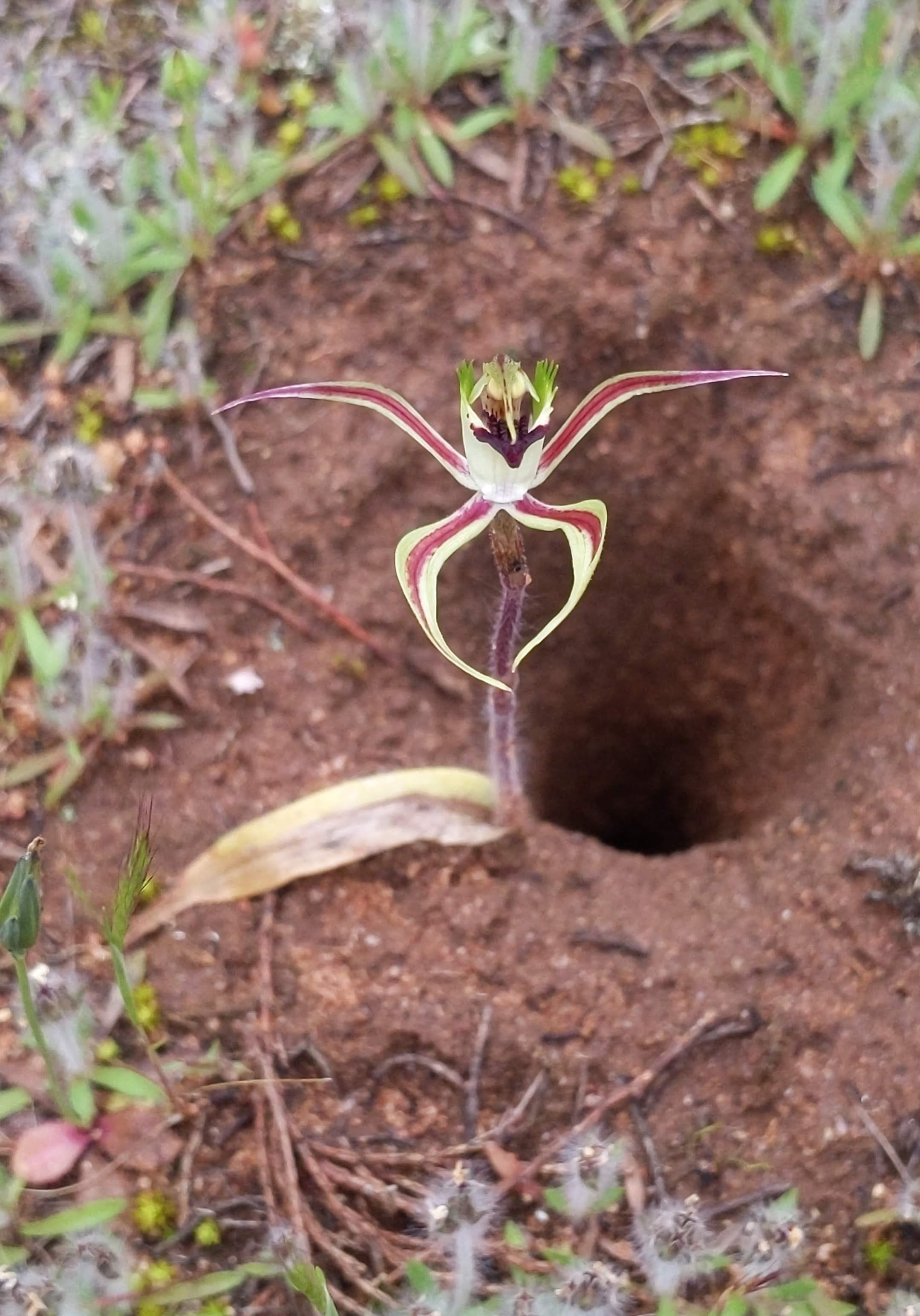
3. Caladenia sticta
3. Caladenia sticta


Looking closely at orchids’ relationship to soil type in the field can be illuminating as to the harsh conditions orchids can thrive in. Large areas of South Australian have soils that are very nutrient poor with a high sand and/or calcareous content. This is often the case on Yorke Peninsula and in the South East of S.A.

Orchids can also become geographically isolated by geological processes as is the case in the Grampians, Victoria.

So in conclusion:
• Orchids have been around since the Early Cretaceous (120 mya).
• Orchid evolution has not been linear – most orchid species originated over the past 5 million years.
• Southern Central America has the highest current diversification (speciation) rate of orchids.
• The initial diversification of orchids occurred in Laurasia (now North America in the Late Cretaceous (83 mya).
• Global distribution is primarily controlled by temperature and rainfall.
• Local distribution is also controlled by the physical, chemical, and biological properties of soil (which is functionally of rock type / geology).
• Local distribution is also controlled by geography, (which is function of rock type / geology).

Caleana major (Flying Duck Orchid)

2021 June Talk – Photostacking Australian Orchids

For the June Native Orchid Society of South Australia’s meeting we were privelaged to have June Niejalke speak to our members about how to use photostacking when photographing our beautiful orchids.

Photographing our exquisite orchids is a challenge due to their size and the need to use macro. Sharp focus seems to elude many of us and for many years, we have admired her sharp images that has enabled us to see the hidden details of these tiny bush gems.

It was a pleasure to listen to her share her photographic methods. I hope you too find this video as helpful as those who were at the meeting found it.

It’s Arrived, the Wild Orchid Watch App …

The process may have taken awhile, (for some longer than than the two years collaboration with the University of Adelaide,) but finally the Wild Orchid Watch app is now available for all Australians to use.

Glossodia major

So why orchids…

  • Orchids are iconic and somewhat mysterious plants that are highly valued by sections of our society.
  • They are sensitive to environmental change most of which puts the survival of populations at risk of being lost permanently.
  • Orchids tend to be indicators of ecosystem health.
    • They are dependent on other parts of the ecosystem such as fungi within the soil and particular insect pollinators .
    • These insects are also dependent on a functioning ecosystem for their survival.

Thus, when orchids are conserved other parts of the ecosystem are also conserved resulting in broader benefits to the ecosystem as a whole.

Diplodium sp Adelaide Hills

So, why an app …

  • traditional methods of data collection for orchids are inadequate because of their
    • differences in emergence with seasons
    • short flowering, sometimes non-flowering, seasons
  • allows the collection of a wealth of knowledge known to orchid enthusiasts
  • this method of collecting data enables researchers to gain a better understanding of
    • the conservation status and trend of orchids
    • the value of orchids as indicators of environmental change
    • the phenology (life cycle), distribution and abundance of orchids

The WOW app allows citizens scientists to provide important data for researchers.

Bonus Benefit of the App – Identification

Probably one of the most frustrating things for the novice is not knowing what is the species of orchid that they have found. With this app it is not necessary to be familiar with all the orchid species.

The WOW app uses the iNaturalist platform where there is a whole community ready to assist with identification.

One can be an orchid citizen scientist without a detailed knowledge of orchids.

So, hop over to the WOW website to find more information, instructions and download the app.

Orthoceras stricta

COVID19 Impact on NOSSA

Update February 2022

As the pandemic continues with its various strains, we encourage all members to keep informed via the SA Health website.

NOSSA will continue to adhere to the government advice and will notify members when and if specific events are impacted. This is most likely to occur through our email monthly Updates.

In the meantime, continue to maintain safe hygiene practices.


Update November 2020

With the current outbreak, NOSSA has cancelled the public meeting scheduled for 24 November. The NOSSA committee will assess the other activites closer to the time and will notify members should any events be cancelled.

Continue to maintain safe hygiene practices

September 2020
With recommencement of various NOSSA activities we have put into place the Government required Covid19 plans with Covid Marshalls.

If you have any concerns, please feel free to contact NOSSA on 0439214106, or email the secretary or go to the South Australian government website for more details.

March 21 2020
NOSSA will put best practice to prevent the spread of COVID19 into action to protect our members. Ramifications of this decision include the following –

Postponement of NOSSA AGM and general meeting until further notice.
Our planned speaker, Dr Rick Davies, was relieved to hear that we had postponed our meeting next week because he was concerned for our members.

NOSSA Committee Meetings
The plan is to manage these meetings electronically so that the affairs of NOSSA are properly canvassed and effective decisions are made.

Propagation Days
These will be placed on hold for the time being.

Field Trips
These are not necessary meetings and will not be formally arranged by NOSSA however going for a walk looking at orchids is something that family groups are able to do outside. NOSSA and the Update may offer a suggested place to visit to encourage this.

WAYS TO STAY IN TOUCH
Journal
Our wonderful editor, Marg, will continue to ensure the Journal meets the monthly deadline, and her team of trusty helpers will ensure it gets tot he members. The Journal is the official source of Orchid news and information so look out fot it each month. Feel free to send your thoughts to the editor – they may even get published!

Facebook
Some members are already familiar with our Facebook pages. Others may be interested in exploring this avenue of member interaction.
If you have any questions etc, email nossa.enquiries@gmail.com

Photographic Competition
Please continue to send your wonderful photos into nossa.enquiries@gmail.com. The photos will be displayed for voting. 😉 Still working on the how of that thought!

Update
Update will continue to keep you in the loop of NOSSA news at mid-month.

CANCELLED EVENTS
There have been many events that have been delayed, postponed or cancelled. Some of the follow –
Mt Pleasant Show
APS Autumn Sale
SAROC AGM and meeting

***GOOD NEWS***
Library Display
We couldn’t take part in the Mt Pleasant Show, however Faye McGoldrick of the Mt Pleasant Natural Resource Centre invited us to put up a display in their library. Rosalie and Robert Lawrence have already put the display in place, so if you are passing pop in and have a look.

We encourage everyone to stay safe and follow the basics of social distancing and washing hands to minimize inviting COVID19 into your world.

Stay well, Stay happy
Til next time

Lindy McCallum
Honorary Secretary NOSSA

Burning Issues

Over the years, we have published several blogs concerning orchids and fire. At the beginning of the year, Renate Faast spoke at the NOSSA February meeting. John Eaton wrote an extensive summary of her talk which is reprodued here as it appeared in the 2019 March edition of the Native Orchid Society of South Australia Journal, Volume 43 Number 2.

Renate’s take home message was that we cannot make sweeping statement about orchids and fire, each species responds differently and we need to take this into account when planning proscribed. This was something that Dr Michael Duncan also brought out in his 2009 report following the Victorian Black Saturday fires – see Orchids and Fire.

An interesting aside to Renate’s research was her observations of white-winged choughs – see the paragraph Not All Relationships are Friendly.

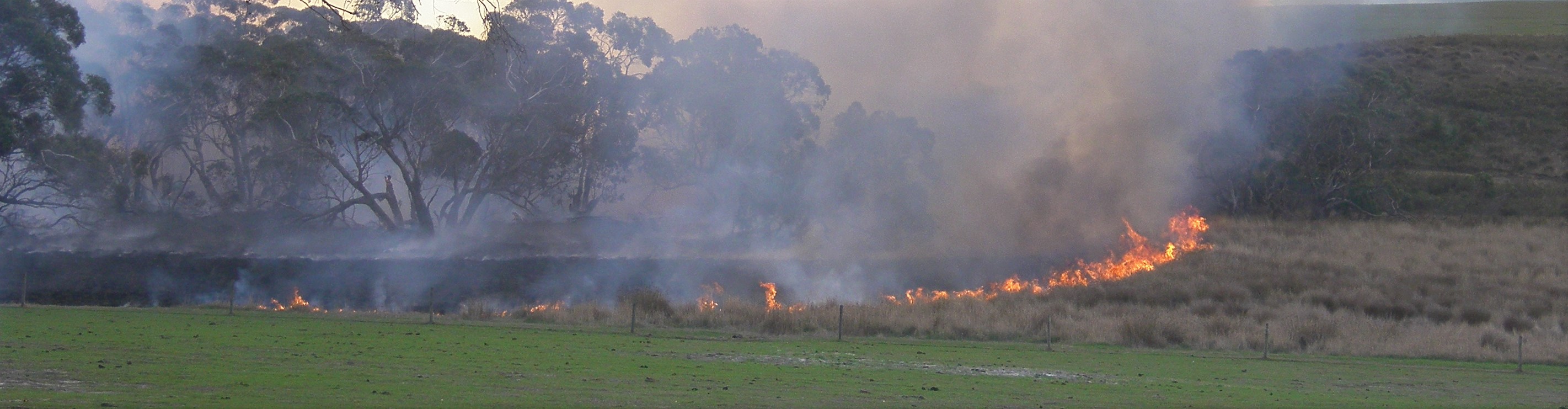
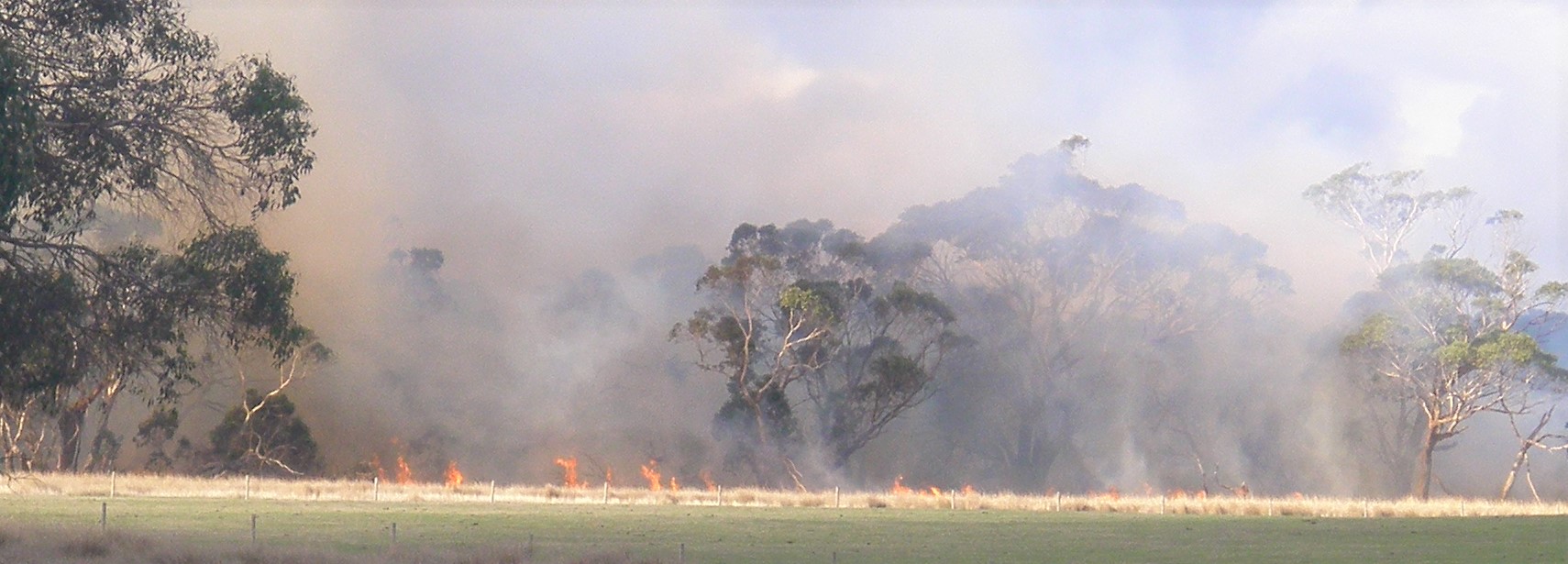
Stipi fire 3Guest Speaker Notes                                John Eaton

At our February 26th meeting, thirty NOSSA members were treated to a stimulating talk by Dr Renate Faast from the University of Adelaide – our first guest speaker for 2019.

Renate acknowledged the support her project received from an Australian Research Council (ARC) grant under the Linkage Program which promotes national and international research partnerships between researchers and publicly funded research agencies – in Renate’s case – support from the University of Adelaide, SA Museum, SA Water, Forestry SA, The Australian Orchid Foundation, the Nature Foundation of SA, The Environment Institute and the SA Government.

Mixed Messages

Renate had been getting mixed messages from the field observations people had made following prescribed burning or bushfires. This ARC grant enabled her to study the impacts of prescribed burning on native terrestrial orchids.

Renate found that the response of orchids to controlled burns suggests that there are winners and losers amongst orchids: Naked sun orchids responded really well to a controlled burn with 6 plants growing to 83 plants. REALLY good news for that species of orchid but the reality is more complicated than that and this study suggests that there are no generalisations that can be drawn with any confidence about regeneration following prescribed burns or bushfires! In view of the complex interactions between orchids and other plants, and between orchids and bird-and-animal grazers, orchids rely on so many things to go right in order to set seed and recruit new plants into a population. With the exception of a few self-pollinating species, most orchids rely on pollinators for seed production. For non-clonal species, releasing seed is the only way to ensure the species’ long-term survival!

Not all relationships are friendly

Over 80% of orchid flowers had been grazed at some sites. No flowers means no seeds. Renate’s film clips embedded in her PowerPoint dramatically showed the extent of orchid predation by birds such as white-winged choughs and currawongs. They picked off the flowers quite deliberately, leaving behind an intact stalk. Five flowers were grazed every 10 sec (that’s at a rate of 30 flowers/min!) And there are all the other orchid grazers such as roos, deer and rabbits as they move through a patch, often only grazing part of the stem, in a far less targeted and thorough way, compared to these birds. All of these interactions play a key role in whether seeds are released to keep the population viable.

The Mount Bold Fire prompt

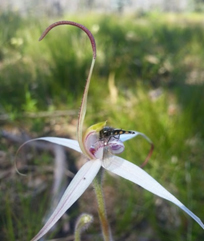
160219 Anita Marquart Melangyna collatus on Caladenia rigida

While engaged in her PhD research into reproductive ecology of spider orchids, Renate heard that a fire at Mt Bold had led to a “profusion” of Caladenia rigida flowers! The Victorian bushfires had also prompted changes to prescribed burning practises in South Australia. The combination of these two events led Renate to explore the effect of fire on the interactions orchids have with other plants and animals – leading her to ask such questions as:

  • Does fire promote the flowering of spider orchids (e.g. Caladenia rigida, C. behrii, C. tentaculata) and Glossodia major?
  • If there are more flowers following fire, will they be pollinated and will they set seed?
  • How does burn timing influence this response?
  • Do all species respond in the same way?

These are all critical issues to consider if we are to ensure a self-sustaining orchid population in the future.

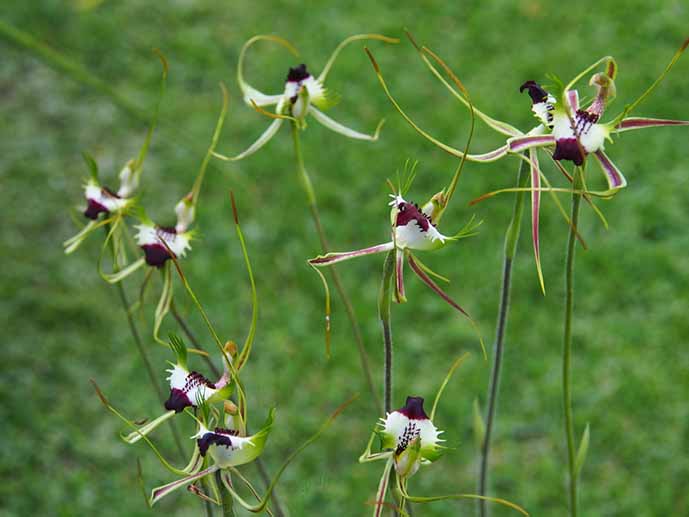
1710 JH Arachnorchis tentaculata sm

Seasonal Factors

There are seasonal influences on the effects of a burn. The response to a summer bushfire could be quite different from cooler season burns in autumn and spring. And even if some orchids are stimulated to flower, it doesn’t necessarily mean that they will end up producing and releasing more seed – which is what really matters for the long-term survival of the orchid population.

Orchid monitoring was carried out in several sites and included 1 autumn, 3 spring burns and 4 adjacent unburnt control sites across the Mt Lofty Ranges (NE of Adelaide). Renate followed the fate of 4 species by tagging up to 150 plants for each species. Renate’s presentation focused on the Millbrook sites where she studied C. rigida and G. major before and after a prescribed burn conducted in Autumn 2013. Unfortunately and fortuitously, her control site also became a bushfire site following the Sampson Flat Fire in January 2015. Fortunately, the Autumn burn site was not affected by the Sampson Flat Fire, so became something of a control site! Renate found that 97% of C. rigida did not emerge after the Autumn prescribed burn compared with 8% at the unburnt control affected site. Flowering was not promoted and no tagged plants flowered. A similar but less severe effect was recorded for Glossodia major.

Will these orchids recover in subsequent years?

Annual monitoring up until 2017, revealed that over one third of C. rigida plants did not re-emerge for 5 consecutive years after the autumn burn. Unfortunately, these plants are likely to have been killed by this burn, probably because the fire was conducted as the orchids were about to emerge. Interestingly, spring burns did not have a detrimental impact on the orchids studied, however, a proportion (18 – 28%) of C. rigida plants may also have been killed by the summer bushfires.

One of the more striking findings out of this research was the large increase in pollination for C. rigida following the bushfires – up to 65% of flowers (protected from grazing) produced a seed pod – an unprecedented rate for Renate’s research. It seems that in the sparse blackened landscape with very few other plants in flower, C. rigida had most of the attention for pollinators. However, the removal of understorey cover also meant that grazing rates were higher after the fires, and most of the flowers that were not protected inside cages were eaten. This meant that there was no actual benefit to the orchids, as there was no increase in seed release. All of these responses were short-lived, and by spring 2016, pollination, grazing and seed release rates were much the same as before the fires.

Arachnorchis behrii 1
Arachnorchis behrii (Pink Lipped Spider Orchid)

Renate’s Conclusions:

All species are not equal – fires may benefit some species others don’t fare so well;
All fires are not equal;
Autumn burning may be detrimental to SOME species;
Bushfire may benefit seed release, only if grazing pressure is low – and
Flowering was not promoted by any fire.
More research is needed on other species, and in different habitats.

Therefore, Renate pointed out that no generalisations can be made about her observations!

Some good news that has come out of this research:

  • Burn practices are changing, with land managers taking into account the timing of prescribed burns, and bestattempts are made to avoid late autumn burns in areas containing threatened (early-emerging) orchids;
  • Impacts of fire on reproductive success appear to be short-term

Renate’s hope is that one day, the message will get out there that while some orchids can respond well to burning, this isn’t the case for all species – and that we still have a long way to go before we will really understand the complexities that underlie these different responses with any degree of predictability. Renate also warned that over a third of SA’s orchids are threatened with habitat loss, weed invasion, pollinator loss, grazing and fire regimes.

Renate’s address was followed by a flurry of burning questions and observations. It is hoped that we NOSSA members will use Renate’s conclusions to guide and inform our own anecdotal field observations and test our underlying assumptions and prejudices about the effects of burning on orchid viability – especially as we enter an unprecedented and potentially species-destroying period of human – induced global warming.

Stipi fire 2


Australian Orchids: The How, Where, When & Why

It’s been a little while in coming, but here is the second of a three part educational video about Australian Orchids.

Orchids are special.

They are unique but even more they are important. Orchids are the barometer to the health of the ecosystem.

So, watch and enjoy the video …

To watch the first video click here.

Good News, They’re Back …

With the lack of rains, it doesn’t look good for the start of the 2019 South Australian orchid season but there is a good news story.

In the February 13, 2019 edition of the Hills Valley Weekly there was an encouraging article of the work of Bush For Life. Part of Trees For Life, this program with the aid of trained volunteers spend numerous hours weeding specific bush sites with the hope that they give our native plants a chance to survive. Yes it requires commitment and dedication but what joy there is when volunteers start seeing plants returning.

Orchids are often the first to disappear from a site when weeds enter and in many instances do not return. For them to return the conditions have to be just right with both the mycorrhizal fungi and the pollinators present. The more orchid species the better the site.

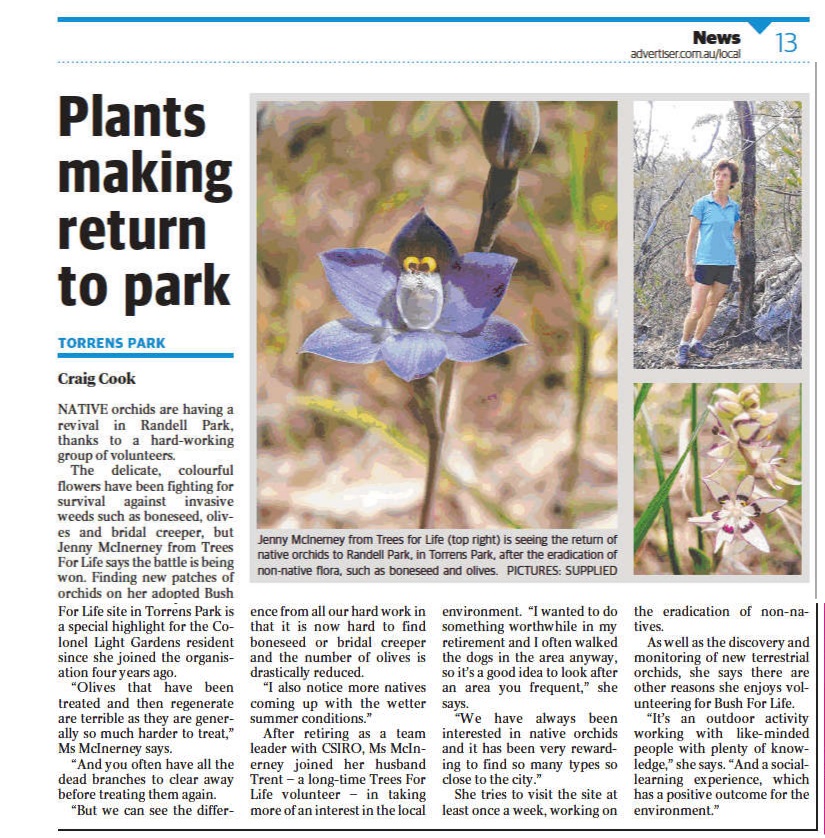
So well done to Jenny McInernay and Trees For Life for their work and commitment.Plants Return to Park

The blue orchid featured in the article is a spring flowering sun orchid; it appears to be Thelymitra inflata, common names Blue Star Sun Orchid or Adelaide Hills Plum Orchid. The other flower is not an orchid. It is a Wurmbea, common name Early Nancy.

Tracking Down the elusive Prasophyllum suttonii

Rudie Kuiter’s Short Paper 2 Taxonomic Status of the Mauve Leek-orchid Prasophyllum suttonii Rogers & Rees, 1912 (Orchidaceae) published in May 2017 documents how he used original source material to determine the identification of a species that was considered extinct.  Prasophyllum suttonii belongs to the Prasophyllum odoratum/diversiflorum complex and is very similar to the later named Prasophyllum alpestre. It was considered to be extinct but Rudie’s view was not that it was extinct but that it had been “lost in taxonomy, and its status need to be restored”. His article documents how he used original material to help determine identification of the species he had photographed.

In his summary Rudie has some good advice about how to effectively use the material available –

  • Use original descriptions and illustrations
    • Original descriptions are preferred over type specimens
    • later descriptions may be based upon second hand information which may or may not be accurate.
  • Drawings have some value but depend
    • upon the skill of the artist to show the crucial details
    • upon whether they were drawings from fresh or preserved specimens
  • A good photograph will be better than a drawing
  • Type material is useful but may deteriorate over time

Images from Rudie Kuiter's article on Prasophyllum suttonii


Click here to read the complete article


Orchids In Remnant Roadside Vegetation

This week’s post written by Leo Davis is an article (slightly edited) from The South Australian Naturalist 91 (1): 34 – 37 January – June 2017. In this article, Leo highlights the importance of  the role of roadside vegetation in preserving the native orchids and flora.

All photographs are by Leo Davis.

Microsoft Word - SAN Vol. 91, No. 1, Jan-Jun 2017  pp. 34-37 OrcFig 1: Thelymitra antennifera hybrid
One of my rules of thumb is ‘If I am in a Conservation Park, I’m on ground that nobody could make a living from.’ One, usually more, of nutrient poor soils, excess salinity, extreme rockiness, steepness, poor moisture retention, low rainfall or even being waterlogged, will be a feature of the location. There are a few odd spots that have survived partly intact, that have good soil, sufficient rainfall, etc. These include cemeteries (The Nationally Critically Endangered ghost spider orchid (Caladenia (syn. Arachnorchis) intuta) holds on in a cemetery on Yorke Peninsula) or exclusion zones around water storages (including a reservoir reserve in Lobethal that the public can now access) or abandoned railway yards (including Sherlock, where so far I have found 21 species of orchids and part of a reserve in Halbury.)

Microsoft Word - SAN Vol. 91, No. 1, Jan-Jun 2017  pp. 34-37 Orc

Fig 2: Little Yellow Club Mallee Spider Orchid Caladenia (syn Arachnorchisverrucosa

When I go in search of plants with the Botany Group of the FNSSA (Field Naturalist Society of South Australia), or for orchids with NOSSA (Native Orchid Society of South Australia), or when I do surveys of threatened orchid species with DEWNR (Department Environment, Water and Natural Resources), or orchid seed collection with the Adelaide Botanic Gardens, or go on weeding parties to protect endangered species, the destination is always one of these deprived, rejected sites. The orchids I see are those adapted to or just hanging on in such sites. We never see orchids that lived on better soils, say on the Adelaide Plains. How many have become extinct?

Microsoft Word - SAN Vol. 91, No. 1, Jan-Jun 2017  pp. 34-37 Orc

Fig 3: Common Mallee Shell Orchid Pterostylis dolichochila

Wherever the land was suitable for agriculture it was clear felled. Almost nothing of the original flora and little of its associated fauna, were left. But there is a tiny flimsy exception. Crossing these highly productive agricultural zones are roads and sometimes these have remnant vegetation. For a person interested in orchids, these narrow strips are normally areas of slim pickings but occasionally finds are made. Near Halbury, the Nationally Endangered Halbury rufoushood (Pterostylis sp. Halbury or Oligochaetochilus lepidus) can be found in some roadside spots.

Microsoft Word - SAN Vol. 91, No. 1, Jan-Jun 2017  pp. 34-37 Orc

Fig 4: Mallee Bearded Greenhood Pterostylis (syn Plumatichilos) sp. Mallee Bearded Greenhood

The most remarkable piece of roadside vegetation that I have come upon was discovered by and shown to me by Glenn Dean, the Environment Officer with the City of Murray Bridge. He found a section of predominantly broombush (Melaleuca uncinata) vegetation, only about 200 m. long, on the verges of a single car sandy track, east of Murray Bridge. It is so close to the vegetation that cars can be scratched. I have found 24 species of orchid (Glenn has found more) blooming there sometime between March and October each year. All images shown here (Figs 1–11) were made at this site. If the little used road was not there the land would have been under crop, being equal in quality to regularly cropped fields to either side, and is of much higher quality than any normally allocated to Conservation Park status. Most of the orchids found can indeed be found in some of the poor sites dedicated as Conservation Parks, including species similar to those found at Ferries McDonald and Monarto Conservation Parks with their poor sandy soils. But this spot, which for some reason supports species that do not grow just 100 metres east or west along the road, has such species as the Nationally Critically Endangered Mallee Leek Orchid (Prasophyllum constrictum) (Fig. 8), that requires soils as good as those demanded by wheat, so it is essentially doomed.

Microsoft Word - SAN Vol. 91, No. 1, Jan-Jun 2017  pp. 34-37 Orc

Fig 5: Rusty Rufoushood Pterostylis biseta (syn Oligochaetochilus bisetus)

Its single plant sighting here is regarded as a ‘rediscovery’ of a species not seen for years. In the longer term I guess this tiny site of orchid species richness is in a transitory state and most species will disappear. The surrounding cropping land is neither a source of seed nor a suitable landing site for it and it provides damaging wind blown nutrients and other chemicals. So I will cherish it while it lasts and hope others appear, if only briefly. Here is a reminder, that most of you do not need, of the value of roadside vegetation (with the understanding that it can contribute to native animal mortality) and that we should manage, extend and guard its presence.

Microsoft Word - SAN Vol. 91, No. 1, Jan-Jun 2017  pp. 34-37 Orc

Fig. 6: Rufoushood Pterostylis (syn Oligochaetochilus) boormanii complex sp.

Microsoft Word - SAN Vol. 91, No. 1, Jan-Jun 2017  pp. 34-37 Orc

Fig. 7: Cinnamon Donkey Orchid Diuris palustris

Microsoft Word - SAN Vol. 91, No. 1, Jan-Jun 2017  pp. 34-37 Orc

Fig. 8: Mallee Leek Orchid Prasophyllum constrictum

Microsoft Word - SAN Vol. 91, No. 1, Jan-Jun 2017  pp. 34-37 Orc

Fig. 9: Limestone Tiny Shell Orchid Pterostylis cycnocephala
(syn Hymenochilus calcicolus)

Microsoft Word - SAN Vol. 91, No. 1, Jan-Jun 2017  pp. 34-37 Orc

Fig. 10: Caladenia (syn Jonesiopsis) capillata x Pheladenia deformis hybrid

Microsoft Word - SAN Vol. 91, No. 1, Jan-Jun 2017  pp. 34-37 Orc

Fig 11: Small Rustyhood Pterostylis pusilla (syn Oligochaetochilus pusillus)


Orchids in Medicine?

Question: Are orchids used in medicine?

Answer: Worldwide, some orchids are used medicinally but compared with other families, despite their numerical dominance in the plant world, orchids only contribute a small number of species to medicine.

Orchidaceae is the second** largest Family in the world after Asteraceae which has about 32,280* species whilst the orchids consists of about 27,753 species. In the big picture, their numbers are similar but only 2.32% (619) of all orchids species can be considered medicinal as opposed to 7.17% (2,314) of Asteraceae.

It is worth noting, that only 28,187 (6.48%) of the possible 434,910 species worldwide are recorded as being used medicinally. But of all of the world’s families it is the small Family of Moraceae (Mulberry, Figs & Mallow) that contributes the most. Of its 1,229 species 22.54% are medicinally useful.


 Total number species


 Percent of species used medicinally


 Number of Species used medicinally

 
World wide

434,910


6.48%


28,187


Asteraceae

32,280


7.17%


2,314

 
Orchidaceae

27,753


2.23%


619

 
Moraceae

1,229


22.54%


277

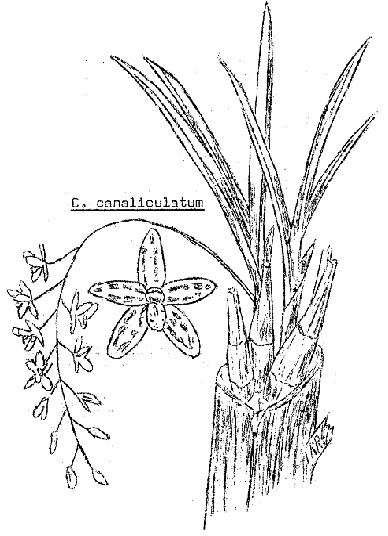
Concerning Australian orchids only a handful are known to have been used medicinally such as Cymbidium for dysentery, Dendrobium teretifolium bruised leaves for pain relief and different parts of  Dendrobium discolor as a poultice and for ringworm.

Cym caniculatum drawing

Notes:

**Many sources will state that the Orchid Family is the largest Family worldwide but for the purpose of this article, the information used is from 2017 State of the World’s Plants. Species numbers tend to be a in state of flux as botanists are discovering new and reassessing data.

*All figures in this article are based upon figures found in the 2017 State of the World’s Plants report.

Reference:

https://stateoftheworldsplants.com/ accessed 9 June 2017

https://academic.oup.com/qjmed/article/98/9/625/1547881/The-uses-and-misuses-of-orchids-in-medicine accessed 9 June 2017