When I first joined NOSSA many years ago, I was very much interested in the conservation side of Australian orchids. But over the years I have come to appreciate the growers and their orchid knowledge.
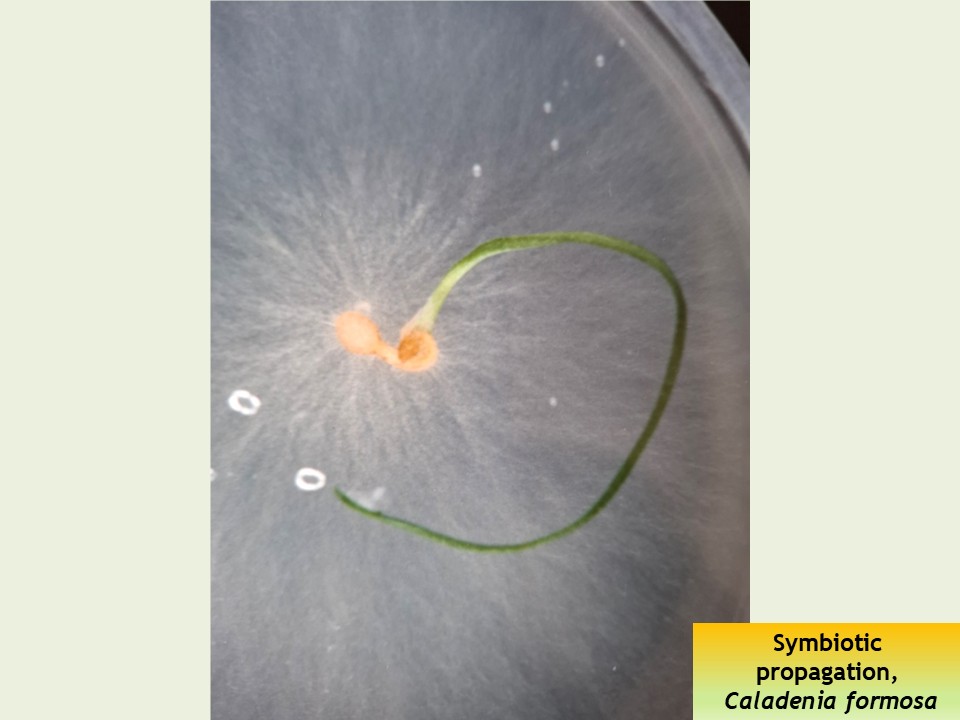
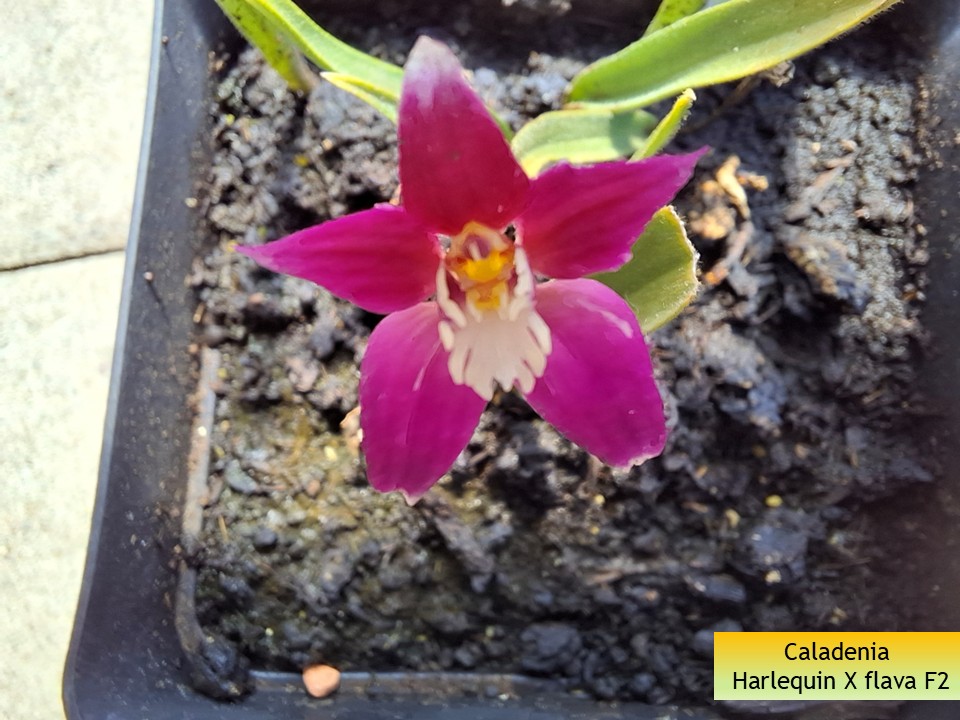
This was quite evident when Dr Heinrich Beyrle, a long time researcher, gave his talk to the October 2025 NOSSA general meeting on orchid mycorrhizal and growing terrestrial orchids. As I listened to his explanation of how the mycorrhiza interacts with the orchid and saw the hybrids that he created, I saw glimpses of how this information relates to conservation.
So one of the things was to consider when out in the field, is the question: am I looking at a variation, a second generation hybrid or a new species?
Growers have the advantage of being able to observe a plant throughout the whole of its life cycle as well as the variations that occur in the same plant or population over several season, a thing that is not so easily observed by those of us visiting several different sites in one season and maybe not being able to get back to them in the next season.
I highly recommend Dr Heinrich’s talk “Orchid Mycorrhizal: From a Gardener’s Perspective” on the NOSSA Youtube channel.
Established in 1976, the Australian Orchid Foundation (AOF) was formed to protect and propagate orchids; support and conduct orchid research; to educate and encourage orchid study and related sciences.
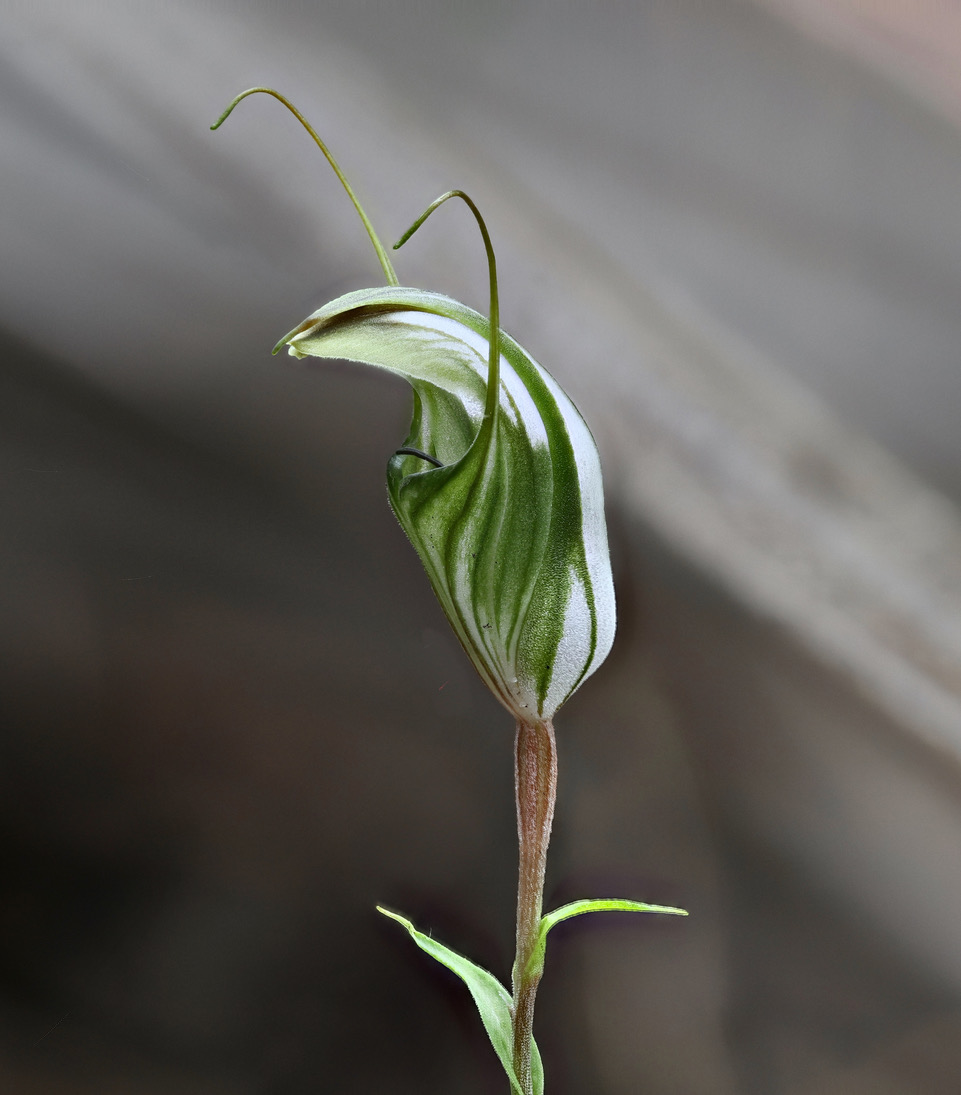
Diplodium aff alatum sp Hills – Scott Conservation Park-12/6/21 Now D clivoum
In keeping with their aim of research and education, the AOF has published various volumes of the Australian Orchid Research wherein, amongst other things, new orchid species are described. Over the years, beginning in 1989, six volumes have been produced.
Now Volume 7: More New Taxa of Australasian Orchidaceae, is available from their website.
For South Australians, this is as significant volume with the publishing of 52 species, many of which we have been waiting for many years to have described.
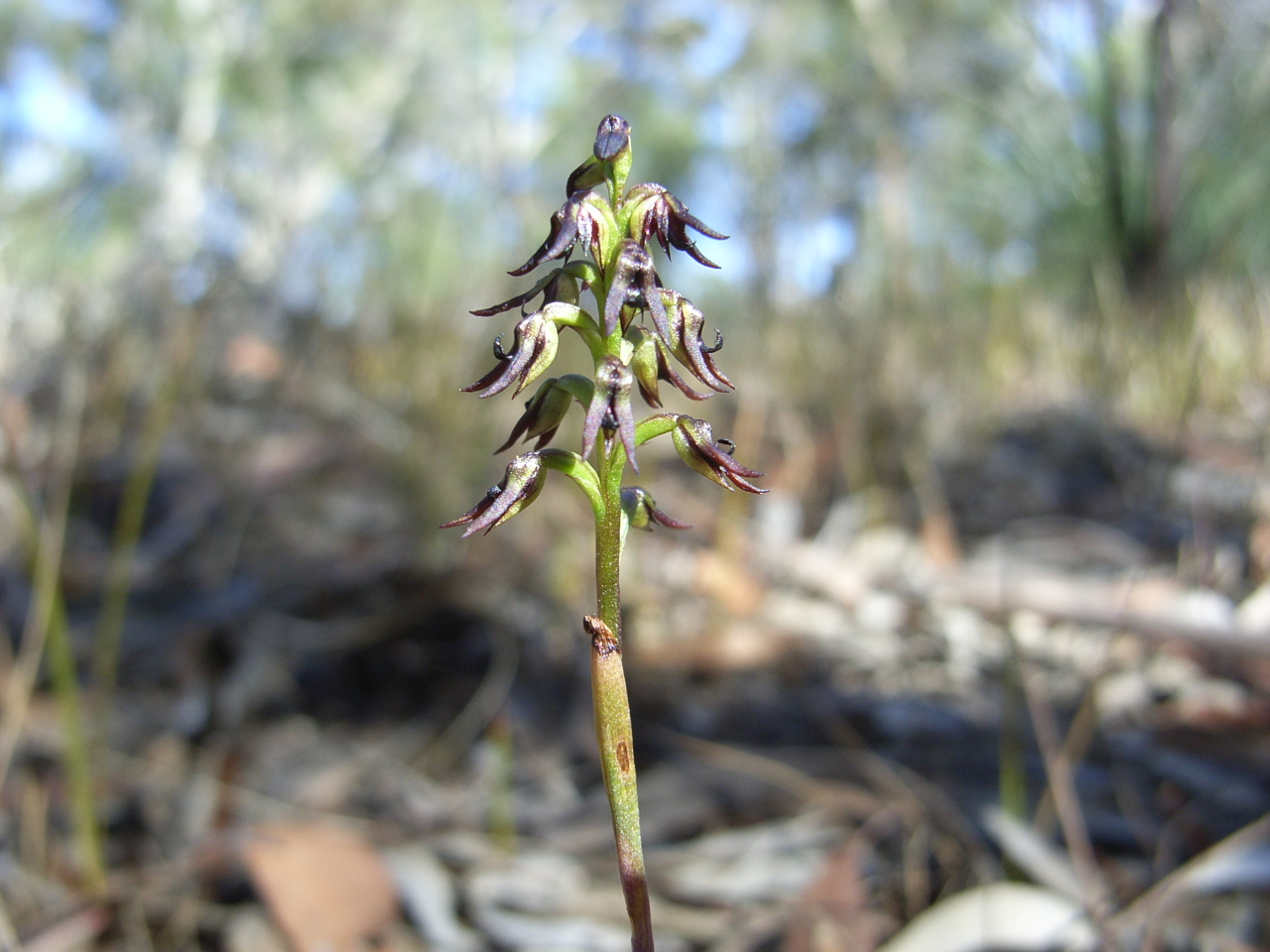
Previously Corunastylis sp Adelaide Hills, now C occidua Photographer: Robert Lawrence
As many of them have appeared in Native Orchids of South Australia: A Field Guide, the author, June Niejalke, for her own cross-referencing she has attempted as best as possible to map the names and page number of both volumes. This was based upon the Illustration section of the description as found in Volume 7.
As there is no index, she has kindly made this available for other orchid enthusiasts.
The Native Orchid Society is involved in many different activities, one of them being to assist researchers. In 2020, Covid 19 struck bringing many university projects to a halt. But in South Australia, NOSSA members were able to help PhD candidate Alex Thomsen, University of New South Wales, set up her project titled Impacts of Changing Fire Seasons on Orchids. The following video is her brief presentation of her planned research that she gave to the general membership at the September meeting.
The process may have taken awhile, (for some longer than than the two years collaboration with the University of Adelaide,) but finally the Wild Orchid Watch app is now available for all Australians to use.
Glossodia major
So why orchids…
Orchids are iconic and somewhat mysterious plants that are highly valued by sections of our society.
They are sensitive to environmental change most of which puts the survival of populations at risk of being lost permanently.
Orchids tend to be indicators of ecosystem health.
They are dependent on other parts of the ecosystem such as fungi within the soil and particular insect pollinators .
These insects are also dependent on a functioning ecosystem for their survival.
Thus, when orchids are conserved other parts of the ecosystem are also conserved resulting in broader benefits to the ecosystem as a whole.
Diplodium sp Adelaide Hills
So, why an app …
traditional methods of data collection for orchids are inadequate because of their
differences in emergence with seasons
short flowering, sometimes non-flowering, seasons
allows the collection of a wealth of knowledge known to orchid enthusiasts
this method of collecting data enables researchers to gain a better understanding of
the conservation status and trend of orchids
the value of orchids as indicators of environmental change
the phenology (life cycle), distribution and abundance of orchids
The WOW app allows citizens scientists to provide important data for researchers.
Bonus Benefit of the App – Identification
Probably one of the most frustrating things for the novice is not knowing what is the species of orchid that they have found. With this app it is not necessary to be familiar with all the orchid species.
The WOW app uses the iNaturalist platform where there is a whole community ready to assist with identification.
One can be an orchid citizen scientist without a detailed knowledge of orchids.
So, hop over to the WOW website to find more information, instructions and download the app.
Sadly many of our orchids are under threat of extinction.
Fortunately, conservationists and researchers are putting in a lot of effort in an attempt to save them. Part of this work consists of caging and tagging individual plants.
Most people do the right thing and do not disturb the cages/tags. Unfortunately some, hopefully mainly through lack of knowledge, do move them. Sadly, too many of them are being moved. Sometimes they are re-positioned but not always.
There are a good reasons for the individual plants to be tagged/caged. And there are good reasons for not moving either the tags or the cages.
Tags
Tags are usually numbered. These numbered tags are reference locations from which the distance and bearing of plants are measured. If the pin is moved the record for that individual plant is invalidated. Position of pins are used to determine if plants reappear in succeeding years.
Replacing the pins can also result in inadvertently spearing, and thus destroying, the tubers.
Cages
Cages are used to protect individual plants from grazing. Moving cages, even if returned, can result in damage to the plant, as well as damage to any emerging juvenile plants.
NOSSA & Conservation
One of the main activities of NOSSA is conservation. Many of our members assist in the work of monitoring, caging and tagging of plants. They know of the time and effort required for this work. They know why it is important not to move tags or cages, not even for taking photographs.
But we are aware that there are those who do not know and so would ask that others pass this message onto friends who may be unaware of the significance of cages/tags.
So simply put, “Cages & tags are not to be moved under any circumstances”.
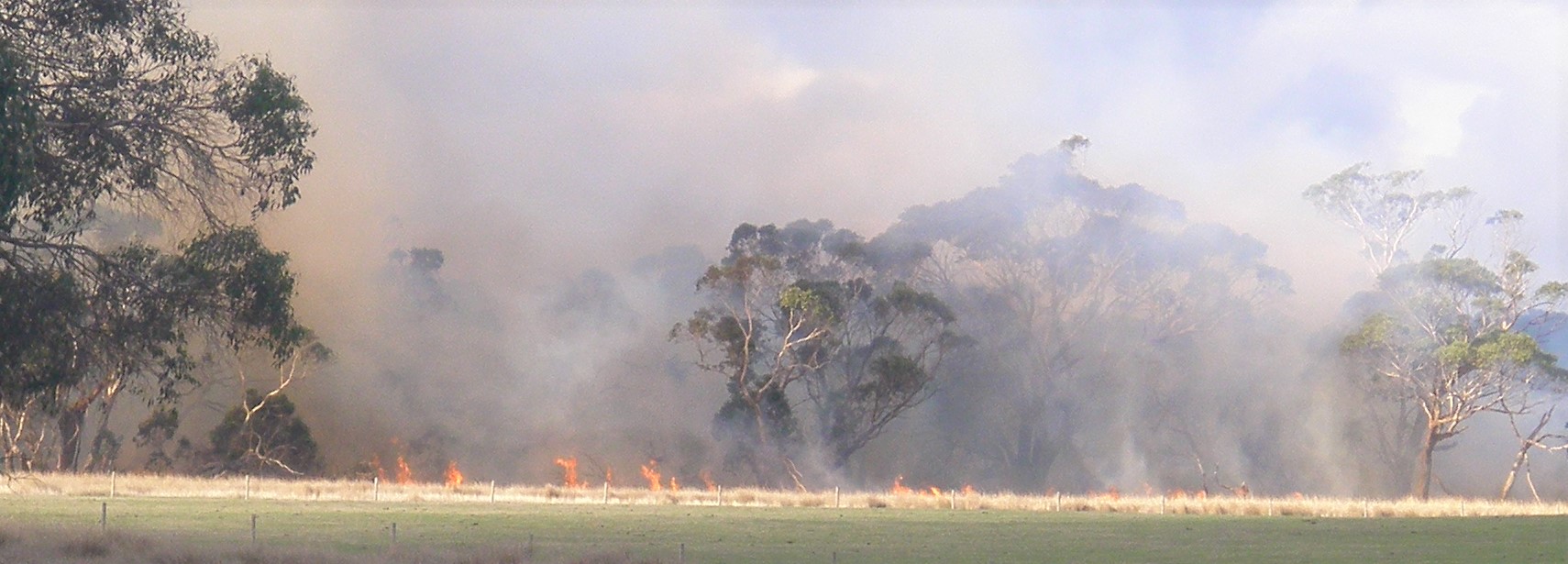
Over the years, we have published several blogs concerning orchids and fire. At the beginning of the year, Renate Faast spoke at the NOSSA February meeting. John Eaton wrote an extensive summary of her talk which is reprodued here as it appeared in the 2019 March edition of the Native Orchid Society of South Australia Journal, Volume 43 Number 2.
Renate’s take home message was that we cannot make sweeping statement about orchids and fire, each species responds differently and we need to take this into account when planning proscribed. This was something that Dr Michael Duncan also brought out in his 2009 report following the Victorian Black Saturday fires – see Orchids and Fire.
An interesting aside to Renate’s research was her observations of white-winged choughs – see the paragraph Not All Relationships are Friendly.
Guest Speaker Notes John Eaton
At our February 26th meeting, thirty NOSSA members were treated to a stimulating talk by Dr Renate Faast from the University of Adelaide – our first guest speaker for 2019.
Renate acknowledged the support her project received from an Australian Research Council (ARC) grant under the Linkage Program which promotes national and international research partnerships between researchers and publicly funded research agencies – in Renate’s case – support from the University of Adelaide, SA Museum, SA Water, Forestry SA, The Australian Orchid Foundation, the Nature Foundation of SA, The Environment Institute and the SA Government.
Mixed Messages
Renate had been getting mixed messages from the field observations people had made following prescribed burning or bushfires. This ARC grant enabled her to study the impacts of prescribed burning on native terrestrial orchids.
Renate found that the response of orchids to controlled burns suggests that there are winners and losers amongst orchids: Naked sun orchids responded really well to a controlled burn with 6 plants growing to 83 plants. REALLY good news for that species of orchid but the reality is more complicated than that and this study suggests that there are no generalisations that can be drawn with any confidence about regeneration following prescribed burns or bushfires! In view of the complex interactions between orchids and other plants, and between orchids and bird-and-animal grazers, orchids rely on so many things to go right in order to set seed and recruit new plants into a population. With the exception of a few self-pollinating species, most orchids rely on pollinators for seed production. For non-clonal species, releasing seed is the only way to ensure the species’ long-term survival!
Not all relationships are friendly
Over 80% of orchid flowers had been grazed at some sites. No flowers means no seeds. Renate’s film clips embedded in her PowerPoint dramatically showed the extent of orchid predation by birds such as white-winged choughs and currawongs. They picked off the flowers quite deliberately, leaving behind an intact stalk. Five flowers were grazed every 10 sec (that’s at a rate of 30 flowers/min!) And there are all the other orchid grazers such as roos, deer and rabbits as they move through a patch, often only grazing part of the stem, in a far less targeted and thorough way, compared to these birds. All of these interactions play a key role in whether seeds are released to keep the population viable.
The Mount Bold Fire prompt
While engaged in her PhD research into reproductive ecology of spider orchids, Renate heard that a fire at Mt Bold had led to a “profusion” of Caladenia rigida flowers! The Victorian bushfires had also prompted changes to prescribed burning practises in South Australia. The combination of these two events led Renate to explore the effect of fire on the interactions orchids have with other plants and animals – leading her to ask such questions as:
Does fire promote the flowering of spider orchids (e.g. Caladenia rigida, C. behrii, C. tentaculata) and Glossodia major?
If there are more flowers following fire, will they be pollinated and will they set seed?
How does burn timing influence this response?
Do all species respond in the same way?
These are all critical issues to consider if we are to ensure a self-sustaining orchid population in the future.
Seasonal Factors
There are seasonal influences on the effects of a burn. The response to a summer bushfire could be quite different from cooler season burns in autumn and spring. And even if some orchids are stimulated to flower, it doesn’t necessarily mean that they will end up producing and releasing more seed – which is what really matters for the long-term survival of the orchid population.
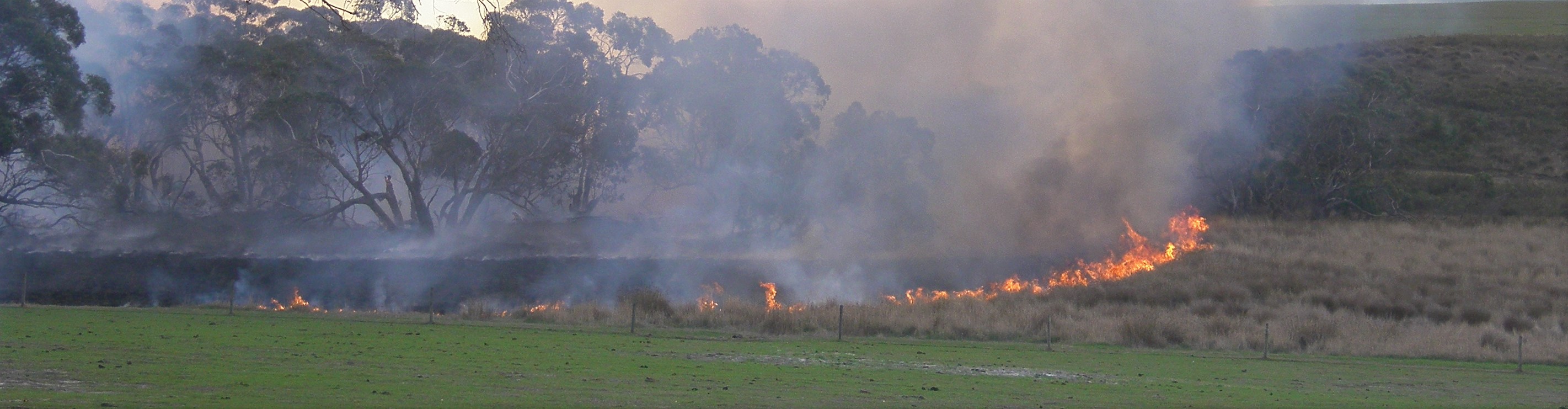
Orchid monitoring was carried out in several sites and included 1 autumn, 3 spring burns and 4 adjacent unburnt control sites across the Mt Lofty Ranges (NE of Adelaide). Renate followed the fate of 4 species by tagging up to 150 plants for each species. Renate’s presentation focused on the Millbrook sites where she studied C. rigida and G. major before and after a prescribed burn conducted in Autumn 2013. Unfortunately and fortuitously, her control site also became a bushfire site following the Sampson Flat Fire in January 2015. Fortunately, the Autumn burn site was not affected by the Sampson Flat Fire, so became something of a control site! Renate found that 97% of C. rigida did not emerge after the Autumn prescribed burn compared with 8% at the unburnt control affected site. Flowering was not promoted and no tagged plants flowered. A similar but less severe effect was recorded for Glossodia major.
Will these orchids recover in subsequent years?
Annual monitoring up until 2017, revealed that over one third of C. rigida plants did not re-emerge for 5 consecutive years after the autumn burn. Unfortunately, these plants are likely to have been killed by this burn, probably because the fire was conducted as the orchids were about to emerge. Interestingly, spring burns did not have a detrimental impact on the orchids studied, however, a proportion (18 – 28%) of C. rigida plants may also have been killed by the summer bushfires.
One of the more striking findings out of this research was the large increase in pollination for C. rigida following the bushfires – up to 65% of flowers (protected from grazing) produced a seed pod – an unprecedented rate for Renate’s research. It seems that in the sparse blackened landscape with very few other plants in flower, C. rigida had most of the attention for pollinators. However, the removal of understorey cover also meant that grazing rates were higher after the fires, and most of the flowers that were not protected inside cages were eaten. This meant that there was no actual benefit to the orchids, as there was no increase in seed release. All of these responses were short-lived, and by spring 2016, pollination, grazing and seed release rates were much the same as before the fires.
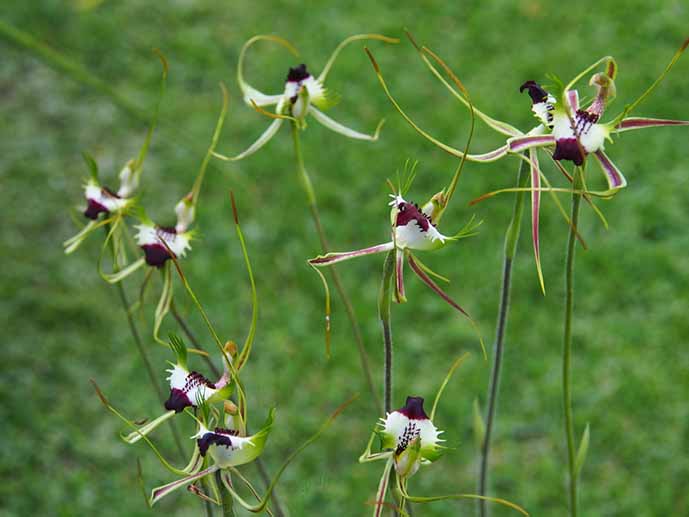
Arachnorchis behrii (Pink Lipped Spider Orchid)
Renate’s Conclusions:
All species are not equal – fires may benefit some species others don’t fare so well; All fires are not equal; Autumn burning may be detrimental to SOME species; Bushfire may benefit seed release, only if grazing pressure is low – and Flowering was not promoted by any fire. More research is needed on other species, and in different habitats.
Therefore, Renate pointed out that no generalisations can be made about her observations!
Some good news that has come out of this research:
Burn practices are changing, with land managers taking into account the timing of prescribed burns, and bestattempts are made to avoid late autumn burns in areas containing threatened (early-emerging) orchids;
Impacts of fire on reproductive success appear to be short-term
Renate’s hope is that one day, the message will get out there that while some orchids can respond well to burning, this isn’t the case for all species – and that we still have a long way to go before we will really understand the complexities that underlie these different responses with any degree of predictability. Renate also warned that over a third of SA’s orchids are threatened with habitat loss, weed invasion, pollinator loss, grazing and fire regimes.
Renate’s address was followed by a flurry of burning questions and observations. It is hoped that we NOSSA members will use Renate’s conclusions to guide and inform our own anecdotal field observations and test our underlying assumptions and prejudices about the effects of burning on orchid viability – especially as we enter an unprecedented and potentially species-destroying period of human – induced global warming.
Short Paper 3 Identity of Pterostylis valida (Orchidaceae) by Rudie Kuiter was published in June 2017. In this paper, Rudie has tackled the difficult group of Rustyhoods or Oliogochaetochilus (specifically Pterostylis valida) within the genus Pterostylis. Many of the different species occur in isolated pockets over a wide geographical range. Differences can be subtle but Rudie has sought to clarify the distinction between P. valida and similar species. Click here read the complete paper.
A typical flower at the type-locality, green with the usual stripes on the transparent parts of the hood, cup-shaped synsepalum and dark labellum swellings. (Image from Rudie Kuiter’s Short Paper)
Rudie Kuiter’s Short Paper 2 Taxonomic Status of the Mauve Leek-orchid Prasophyllum suttonii Rogers & Rees, 1912 (Orchidaceae) published in May 2017 documents how he used original source material to determine the identification of a species that was considered extinct. Prasophyllum suttonii belongs to the Prasophyllum odoratum/diversiflorum complex and is very similar to the later named Prasophyllum alpestre. It was considered to be extinct but Rudie’s view was not that it was extinct but that it had been “lost in taxonomy, and its status need to be restored”. His article documents how he used original material to help determine identification of the species he had photographed.
In his summary Rudie has some good advice about how to effectively use the material available –
Use original descriptions and illustrations
Original descriptions are preferred over type specimens
later descriptions may be based upon second hand information which may or may not be accurate.
Drawings have some value but depend
upon the skill of the artist to show the crucial details
upon whether they were drawings from fresh or preserved specimens
A good photograph will be better than a drawing
Type material is useful but may deteriorate over time
It’s Christmas and usually, despite Australia’s hot climate, we associate Christmas with snow and cold but we don’t tend to associate them with orchids. And yet, for Australia we do have not one but two Christmas flowering orchids in snow country, that is, on the isolated sub-Antarctic Macquarie Island, an island where “[r]ain and snow are frequent, with only a few days each year with no precipitation”. Admittedly at this time of the year, being summer it is warmer with an average temperature of 7.9degrees Celsius.
The first species was only discovered in 1978 and not recognised as an unique species until 1993 when it was named Corybas dienemus (syn. Nematoceras diemenum). Previously it had been linked with Corybas macranthus.
The second orchid species is Corybas sulcatus (syn. Nematoceras sulcatum) and this species, possibly the world’s rarest orchid, has gone travelling. Staff from the Royal Tasmanian Botanical Gardens have manage to collect and amazingly propagate the seed. Amazingly because orchids, particularly the terrestrial orchids, are difficult to grow. It is now flowering, this Christmas season, but under very carefully controlled conditions in Hobart.
Click here and here to see images and read about this amazing journey.
So Christmas, orchids and snow do go together in Australia, albeit in the far flung island of the south.
Corybas sulcatus (Grooved helmet-orchid) is one of two endemic orchids which occur on Macquarie Island (Photo: Royal Tasmanian Botanical Gardens) Image Source
Certain flowers in large colonies were most popular over several days and both sexes were observed feeding on the boss, which suggests a food-related attraction. Virtually nothing was known about the Corybas pollinators and primary literature to date only offered hypotheses. Based on our findings, the persisting statement in literature that ‘Corybas species attract fungus-gnats as putative brood-sites’ is incorrect for the taxa in Victoria. No evidence of ovipositing in flowers was found. Females feeding looked gravid and were presumed to be unfertilised. All individuals looked fresh with undamaged wings and it was apparent they had recently hatched.
Is this a hypotheses that needs revising? Rudie definitely demonstrates the importance of careful and meticulous observations.



 Guest Speaker Notes John Eaton



 NOSSA
NOSSA 