Why can’t I buy that pretty blue orchid? . . . or Purchasing Aussie terrestrial Orchids on the International Market

When noticed, Australian orchids capture people’s imagination and many want to be able to grow them.  As a result we often receive request for where to purchase them, particularly from overseas.  For people overseas we are unable to help them.  Recently I came across some comments from Philip Shin and he has kindly written about his experience with trying to purchase orchids from Australia.  I trust that his experience will help our overseas people understand some of the issues involved.

So let’s hear what he has to say …..


It has been brought to my attention that there have been many requests from international buyers who wish to purchase Native Australian Terrestrial Orchids from Australia. To give you all a basic idea of who I am and why I’m writing this brief article, I will tell you a few things about me.

Firstly, I am an orchid hobbyist just like you all. I live in the United States of America. My love for orchids stemmed from repeated failures of growing bromeliads, (which I eventually learned how to grow), after which my parents had suggested I try growing orchids instead, as they might be easier to cultivate. I took them up on it and for the most part, when it came to many of the more commonly available orchid hybrids, they were right. After a few tries, I managed to not only grow some orchids, but I also was able to bloom them as well! From here, my appreciation for the hobby grew to include species orchids. Then I learned about terrestrial orchids and how people were attempting to cultivate them in their gardens/greenhouses, and that lead to me wanting to grow them too.

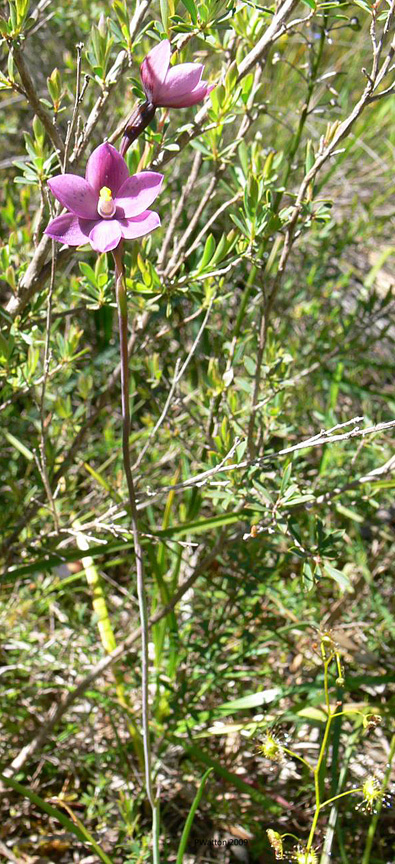
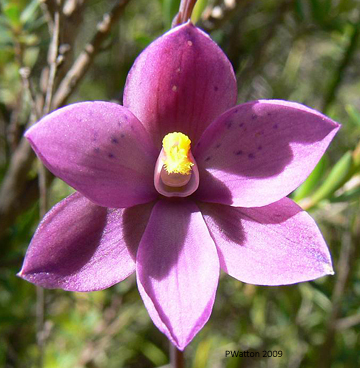
Some of the terrestrial orchids that caught my eyes were those pretty little blue flowered orchids in the genus Thelymitra. I was always told that there were “no such things as orchids that were true blue”, but seeing photos of them contradicted that notion, and thus I was intrigued. Then, I started hearing about how some people were attempting to grow them. I thought to myself, “I must have some!” And that was when reality hit hard.

You see, I eventually learned that acquiring Thelymitras through legal channels was quite an endeavour here in America. I had to acquire a permit through our APHIS/USDA (Animal and Plant Health Inspection Service/ United States Department of Agriculture) to import plants from other countries, (specifically, Australia and Europe in the case of Thelymitras and a few other Native Australian Terrestrial Orchids). Of course, there was also paying for the CITES (Convention on International Trade in Endangered Species) permit and phytosanitary certificate in order to have them make it through our US Customs. The difficult part wasn’t necessarily with the USDA permit, but rather paying for the CITES permit and phytosanitary certificate. When Australia was open for export, the fees for CITES permits and phytosanitary certificates were rather high in price, running at about $250 USD per shipment. But shortly after making two orders to be shipped out from Australia, the exportation laws had changed radically! During this time, CITES and phytosanitary paperwork now cost somewhere in the order of $1,000 USD. It was now clear that Australia was no longer in the business of exporting goods from small companies. Which then brings us to the next option, Europe…

Europe had somehow also managed to get a hold of Native Australian Terrestrial Orchids much earlier than America did, but they were still not very prevalent in the hobby.

It then bears the question, “if Native Australian Terrestrial Orchids are already on the market, why aren’t they more prevalent or more popular?” The answer to this question would be, although people have attempted to grow these orchids, they are not necessarily the easiest orchids to grow long term. Some may be easier than others, but they are still a novelty in the hobby, partially because of this. The difficulty lies in that they are plants that have a tight symbiotic relationship with fungi. I’m not sure whether or not the orchids started to develop smaller and smaller root systems because of the symbiosis, but these orchids do tend to have rather negligible amount of roots. This often makes it difficult to cultivate these orchids, because once the roots get damaged for any reason, they pretty much die. Hence, why these orchids are not more prevalent in numbers despite the demand.

In short, this article is an explanation of the difficulties of obtaining Native Australian Terrestrial Orchids. And this is also some insight on how it is trying to obtain these plants here in America. For anyone coming across this article, I appreciate the time and effort it took for you to read through an American hobbyist’s perspective on Native Australian Terrestrial Orchids. Thank you.


Philip Shin

Pots of Thelymitra nuda cultivated by Les Nesbitt
Pots of Thelymitra nuda cultivated by Les Nesbitt in South Australia

Just as a postscript, Philip mentioned that he could grow Diuris or Donkey Orchid “but that it takes quite a bit of trial and error before you can see anything that resembles success.”


The Role of Orchids

October is Orchid Month with the greatest number of species flowering throughout South Australia; so it is worth considering the role of orchids in the Australian bushland.  Hence this week’s blog is an article written by Belinda Newman, Western Australia.

Orchids: The Canary in the Coal Mine was published in the Friends of Kings Park magazine For Plants and People, Issue 70 p 22-24, 2010.  The article is both a good introduction to, and summary of, her 2009 thesis Orchids as Indicators of Ecosystem Health in Urban Bushland Fragments

Orchids: The Canary in the Coal Mine

Belinda Newman – Research Scientist BGPA

What could orchids and canaries possibly have in common?

Before occupational health and safety and ventilation systems were commonplace in the mining industry, a caged canary would be bought down to the coal seam by the miners.  Canaries are particularly sensitive to methane and carbon dioxide which made them excellent indicators for the build-up of dangerous gases.  A singing canary meant everything was fine, a dead canary spelt trouble and an immediate evacuation.

Although orchids can’t sing, they do possess a number of traits that make them sensitive ecological indicators.  The relationships that orchids have with their surroundings form part of a complex ecological web.  Orchids have specific relationships with mycorrhizal fungi, which they require both for germination of their dust-like seed and ongoing growth of plants in adulthood.  These fungi in turn rely on the appropriate soil moisture content and carbon sources.  Above ground, the majority of terrestrial orchids in the south west of Western Australia rely on pollinators for successful seed set.  For some orchids this plant-pollinator relationship has become so highly evolved that removal of the pollinator would spell the end of the orchid.  The pollinators also have specific requirements for habitat, appropriate food sources and nesting sites.  These above and below ground links to the ecosystem make orchids particularly sensitive to disturbances and changes in their surroundings.

The potential for orchids to be used as indicators of ecosystem health formed the basis of a study between Kings Park and Botanic Gardens and Murdoch University.  The coal seam was eleven urban reserves of varying condition on the Swan Coastal Plain.  The canaries were seven orchids common to Perth’s urban bushlands; the Carousel spider (Caladenia arenicola), Cowslip orchid (Caladenia flava), Pink Fairy orchid (Caladenia laitfolia), Pansy orchid (Diuris magnifica), Dark Banded Greenhood (Pteryostylis sanguinea), Purple Enamel Orchid (Elythranthera brunonis) and the Mignonette orchid (Microtis media).  Before it was possible to see which orchids made the best canaries, it was important to determine the health of each of the bushland sites.  A number of environmental variables were chosen that best reflected the health of the ecosystems.  Extensive surveys and analysis of species composition, plant functional groups against these environmental variables revealed a range of site conditions from close to pristine to highly degraded.  This provided the backdrop against which to determine the effectiveness of orchids as indicators through the measured responses of the orchid species.

Firstly orchid presence and abundance was measured across sites to determine if particular orchid species showed a preference for particular site conditions.  Diuris magnifica and Microtis media showed strong correlations and were most abundant in poor condition sites and Pteryostylis sanguinea showed strong correlations to sites in good condition.  While the abundance and presence of orchids appeared to correlate with site condition, we wanted to know what other aspects of the orchid we could measure as a means of judging the health of an ecosystem.

Successful seed set in plants reflects a healthy ecosystem and the reproductive success of the seven orchid species was investigated to determine the effects of declining site condition on seed set.  Pollination trials were set up to measure natural and artificial pollination events across all sites.  Widespread depression in pollination across all species and sites was found to be occurring, rendering seed set a poor measure of ecosystem health.

Investigations into the below-ground links orchids have with the ecosystem were undertaken by determining the presence and abundance of orchid mycorrhizal for the seven orchid study species across all sites.  Mycorrhizal distribution was found to be patchy within urban reserves and also revealed unoccupied niches capable of supporting orchid germination.  A greater abundance of Microtis media mycorrhizal at sites of poor condition supported earlier correlations of plant abundance at sites of poor condition.  The higher abundance of mycorrhizal symbionts for Caladenia arenicola at sites of very good condition also suggests its potential as an indicator species.

The study also looked at seedling growth in urban reserves.  This was the first time that biomass allocation in orchids has been investigated in light of ecosystem health.  In poor condition sites, Diuris magnifica and Caladenia arenicola increased growth effort to the above ground leaf. In sites of very good condition, these two species increased growth to the tuber to take advantage of being able to store starch as a result of both fungal and photosynthetic activity taking place.  Most importantly this shows a measurable change over a short period time.  Although it is effort intensive, planting orchid seedlings of a standardised size into the field may provide a useful and rapid measure of ecosystem health, much like caged canaries were used in the past.

This research into using orchids as an indicator species is the first of its kind and suggests that orchids can be used as an indicator of ecosystem health.  Future research will need to focus on the thresholds of the species identified as potential indicators in this study.  What aspect of the orchid’s ecology will give clear and repeatable data linked to ecosystem health?  Following the canary analogy, how long can orchids hold their breath? Future studies would need to focus on testing these thresholds.  The results of this study suggest that orchid presence and abundance, orchid growth and orchid symbionts can be used as indicators of ecosystem health, although work needs to be undertaken to refine the understanding of their response to specific disturbances.  This study provides a baseline for investigating the utility of orchids as indicators of ecosystem health in highly fragmented systems.  Perhaps orchids and canaries have more in common than first thought.


Help Save South East Austalia’s Unique and Threatened Orchids

Australian orchids are special but Australian orchids have been disappearing from our landscape.  Throughout the country individuals and groups are attempting various conservation methods to help save our orchids.  One such group is Dr Nouska Reiter and her team from Orchid Conservation Program, and arm of the Australian Network for Plant Conservation Inc

Dr Nouska Reiter is seeking to raise money for a conservation laboratory to cultivate threatened orchids for reintroduction into the bushland.  She has a month left; so for details about the project and on how to help, go to Help save South East Australia’s unique and threatened orchids!

Spotted Pink Sun Orchid – Beautiful, but Only a Hybrid

This week, a local radio station introduced a segment with the phrase “our rarest sun orchid” and that it was called Thelymitra irregularis or Spotted Pink Sun Orchid.  However it certainly is not our rarest sun orchid.

Thelymitra x irregularis is typically a hybrid pink spotted sun orchid
Thelymitra x irregularis,  Peter Watton, 2009

True, it is not common, but that is partly because it is a hybrid and, correctly speaking, the name should be written as Thelymitra x irregularis (the “x” indicates that it is a hybrid).

For a hybrid to occur, the two parent species need to grow in close proximity, the flowers need to open at the same time that the pollinator is visiting flowers, either to collect or to deposit the pollen and, in the case of self pollinating species, before the individual flower has pollinated itself.

The majority of hybrids are sterile, but occasionally some are fertile.  When hybrids occur the majority will only last a few years before disappearing although sometimes colonies are formed which may last for decades.  Hence, it is not usual to name hybrids, but the more common and recurring ones have been named formally.  T. x irregularis is one of them.

Several species of Thelymitra have been proposed as parent species of Thelymitra x irregularis.  Jeanes & Backhouse (2006) give T. ixioides and T. carnea as parents; Weber & Entwisle (1996) and Jones (2006) suggest T. ixioides and T. carnea and/or T. rubra; Bates & Weber (1990) state that in South Australia the parents are T. ixioides and T. rubra, but T. ixioides and T. carnea in the Eastern states; in contrast, Bates (2011) states that in South Australia it is a hybrid between T. juncifolia and T. rubra.  However, without detailed genetic studies or breeding experiments these all remain suggestions.

Due to the transient nature of hybrids and the conditions needed to produce them, the named hybrids are not common, but since the 1890s specimens of Thelymitra x irregularis have been collected in every decade, which suggest that this hybrid readily occurs.  The 71 specimens held in the Australian herbaria have been collected from four states – which gives a good indication of the distribution but not necessarily the frequency of occurrence.  See Australia’s Virtual Herbarium (AVH) for details.  The AVH lists 12 herbarium records for South Australia with specimens collected from the Adelaide Hills, the Barossa Valley, Kangaroo Island and near Naracoorte.

Thelymitra x irregularis
This Thelymitra x irregularis or Pink Spotted Sun Orchid was photographed by Peter Watton in 2009 near Macclesfield, South Australia

The botanical name “irregularis” refers to the description of the column.  With many sun orchids, it is often necessary to observe the column to distinguish one species from another.  In this instance the top of the column is irregularly toothed.  Retired Aussie has some very good photographs with one in particular showing the column detail.


Thanks to Juergan Kellermann, State Herbarium of South Australia for his help with this post.

References

Bates (2011). South Australia’s Native Orchids. DVD-ROM

Bates & Weber (1990). Orchids of South Australia.

Jeanes & Backhouse. Wild Orchids of Victoria, Australia

Jones (2006), Native Orchids of Australia, 2nd edn.

Weber & Entwisle (1996). Thelymitra. In: Flora of Victoria, Vol 3.

Australia’s Virtual Herbarium accessed 24th September 2014


August 2014 Winning Photograph

08 sm CC Caladenia valida

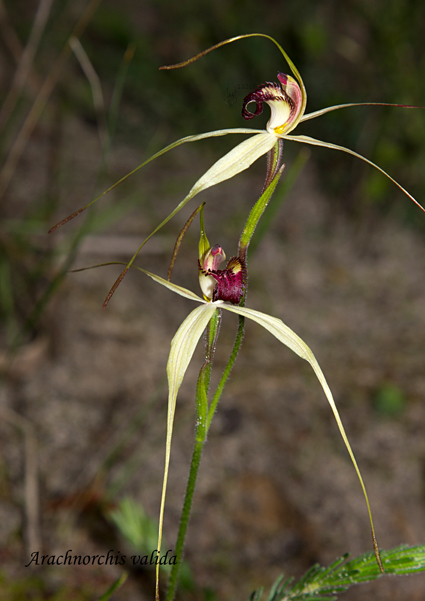
Claire Chesson’s Arachnorchis valida (common name Robust Spider Orchid) was the winning photograph for August.

The name Arachnorchis valida was not validated until 2002; synonym Caladenia valida. Previously it had been included under Caladenia huegelii (a Western Australian species) and Caladenia reticulata.

A. valida grows in sandy or sand over red clay soil, in sheltered clearings within heathy woodland or mallee but within a very restricted and disjunct distribution on Fleurieu Peninsula and Kangaroo Island in South Australia; and Otway Plain, Victoria. Rated Endangered in South Australia, it is not listed nationally.

Although A. valida shares some similar features with A. reticulata (ie 1 to 2 flowers, clubbed sepals, calli on the labellum) it also has quite distinctive features (see chart below) that help to differentiate between the two as they can sometimes be found growing together.

Comparison of A. valida and A. reticulata

Features

A. valida

A. reticulata

Pollinating wasp Phymatothynnus pygidialis Phymatothynnus victor
Leaf Felted Leaf – dense, short hairsSemi erect Very long silky hairs; purplish at the baseErect
Flower Stem Taller – 40 cm, hairy 30 cm, green & purplish red with long silky hairs
Flower Size Though variable, larger – 7 cm 5 cm
Flower Greenish when first opened fading to white or cream as the flower matures Red-brown
Perianth Stiffly spreading – broad based sepals; backswept petalsNo stripes Dorsal sepal erect; perianth spreading downwardRed stripes
Labellum Can be red but without veining Red with veining


NB: November Picture Competition Theme – Orchids and Insects

See the 2014 April Journal for hints of photographing orchid pollinators.

References:

http://www.rbg.vic.gov.au/dbpages/dev/vicflora/index.php/viclist/name/4677 accessed 4th September 2014

Threatened Species Profile Fact Sheet Caladenia valida Department for Environment and Heritage, South Australia

International Plant Name Index – http://www.ipni.org/

Personal communications with Claire Chesson

South Australia’s Native Orchids DVD 2011 Bates

Spider-orchids the Genus Caladenia and it Relatives in Australia CD 2011 Gary Backhouse


Orchid Etiquette – Tread Carefully

An important first lesson to learn when out orchid hunting is to watch where you put your feet.  In this video the Orchid Hunter explains the how and why for watching where you step.

Related Article

Protect Our Orchids – Stay On the Path

Delicate Dwellers in a Harsh Environment

So fair, so sweet withal so sensitive,
Would that the little flowers were born to live,
Conscious of half the pleasure which they give”

I found this quote of Samuel Taylor Coleridge in A Collection of Australian Wildflower Illustrations by Patricia Weare 1984.  The only text for the painting’s section were for identification but at the end of the Orchid section there was this one poem.  It was appropriately placed as one could easily substitute the word orchids for flowers.

So fair, so sweet withal so sensitive,
Would that the little orchids were born to live,
Conscious of half the pleasure which they give”

The exquisite paintings of Patricia Weare combined with this quote do homage to these dainty plants of our Australian bush. It is a reminder that though at times it can be seen as harsh, there is in these jewels a hidden delicateness and gentleness of the bushland.

Petite point work showcasing the delicacy of our South Australian Orchids; worked by Lorraine Badger; Design by Jan Woodman from her book 'Australian Wildflowers for Embroiderers'
Petite point work showcasing the delicacy of our South Australian Orchids; worked by Lorraine Badger; Design by Jan Woodman from her book ‘Australian Wildflowers for Embroiderers’


Australian Orchids & the Doctors they Commemorate Part 10 of 20

Charles Brightly Prentice (1820 – 1894)

A Brisbane surgeon, naturalist and botanical collector, a member of the Medical Board of Queensland, and an expert on Australian ferns.

Orchid Species:

Bulbophyllum prenticei

Synonyms: Dendrobium prenticei, Davejonesia prenticei

Bananas Trigger Flowering of Orchids


Some native terrestrial orchids only flower in the season after a bushfire.  They are stimulated by the hot gases given off during the fire.  One of those gases is ethylene.  Bananas are shipped down from Queensland to the southern states of Australia as green bananas to stop fruit fly outbreaks.  On arrival they are put in sealed rooms and exposed to ethylene gas.  The bananas ripen a few days later.  Traces of ethylene remain in the banana skin.  Overripe fruit also emits ethylene gas.  Orchid flowers do not last long if ethylene is present in a closed glasshouse.

We know that dormant tubers exposed to ethylene often flower the next season.  The best example is the Hare orchid Leptoceras menziesii.  In summer I put dormant tubers in a small dish in a plastic bag with a banana skin and seal the bag with a rubber band.  The skin may go mouldy so should not touch the tubers.  I leave the bag inside my shed for about 2 weeks then remove the tubers and pot them up.  The exposed plants make leaves almost twice as large as normal tuber leaves.  This procedure should not be carried out with the same plants the following year as they may get exhausted and die out.  I have found results with other shy flowering species are not so reliable.  Maybe they need a stronger does of ethylene.

Article by Les Nesbit

Banana & Banana PeelVol 38 No 5 June 2014

NOSSA Journal

Australian Orchids and the Doctors they Commemorate Part 6 of 20

Archibald Menzies (1754 – 1842)

A British navy surgeon who circumnavigated the globe from west to east with Captain George Vancouver, in the tumultuous voyage of 1791 to 1974, explored extensively in south-west Western Australia, and was later president of the Linnean Society of London; his name is recorded in the names of banksias (including the firewood Banksia [Banksia menziesii]), orchids and mosses of the King George Sound hinterland which record his service to Australian botany.

Orchid species: Leptoceras menziesii (=Caladenia menziesii)


This orchid is the emblem of Native Orchid Society of South Australia