Les Nesbitt’s Culture Notes from the October 2019 Journal
The days get gradually longer, hotter and drier this month. In a dry year there may be no useful rain in October. Keep up the watering while leaves remain green. Aphids can infest flower spikes so be on guard. Break off the tops of old flower spikes to discourage these pests. Microtis species flower this month.
Complete tuber removal by the middle of the month. These pots will have to be kept watered as long as the leaves stay green, hopefully well into November, to give time for additional tubers to form. Group these pots together to make watering easier. Diuris punctata plants may not die down until December.
Some seed pods will be ready to harvest usually on a warm day. Pick them as the ribs start to change colour from green to biscuit and before they split open and release the seed. Place the pods in paper envelopes & store inside in a dry place until sowing time next autumn. The cauline autumn flowering greenhoods will go dormant so once the leaves go yellow let these pots gradually dry out completely.
Sort out which pots to repot in summer. Stand small pots in a larger pot to denote those to make a show pot for next year. This applies to colony forming species which are expected to multiply.
Continuing Les Nesbitt’s notes from the NOSSA Journal, this month he reminds us that not only is it a busy month but it is the month of the NOSSA Spring Show.
September is the busiest month of the year in the terrestrial house. apart from orchid shows every weekend there are numerous tasks to perform. The days are getting longer at a rapid rate. Day length increases by 2 hours in the 6 weeks from the 1st Deptember. Equinox is about the 21st September.
Early Spring weather is changeable from cold, windy & wet to warm & sunny. Give plants as much sun as possible as new tubers are developing rapidly. Hand watering may be necessary if there is no rain so get the hose out of winter storage. Do not let the post dry out this month. There are lots of flowers everywehere. Take photos as some flowers are fleeting and may only last one day. Different pollinators are about for the more colourful terrestrials that start flowering in spring.
Prepare your flowering plants for the NOSSA Spring Show. It is fun to put in a display even if you only have one or two plants. You learn a lot from other growers. We certainly need new exhibitors each year. Seek new species to add to your collection at the NOSSA Spring Show. Be there at 10am Saturday morning for the hard to get species which are always in short supply.
Spring is an ideal deflasking period but get it done in the first 2 weeks to give sufficient growing time to harden the plants and for tiny seedling tubers to form before the summer dormancy.
Notes on Tuber Removal
Start tuber removal after the middle of the month. In a wet year you may have to move pots under cover a week earlier to dry out a bit before knocking them out. working with mud is a real pain and not recommended. Use this method to propagate the slow multiplying terrestrials that are amenable. those recommended for slow multiplying are Diuris (punctata & behrii), and rufa group Pterostylis (cycnocephala & biseta).
Knock out the pot and carefully remove most of the soil from the plant. Find the new tuber which is usually whiter smoother than the old tuber. Hold the junction of the old tuber and plant stem firmly with one hand and grasp the new tuber with thumb & finger of the other hand. Twist & pull the new tuber which will separate from the plant. If the old tuber and leaves break apart you have stuffed up. Repot the plant & old tuber and water the pot. The new tuber can be buried in the same pot or potted up separately in another pot. Keep the plant watered for at least six weeks or as long as the leaves stay green. The plant may form one or two small new tubers before going dormant. In January you can repot and see how well the method worked.
The following article has been adapted from the 2019 July Winning Photograph
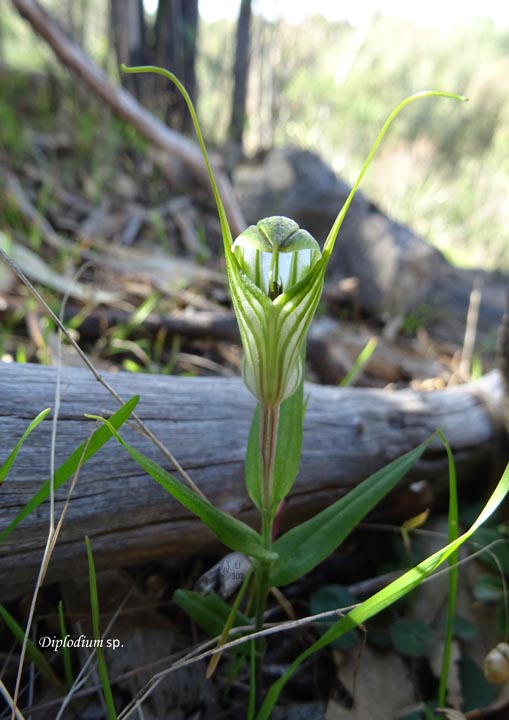
The July competition resulted in a draw. This article will concentrate upon only one of the winner’s – Lisa Incoll’s photograph of a Diplodium sp. found in the Southern Lofty Ranges.
Sometimes images are sent through unnamed or with only the genus named as in the case of Lisa’s picture. Unfortunately, it is not always possible to determine the identity from only one photograph beyond the genus level. In this case it can be seen that it is a Pterostylis but since the introduction of a segregate genera it is possible to narrow it down further to Diplodium sp.
Since there are two main Diplodium found in the Adelaide Hills (D. robustum and D. sp Adelaide Hills), I thought it would be a good opportunity to compare these two species.
The phrase name D. sp Adelaide Hills is used to distinguish it from D. alatum (syn. Pterostylis alata) which is considered to be endemic to Tasmania. The mainland species P. striata was previously known as P. alata. The eFlora-SA, the Adelaide Herbarium online key and census of the SA Flora has D. sp Adelaide Hills listed as P. alata (syn D. alatum).
D. sp Adelaide Hills and D. robustum share many similar feeatures. In the dichotomous fey found on the eFlora-SA, the separation between the two is primarily based upon size. D. sp Adleaide Hills is generally a taller-stemmed plant with a smaller flower and smaller, more slender cauline leaves. D. robustum is mainly a larger flower on a shorter stem. However there is an overlap between D. robustum and small specimens of D. sp Adleaide Hills which can make determination of species difficult.
Based upon the descriptions and the key from eFlora-SA, Orchids of South Australia (1990) and South Australian Native Orchids (2011), the following table shows the similaritites and differences between the two species. For completeness, shared features (highlighted in bold) are also included.
Diplodium robustum (syn. Pterostylis robusta)
Diplodium sp Adelaide Hills (syn. D. alatum, P. alata)
Plant Height
5-20cm tall (usually less than 10cm tall); robust stem
8-25 cm tall; slender stem
Sterile plants
Yes
Yes
Leaves
6 – 7 ovate or elliptic-ovate (ie range from oval to egg-shaped) leaves in rosettes on long petioles
3 – 8 ovate leaves in small rosettes on long petioles
Leaf edges
Smooth
Flowering Plants
No rosettes or basal leaves
No rosettes or basal leaves
Cauline Leaves
Alternating leaves clasping the base & increasing in size from the base upwards. Acuminate (long drawn out point)
Alternating leaves clasping the base & increasing in size from the base upwards. Acuminate
Broad (up to 8mm wide) lanceolate serrulate (tiny teeth) cauline leaves more than 3cm long
Slender lanceolate, cauline leaves less than 3cm long
FLOWER
Blooms can last up to 8 weeks in sheltered places
Delicate flowers can soon collapse with strong drying winds
Inflorescence
Singular flower
Singular flower
Colour
Bright green & white with deeper green, longitudinal stripes
Pale-green or white with darker striations
Galea
Erect; bulbous near the base
Erect; bulbous near the base
Length 25 – 45 mm; diameter more than 20 mm; gradually curved forward at the apex
Length 20 – 25 mm long; Diameter less than 18 mm; gradually incurved
Dorsal Sepal
Ends in a long fine point to 5 mm long
Apex blunt; ends in a short fine point
Petals
Blunt
Blunt or acute
Lateral Sepals
Erect; conjoined basally; distally, the tips produced into long filiform erect points, embracing the galea & greatly exceeding it
Erect; conjoined basally; distally, the tips produced into long filiform erect points, embracing the galea & greatly exceeding it
Sinus (region where lateral sepals separate)
Flat, with a wide, shallow central v-notch; protruding in a shallow curve whenviewed from the side
Narrow sinus, with a notch in the middle; not bulging
Labellum
Movable claw; nearly straight
Movable claw; nearly straight
Dark green
Greenish
Erect potition
Recaches height of the column
Slightly exceeding the height of the column
Column
Column erect
Column erect
Habitat
Forms small to extensive colonies
Forms small to extensive colonies
in rocky places; forest or scrublands
in rocky or shady locations; forest or forest heathlands
Regions
Mt Lofty Ranges
Mt Lofty Ranges
Flinders Ranges; Eyre Peninsula; Yorke Pensinsula; Upper South East
Kangaroo Island; South East; possibly Eyre Peninsula
Rainfall area
Greater than 250 mm
Greater than 600 mm
Flowering Time
May – September
May – July
Of course, as these two hybridise, that will complicate things, Hybrids will have characteristics of both parents but, with hybrid vigour; and vigour is one of the separating features between the two!
Following the success of 2019 NOSSA calendar, we are continuing with the same format of inviting people to vote for the twelve orchids that they would like to see in the 2020 calendar.
All the entries are South Australian orchids that were from the NOSSA monthly photograph competition.
To enter:
Select the numbers corresponding to the twelve images that you would most like to see in your calendar
Email your twleve votes – nossa.enquiries@gmail.com (Subject Heading – Calendar)
Voting closes on Friday 9 August 2019
The results will be collated to determine the twelve most popular images that will go into the calendar. We plan to have the calendars available for purchase at the NOSSA Spring Show, September.
If you would like more details or see the images in a higher resolution, use the above email address to contact NOSSA.
These calendars make great gifts to those who love flowers and are greatly appreciated by orchid enthusiasts not connected to a club.
Shane Grave’s winning photograph for April was the spring flowering Caladenia plicata which is endemic to the South West of Western Australia.
Caladenia is a very large genus with over 330 species, 39 of these currently unnamed. In addition, there are 58 named subspecies and varieties. Caladenia plicata would belong under the subgenus Calonema or the segregate genus Arachnorchis which, although not generally recognised by State herbaria is commonly accepted by many amateur enthusiasts. Yet even this subdivision is still large with 192 species. As a result, some authors have created further groups/complexes, for example C. dilatata complex, C.longicauda complex, etc. However, according to Andrew Brown, C. plicata doesn’t seem to fit neatly into any of these categories, although David Jones does include it within the clubbed spider orchids.
Various authors consistently refer to the labellum as being unusual. In Fitzgerald’s formal description (1882) he states that the labellum tip is “recurved so as to become plicate and touch the under surface of the disc”. Plicate means to fold. The labellum tip of many other Arachnorchis species are known to curl under but none fold under in the way that this species does. The sharp fold with the spreading horizontal fringed margins (edges) combined with a central band of tall dense calli (wart-like structures) gives a distinctive shape reminiscence of a crab, hence the common name Crab Lipped Spider Orchid. The effect of this is best seen from a front, rather than a side, view.
The very mobile labellum is sufficient to identify this species, but it is also possible to identify when in bud “due to the prominent short osmophores (clubs) on the sepals”. The sepals narrow halfway along to form thick brown clubs and when the flower is open both the lateral sepals and petals are downswept. This is clearly seen in Shane’s photograph.
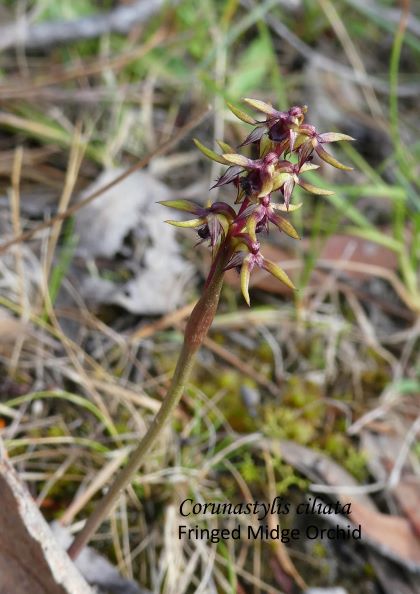
The winning photograph for March 2019, was Corunasylis ciliata (syn Genoplesium ciliatum). As with so many orchids, it has undergone a few name changes. Originally Prasophyllum, then Genoplesium and currently Corunastylis
Although Genoplesium was split into two with only one species remaining in Genoplesium and the others placed into Corunastylis, this split has not been accepted by the everyone. For example, eflora of SA and PlantNET use Genoplesium whilst VicFlora uses Corunastylis.
Whilst researching C. ciliatum I came across images of Prasophyllum spp. being misidentified as Corunastylis spp. and as it was originally described in Prasophyllum it seems appropriate to examine the similarities and differences between the two genera.
In South Australia (SA), the most obvious difference would appear to be size but across the rest of the country some Prasophyllum species potentially can be similar in size to the much smaller Corunastylis, although Corunastylis species are never as large as many of the Prasophyllum species.
Some of the shared features of the two genera are
multi-flowered on a single stem
single tubular leaf
flowers non-resupinate, that is the labellum is above the column and the dorsal sepal is below (the only other non-resupinate flowered orchids in SA are Gastrodia, Caleana, including Paracaleana, and Cryptostylis subulata)
Grow as scattered individuals
Prasophyllum
Corunastylis
Size
Tends to be a larger plant (up to 150cm), but can sometimes be as small as Corunastylis
Always a small plant (maximum no more than 90mm)
Leaf
Leaf sheaf opens well below the inflorescence (flower head)
Leaf sheaf opens at the base of the inflorescence.
Leaf
Often withered at flowering
Not withered at flowering
Labellum
Immobile
Mobile
Usually curved backwards (recurved) resulting in an upright appearance of the flower.
Not recurved resulting in a more drooping appearance of the flower
Season
Mainly spring flowering
Mainly autumn flowering
References:
Jones DL A Complete Guide to Native Orchids of Australia including the Island Territories 2006
Prasophyllum and Corunastylis descriptions from VicFlora, accessed 1 May 2029
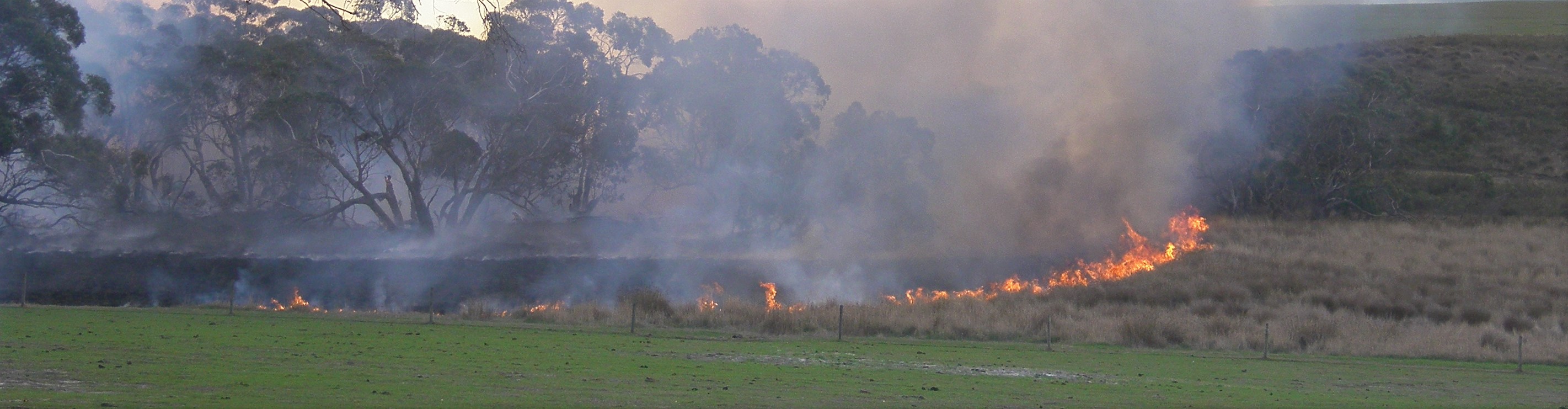
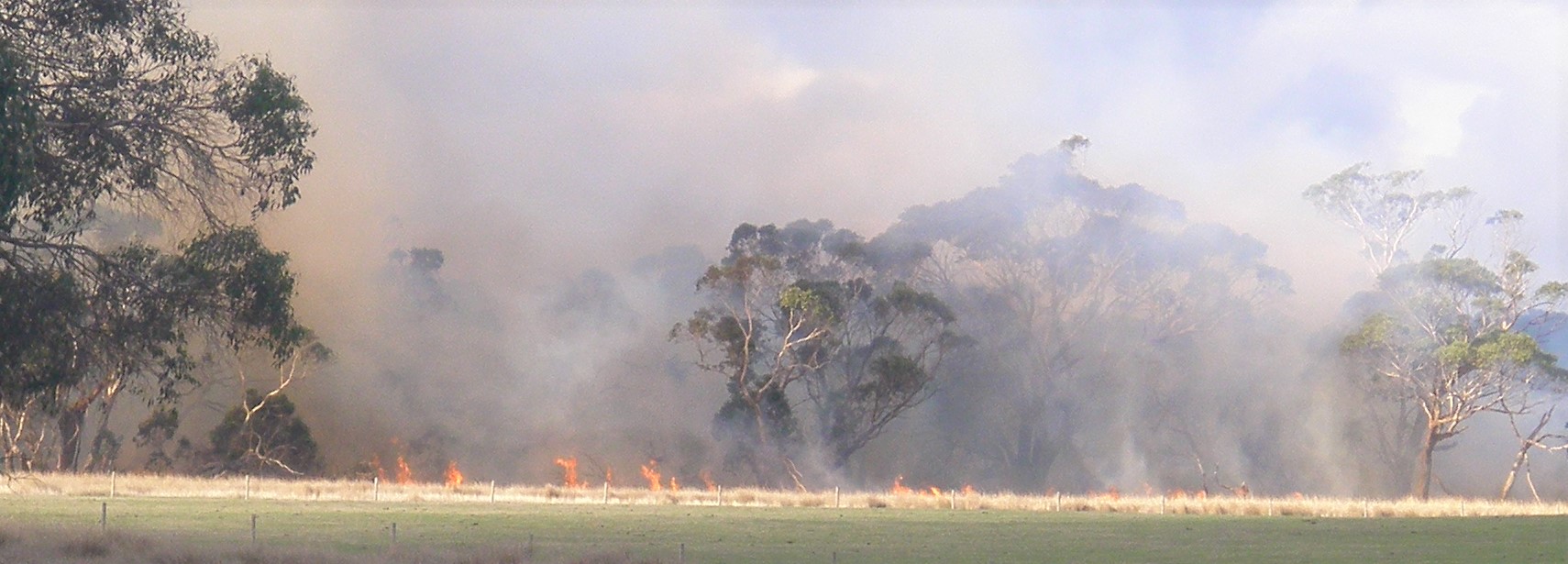
Over the years, we have published several blogs concerning orchids and fire. At the beginning of the year, Renate Faast spoke at the NOSSA February meeting. John Eaton wrote an extensive summary of her talk which is reprodued here as it appeared in the 2019 March edition of the Native Orchid Society of South Australia Journal, Volume 43 Number 2.
Renate’s take home message was that we cannot make sweeping statement about orchids and fire, each species responds differently and we need to take this into account when planning proscribed. This was something that Dr Michael Duncan also brought out in his 2009 report following the Victorian Black Saturday fires – see Orchids and Fire.
An interesting aside to Renate’s research was her observations of white-winged choughs – see the paragraph Not All Relationships are Friendly.
Guest Speaker Notes John Eaton
At our February 26th meeting, thirty NOSSA members were treated to a stimulating talk by Dr Renate Faast from the University of Adelaide – our first guest speaker for 2019.
Renate acknowledged the support her project received from an Australian Research Council (ARC) grant under the Linkage Program which promotes national and international research partnerships between researchers and publicly funded research agencies – in Renate’s case – support from the University of Adelaide, SA Museum, SA Water, Forestry SA, The Australian Orchid Foundation, the Nature Foundation of SA, The Environment Institute and the SA Government.
Mixed Messages
Renate had been getting mixed messages from the field observations people had made following prescribed burning or bushfires. This ARC grant enabled her to study the impacts of prescribed burning on native terrestrial orchids.
Renate found that the response of orchids to controlled burns suggests that there are winners and losers amongst orchids: Naked sun orchids responded really well to a controlled burn with 6 plants growing to 83 plants. REALLY good news for that species of orchid but the reality is more complicated than that and this study suggests that there are no generalisations that can be drawn with any confidence about regeneration following prescribed burns or bushfires! In view of the complex interactions between orchids and other plants, and between orchids and bird-and-animal grazers, orchids rely on so many things to go right in order to set seed and recruit new plants into a population. With the exception of a few self-pollinating species, most orchids rely on pollinators for seed production. For non-clonal species, releasing seed is the only way to ensure the species’ long-term survival!
Not all relationships are friendly
Over 80% of orchid flowers had been grazed at some sites. No flowers means no seeds. Renate’s film clips embedded in her PowerPoint dramatically showed the extent of orchid predation by birds such as white-winged choughs and currawongs. They picked off the flowers quite deliberately, leaving behind an intact stalk. Five flowers were grazed every 10 sec (that’s at a rate of 30 flowers/min!) And there are all the other orchid grazers such as roos, deer and rabbits as they move through a patch, often only grazing part of the stem, in a far less targeted and thorough way, compared to these birds. All of these interactions play a key role in whether seeds are released to keep the population viable.
The Mount Bold Fire prompt
While engaged in her PhD research into reproductive ecology of spider orchids, Renate heard that a fire at Mt Bold had led to a “profusion” of Caladenia rigida flowers! The Victorian bushfires had also prompted changes to prescribed burning practises in South Australia. The combination of these two events led Renate to explore the effect of fire on the interactions orchids have with other plants and animals – leading her to ask such questions as:
Does fire promote the flowering of spider orchids (e.g. Caladenia rigida, C. behrii, C. tentaculata) and Glossodia major?
If there are more flowers following fire, will they be pollinated and will they set seed?
How does burn timing influence this response?
Do all species respond in the same way?
These are all critical issues to consider if we are to ensure a self-sustaining orchid population in the future.
Seasonal Factors
There are seasonal influences on the effects of a burn. The response to a summer bushfire could be quite different from cooler season burns in autumn and spring. And even if some orchids are stimulated to flower, it doesn’t necessarily mean that they will end up producing and releasing more seed – which is what really matters for the long-term survival of the orchid population.
Orchid monitoring was carried out in several sites and included 1 autumn, 3 spring burns and 4 adjacent unburnt control sites across the Mt Lofty Ranges (NE of Adelaide). Renate followed the fate of 4 species by tagging up to 150 plants for each species. Renate’s presentation focused on the Millbrook sites where she studied C. rigida and G. major before and after a prescribed burn conducted in Autumn 2013. Unfortunately and fortuitously, her control site also became a bushfire site following the Sampson Flat Fire in January 2015. Fortunately, the Autumn burn site was not affected by the Sampson Flat Fire, so became something of a control site! Renate found that 97% of C. rigida did not emerge after the Autumn prescribed burn compared with 8% at the unburnt control affected site. Flowering was not promoted and no tagged plants flowered. A similar but less severe effect was recorded for Glossodia major.
Will these orchids recover in subsequent years?
Annual monitoring up until 2017, revealed that over one third of C. rigida plants did not re-emerge for 5 consecutive years after the autumn burn. Unfortunately, these plants are likely to have been killed by this burn, probably because the fire was conducted as the orchids were about to emerge. Interestingly, spring burns did not have a detrimental impact on the orchids studied, however, a proportion (18 – 28%) of C. rigida plants may also have been killed by the summer bushfires.
One of the more striking findings out of this research was the large increase in pollination for C. rigida following the bushfires – up to 65% of flowers (protected from grazing) produced a seed pod – an unprecedented rate for Renate’s research. It seems that in the sparse blackened landscape with very few other plants in flower, C. rigida had most of the attention for pollinators. However, the removal of understorey cover also meant that grazing rates were higher after the fires, and most of the flowers that were not protected inside cages were eaten. This meant that there was no actual benefit to the orchids, as there was no increase in seed release. All of these responses were short-lived, and by spring 2016, pollination, grazing and seed release rates were much the same as before the fires.
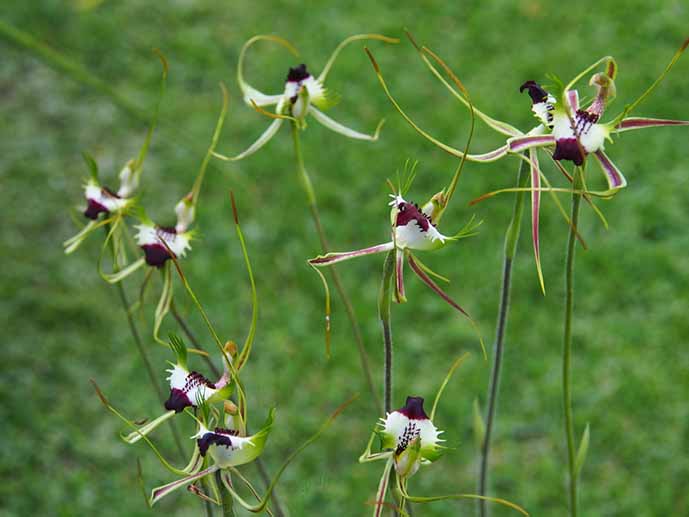
Arachnorchis behrii (Pink Lipped Spider Orchid)
Renate’s Conclusions:
All species are not equal – fires may benefit some species others don’t fare so well; All fires are not equal; Autumn burning may be detrimental to SOME species; Bushfire may benefit seed release, only if grazing pressure is low – and Flowering was not promoted by any fire. More research is needed on other species, and in different habitats.
Therefore, Renate pointed out that no generalisations can be made about her observations!
Some good news that has come out of this research:
Burn practices are changing, with land managers taking into account the timing of prescribed burns, and bestattempts are made to avoid late autumn burns in areas containing threatened (early-emerging) orchids;
Impacts of fire on reproductive success appear to be short-term
Renate’s hope is that one day, the message will get out there that while some orchids can respond well to burning, this isn’t the case for all species – and that we still have a long way to go before we will really understand the complexities that underlie these different responses with any degree of predictability. Renate also warned that over a third of SA’s orchids are threatened with habitat loss, weed invasion, pollinator loss, grazing and fire regimes.
Renate’s address was followed by a flurry of burning questions and observations. It is hoped that we NOSSA members will use Renate’s conclusions to guide and inform our own anecdotal field observations and test our underlying assumptions and prejudices about the effects of burning on orchid viability – especially as we enter an unprecedented and potentially species-destroying period of human – induced global warming.
The following article by Les Nesbitt is taken from the Native Orchid Society of South Australia Journal, May 2019, Volume 43 No 4. The article has been slightly modified with editorial changes in black.
The majority of terrestrials will have leaves showing by month’s end. A few stragglers like South Australian Corybas and Western Australian Cyrtostylis huegelii will not appear until June so do not panic yet.
Pterostylis truncata (little dumpy) flowers this month with a large flower on a short stem. This species is given a blue tag to denote watering from January otherwise there will be no flowers under Adelaide conditions.
Tasks for May
Move the Autumn flowering greenhoods under cover as the flowers open because they generally have tall thin stems that will bend over under the weight of rain drops on the flowers.
Rot can be a serious problem in May. Do not overwater if there is little rain; and inspect plants closely and often. The rot can be on the leaves or below ground. Look for plants that are not thriving and give them a gentle tug to see if there are any
Move infected plants away from healthy plants to a hospital area under cover. Water from below by standing the pot in a saucer of water. Keep the leaves dry. Good air movement and at least 5 hours sunlight a day are essential for the next 3 months.
The fast multiplying orchids will appreciate a weak dose of liquid fertilizer once a month until spring.
Weeding is a chore this month as weed seeds germinate after rain. Pull them out while they are small maybe even with the help of tweezers.
Virus
Inspect plants closely for virus as the symptoms show in the emerging leaves. All plants can be infected with viruses of which there are many. There is no cure for virus. Infected plants must be destroyed to prevent virus spreading to healthy plants via sap sucking insects or human activities spreading sap. Infection during the growing season does not show up in the leaves until the following year. It is difficult to eliminate virus entirely hence the need to be vigilant.
Signs of Infection
Virused Pterostylis leaves may have light & dark green blotches or be thicker than normal and look crippled or turned up at the edges.
Another sign to look for are pointed pimples on Caladenia and Pterostylis
Virus is harder to spot on the narrow leaves of Diuris and Thelymitra. Healthy leaves are straight with almost parallel sides. Leaves that have kinks or are curved probably have a virus. Variegated blotching may be present in severe cases.
Managing
If only one or two plants, in a community-pot, show symptoms they can be lifted out soon after the leaves appear and before side stolons form.
A tool can be made from wire to do this. Bend a foot on the bottom of the wire and a loop handle on the other end.
Push the foot into the mix alongside the infected plant, rotate the foot under the tuber and lift the plant out.
At potting time (when tubers are dormant)
A sieve is a great time saver during repotting but at the same time an excellent way to spread virus.
Do not shake the sieve when tubers are present.
Pick out the tubers as you see them and drop them into a smaller kitchen sieve sitting in an ice-cream container of water. The sand and dirt wash off and falls through leaving clean tubers behind.
Use a jet of water to remove any remaining dirt.
Pat the lumps of mix in the big sieve to crush them to expose any tubers.
Shaking the sieve is the equivalent of sandpapering the tubers, a sure way to spread virus.
If several plants are virused it is better to dump the whole pot, soil and all.
Refuse new plants that look suspect.
ALL EFFORTS SHOULD BE MADE TO ELIMINATE VIRUS FROM AN ORCHID COLLECTION.
This article is a completion of the Thelymitra Column article which appeared in the NOSSA Journal, Volume 42 No 8 September 2018. Click here for Part One.
The first part looked at the features and terms used by botanists to describe various parts of the column, a major identification feature of the sun orchids.
And as previously stated we cannot physically dissect an individual flower, but we can make use of photographs to spot the various features.
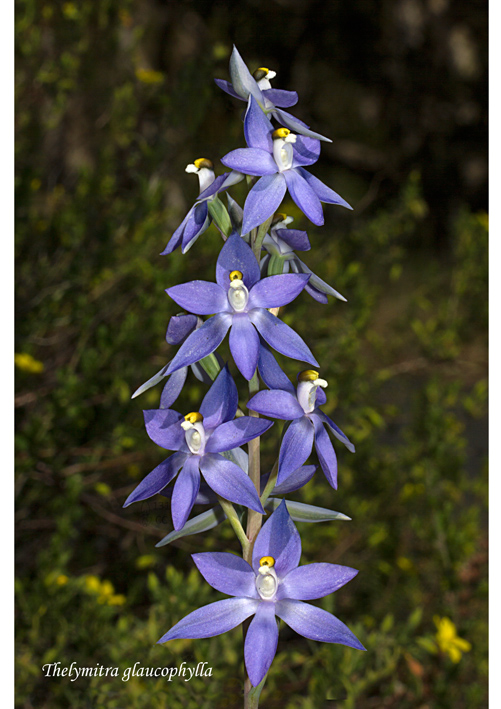
The diagram below is that of T. nuda (based on the taxonomy of 1984) column whilst the photographs are that of T. glaucophylla column (as T. glaucophylla is one of the T. nuda complex). The column of these two are similar.





 Guest Speaker Notes John Eaton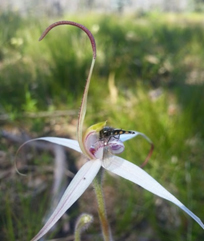



 NOSSA
NOSSA 