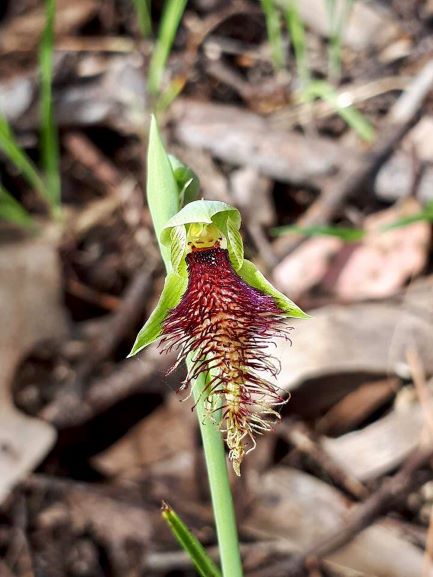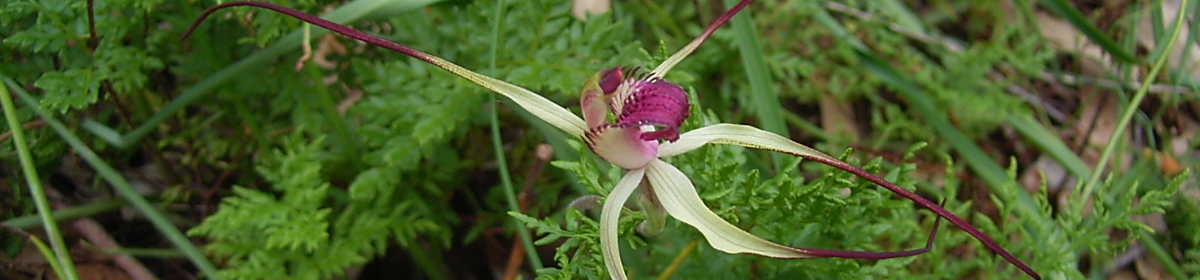
In 2017, Mark Bachmann of Glenelg Nature Trust spoke at NOSSA on The Hydrological Restoration of Glenshera Swamp, Stipiturus Conservation Park. See the article of his talk here. On 2025, Ben Taylor also from Glenelg Nature Trust gave a talk with an update of the restoration work at Stipiturus. See Ben’s talk here. These talks were both encouraging but it begs the question of what is happening to orchids in the swamps? Of which the first question is – what orchids are there?

In the blog on Mark’s talk, three swamp orchids were mentioned in the article but there are many more swamp species, as Bob Bates points out in the quote below from South Australian Native Orchids 2011 indicates.
In general, the orchid flora of bog, swamp, marsh or morass will be highly specific and although there is less than 0.1% of the state which could be termed swampy, some 20% of our orchid species are confined to such wet habitat. Put simply: all of the orchids of swamps are highly threatened as the swamps are either much sought after for grazing and cultivation or they are drained, as in hundreds of square kilometres of the South East.
Some 20 different classes of swamp can be recognised and some orchids are confined to just one microhabitat in these. For example, the tiney swamp helmet orchid Anzbas aff. fordhamii has only ever been seen on the mossy edges of small mounds in peat bogs! The genus Hydrorchis only frequents the sedgy edges of winter wet waterholes. It is something of a paradox that our driest state should have one of the world’s few aquatic orchids!
Some of the types of swamps Bob mentions in his disc are hanging bogs (perched on the sides of hills), sphagnum bogs, peat swamps, limestone swamps, sand swamps, tea-tree swamps, etc. So it is not surprising that the types of orchids associated with these habitats are also quite varied.
20% or one fifth seems a high figure for wetlands but depending upon the taxonomic classification it is feasible. A perusal through both Bates 2011 and June Niejalke’s 2022 Native Orchids of South Australia yields an interesting list of about 49 swamp associated species out of about 300 species.

| GENUS | IN SWAMPS | MARGINS (but not in) |
| Caladenia | C. congesta C. dilatata C. riparia C. venusta C. vulgaris | |
| Calochilus | C. paludosus | C. robertsonii C. herbaceous |
| Corybas | C. fordhamii | C. aff. diemenicus (syn Corysanthes arcana) |
| Cryptostylis | C. subulata | |
| Diuris | D. inundata | |
| Eriochilus | E. paludosus | |
| Genoplesium | G. nudum | |
| Microtis | M. atrata M. oblonga M. orbicularis M. rara | M. arenaria M. parviflora |
| Prasophyllum | P. murfetii | P. austale P. frenchii |
| Pterostylis | P. falcata P. lustra P. tenuissima P. uliginosa | P. melagramma P. nutans |
| Spiranthes | S. alticola S. elytra | |
| Thelymitra | T. aristata T. circumsepta T. cynea T. holmesii T. hygrophila T. lucida | T. abrupta T. antennifera T. cyanapicta T. flexuosa T. ixiodies T. x merraniae T. mucida T. orientalis T. pauciflora T. peniculata T. polychroma T. rubricaulis |
As can be seen most genera are represented in the swamp/margins list. Although two noticeable exceptions not represented were from the dryland Pterostylis segregate genera Hymenochilus and Oligochaetochilus.
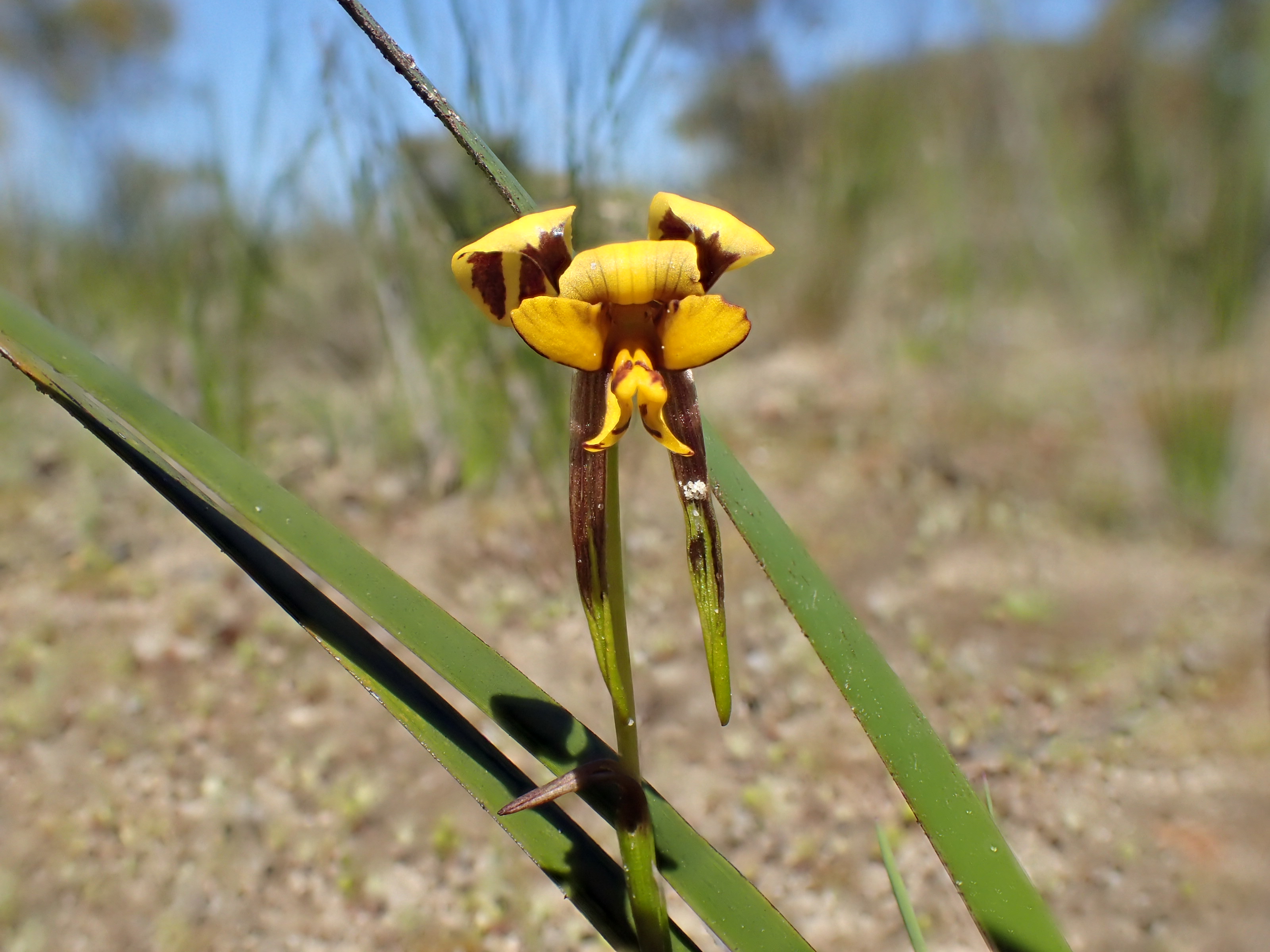
As a curiosity, it should be noted that one species Diuris palustris whose Latin name palustre suggests it should be swamp dwelling, is in South Australia not found in our swamps but instead is associated with grassland, heath and mallee. In contrast, in the eastern states, it is found in swampy depressions. This is in contrast with some South Australian swamp orchids, such Cryptostylis subulata, which in the eastern states, are found in low open forests. As is the case for Thelymitra cyanea, found on heathy hillside in Tasmania.
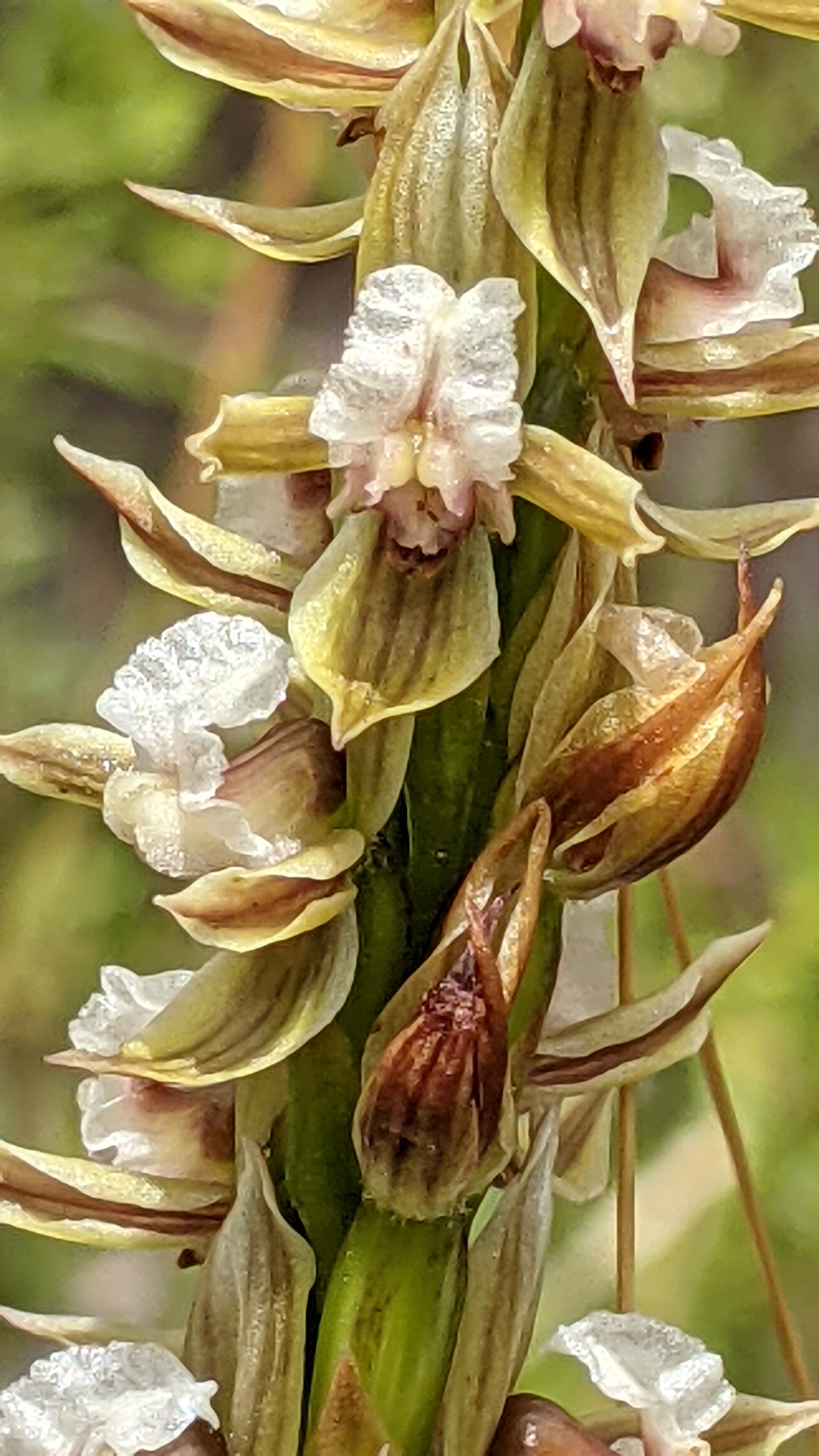
Swamps are significant for many different reasons. But considering that we are loosing so many of our orchid species, loosing swamps means loosing a significant number of our orchids. It is therefore encouraging to see the work of Glenelg Nature Trust in restoring swamps. Will it benefit our orchids? We hope so.