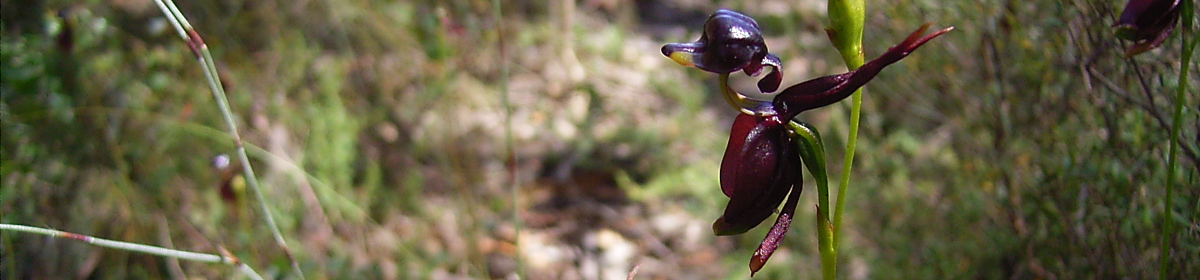
SWAMPED WITH Sth Oz ORCHIDS

In 2017, Mark Bachmann of Glenelg Nature Trust spoke at NOSSA on The Hydrological Restoration of Glenshera Swamp, Stipiturus Conservation Park. See the article of his talk here. On 2025, Ben Taylor also from Glenelg Nature Trust gave a talk with an update of the restoration work at Stipiturus. See Ben’s talk here. These talks were both encouraging but it begs the question of what is happening to orchids in the swamps? Of which the first question is – what orchids are there?

Thelymitra cyanea

In the blog on Mark’s talk, three swamp orchids were mentioned in the article but there are many more swamp species, as Bob Bates points out in the quote below from South Australian Native Orchids 2011 indicates.

In general, the orchid flora of bog, swamp, marsh or morass will be highly specific and although there is less than 0.1% of the state which could be termed swampy, some 20% of our orchid species are confined to such wet habitat. Put simply: all of the orchids of swamps are highly threatened as the swamps are either much sought after for grazing and cultivation or they are drained, as in hundreds of square kilometres of the South East.

Some 20 different classes of swamp can be recognised and some orchids are confined to just one microhabitat in these. For example, the tiney swamp helmet orchid Anzbas aff. fordhamii has only ever been seen on the mossy edges of small mounds in peat bogs! The genus Hydrorchis only frequents the sedgy edges of winter wet waterholes. It is something of a paradox that our driest state should have one of the world’s few aquatic orchids!

Some of the types of swamps Bob mentions in his disc are hanging bogs (perched on the sides of hills), sphagnum bogs, peat swamps, limestone swamps, sand swamps, tea-tree swamps, etc. So it is not surprising that the types of orchids associated with these habitats are also quite varied.

20% or one fifth seems a high figure for wetlands but depending upon the taxonomic classification it is feasible. A perusal through both Bates 2011 and June Niejalke’s 2022 Native Orchids of South Australia yields an interesting list of about 49 swamp associated species out of about 300 species.

Cryptostylis subulata (Moose Orchid)
GENUSIN SWAMPSMARGINS (but not in)
Caladenia
C. congesta
C. dilatata
C. riparia
C. venusta
C. vulgaris
CalochilusC. paludosusC. robertsonii
C. herbaceous
CorybasC. fordhamiiC. aff. diemenicus
(syn Corysanthes arcana)
CryptostylisC. subulata
DiurisD. inundata
EriochilusE. paludosus
GenoplesiumG. nudum
MicrotisM. atrata
M. oblonga
M. orbicularis
M. rara
M. arenaria
M. parviflora
PrasophyllumP. murfetiiP. austale
P. frenchii
PterostylisP. falcata
P. lustra
P. tenuissima
P. uliginosa
P. melagramma
P. nutans
SpiranthesS. alticola
S. elytra
ThelymitraT. aristata
T. circumsepta
T. cynea

T. holmesii
T. hygrophila
T. lucida
T. abrupta
T. antennifera
T. cyanapicta
T. flexuosa
T. ixiodies
T. x merraniae
T. mucida
T. orientalis
T. pauciflora
T. peniculata
T. polychroma
T. rubricaulis

As can be seen most genera are represented in the swamp/margins list. Although two noticeable exceptions not represented were from the dryland Pterostylis segregate genera Hymenochilus and Oligochaetochilus.
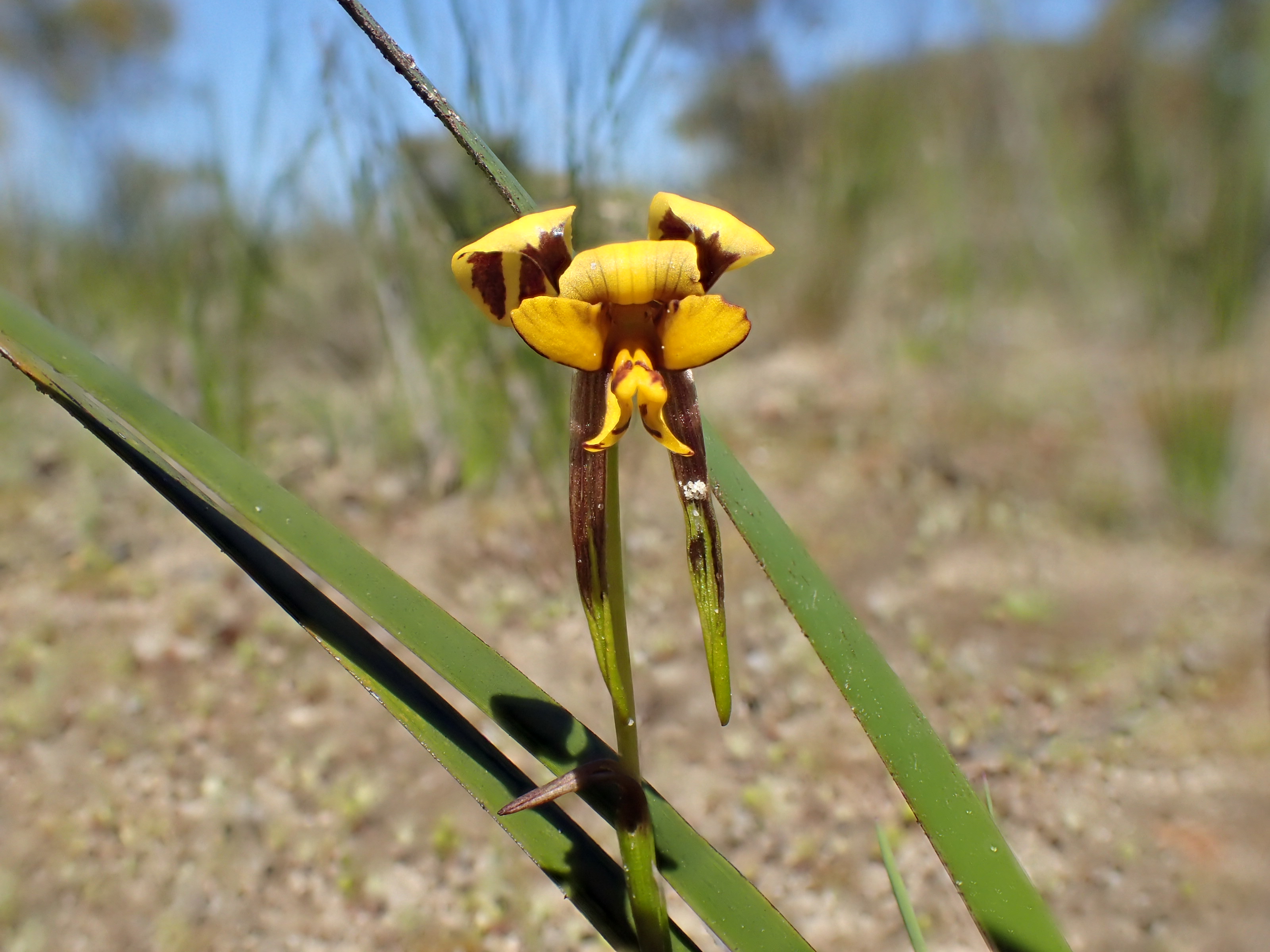
Diuris palastris

As a curiosity, it should be noted that one species Diuris palustris whose Latin name palustre suggests it should be swamp dwelling, is in South Australia not found in our swamps but instead is associated with grassland, heath and mallee. In contrast, in the eastern states, it is found in swampy depressions. This is in contrast with some South Australian swamp orchids, such Cryptostylis subulata, which in the eastern states, are found in low open forests. As is the case for Thelymitra cyanea, found on heathy hillside in Tasmania.
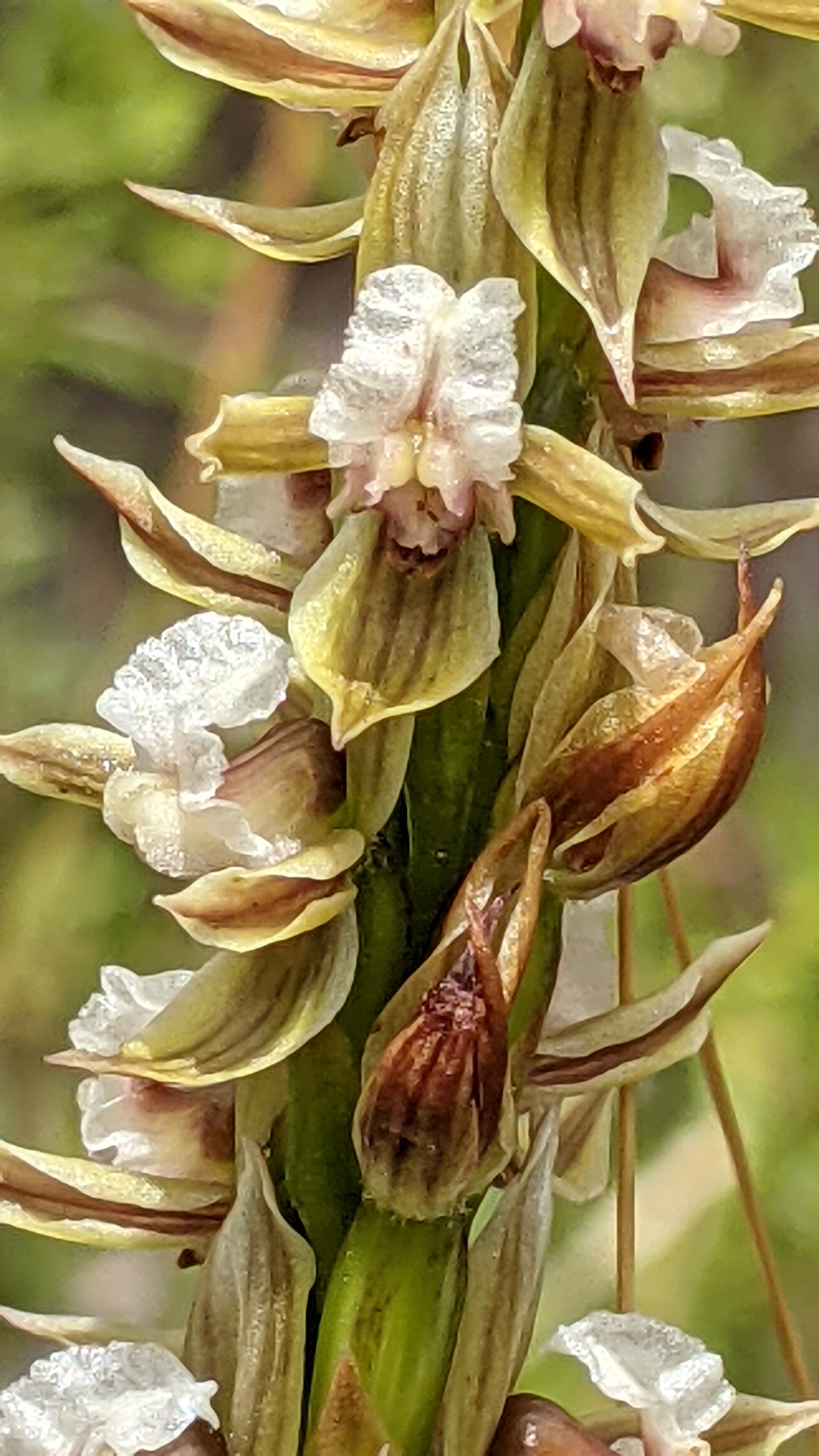
Prasophyllum australe - Kuitpo, January 2021
Prasophyllum australe – Kuitpo, January 2021

Swamps are significant for many different reasons. But considering that we are loosing so many of our orchid species, loosing swamps means loosing a significant number of our orchids. It is therefore encouraging to see the work of Glenelg Nature Trust in restoring swamps. Will it benefit our orchids? We hope so.
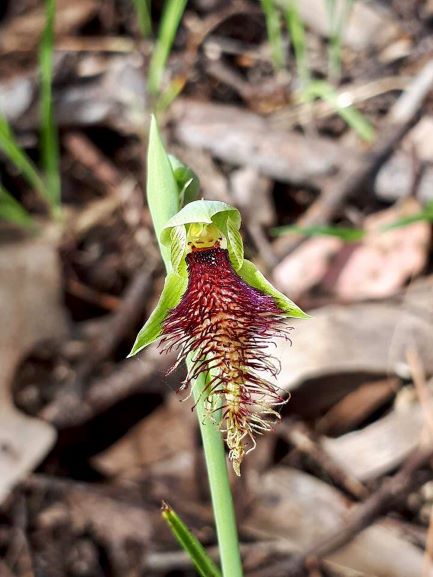
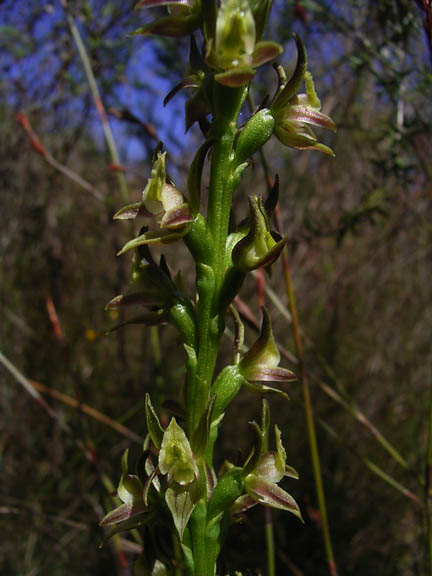
Calochilus robertsonii

Returning the Water

Each month the Native Orchid Society of South Australia has a special speaker. April’s speaker was Mark Bachmann from Glenelg Nature Trust. He spoke on the The Hydrological Restoration of Glenshera Swamp, Stipiturus Conservation Park.

At time of settlement swamps were common on the Fleurieu Peninsula but now they have almost all but disappeared. This has come about because of the clearing of land for farming beginning in the 1940s. There are now very few swamps left in the area. As a result in this region, the swamp orchids potentially face extinction.

BUT Mark’s talk was a good news story. In April, the Glenelg Nature Trust with the help of the Conservation Volunteers Australia (a Green Army program) began the work of reinstating the original creek by the judicious placing of regulating structures along the principal drain.

The good news is that the water returned as they were building the structures.

It was also a good news story because of the cooperation of different groups including a local land owner who was willing to have some of their land returned to swamp and no longer be available for their horses to graze.

We look forward to seeing the swamp refill and learning how the orchids respond.

Below are some of the orchids found at Stipiturus. Click on the images to go to the three articles documenting the work at Glenshera Swamp.

Thelymitra cyanea
Thelymitra cyanea

Cryptostylis subulata 008
Cryptostylis subulata (Moose Orchid)

Prasophyllum murfettii sm
Prasophyllum murfettii (Denzel’s Leek Orchid)

Spiranthes alticola

At this time of the year there are not many orchids flowering in South Australia but one that is just finishing is Spiranthes alticola. The genus Spiranthes, commonly known as Ladies Tresses, is found throughout Australia, Eurasisa and the Americas.The following description is an extract from South Australia’s Native Orchids 2011 DVD which is available from the Native Orchid Society of South Australi. 

Spiranthes alticola D.L.Jones

Swamp Spiral Orchid

Etymology: The name alticola means high dweller, referring to its distribution in Eastern Australia, in west Victoria and South Australia’s South East.  It also grows near sea level.

Synonyms: Previously included in Neottia australis R. Br., S. sinensis (Pers.) Ames and S. australis R.Br.


(These two pictures show the variation in colour.)

Description: Leaves 3-5, narrow lanceolate, shiny, erect at the base, to 15 cm long. Flower stem to 45 cm tall, slender, flexible, with several sheathing bracts.  The flowers are numerous in a dense spiral, pink with a white labellum, rarely all white.  Segments are 6-10 mm long, sepals somewhat triangular, petals lanceolate, together forming a short tube, the tips free and recurved, and the lateral sepals divergent.  Labellum with a broad, decurved crisped, pellucid mid-lobe, side-lobes erect small.  The flowers are faintly fragrant.

spiranthes-alticola-leavesrwl-92

(Leaves of Spiranthes alticola)

Flowering: Dec – Jan – Feb.

Similar Species: S. australis, S. sp. Late selfing-white.

Distribution: SL, KIx, SE; NSW, Vic, Tas.

Confined in South Australia to a few high rainfall, near coastal, often mountain locations, southward from the Adelaide Hills in the Southern Lofty region, extinct on Kangaroo Island, (one record only), and South East; also in New South Wales, Victoria and Tasmania.

Habitat: Restricted to peaty bogs and swampy creek-sides, often in locations that are inundated throughout winter; in some areas surviving in paddocks grazed by stock.

Distinguishing Features:  S. australis, which is from the eastern states and is not strictly a swamp plant, has smaller darker pink flowers with a narrow labellum.

  • The two South Australian forms treated here are regarded as distinct species as where they are sympatric they begin flowering at different times and do not intergrade. S. alticola is the more delicate of the two.

Notes:  The best specimens are found on mowed firebreaks adjacent to swamps.  When vegetative reproduction produces two clonal plants next to each other the spiral arrangement of one is often a mirror image of the other.  See Gallery.

Native bee pollinators work the spikes from the bottom upward but as the stigma becomes receptive well after the pollinia have matured this mechanism helps ensure outcrossing.

Plants do well in cultivation if kept moist over summer.

Conservation Status:

Status in Legislation: Not listed nationally, rare in South Australia.

Suggested Status: Rare in South Australia but more common in the Eastern States


March 2015 Winning Photograph

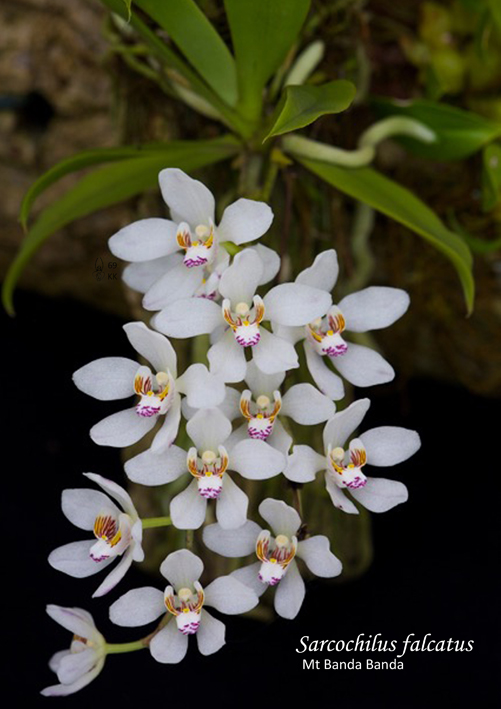
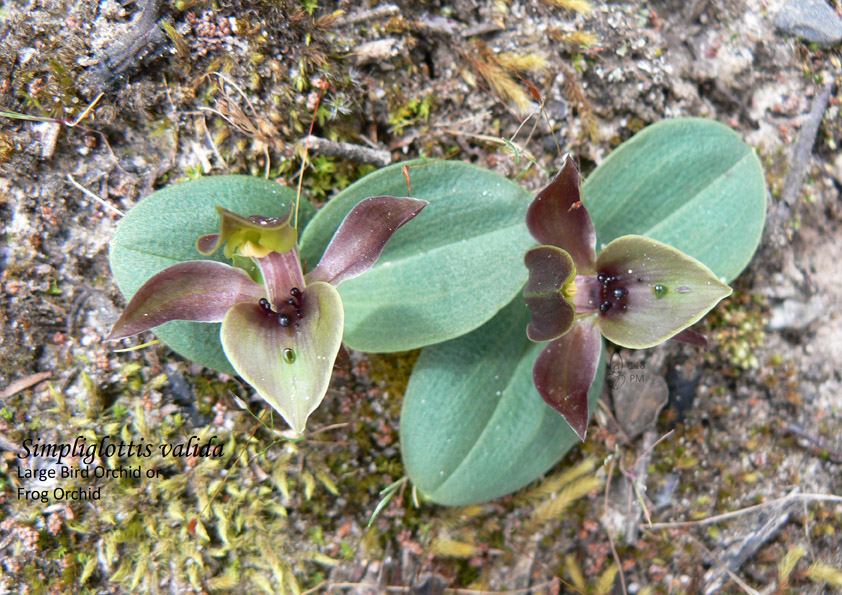
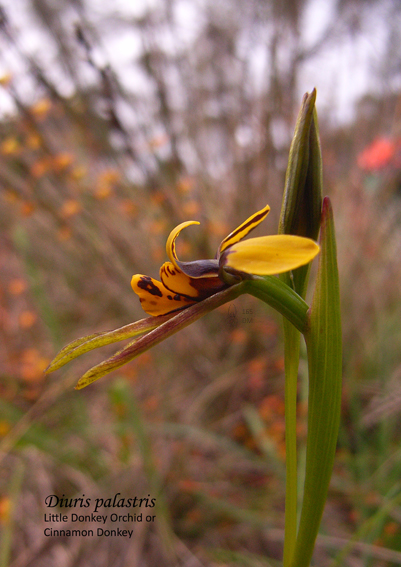
Three winners; three very different orchids but that is typical of Australian Orchids, there is no one species that you can point to and say that is a typical orchid as illustrated by the the winners which were Sarchochilus falcatus (Kris Kopicki), Diuris palustris (David Mangelsdorf) and Simpliglottis valida synonym Chiloglottis valida (Pauline Meyers).

Sarchochilus falcatus (common name Orange Blossom Orchid) is an epiphyte.  03 KK sm Sarcochilus falcatus Mt Banda BandaThe cultivated plant in this photo originated from the Blue Mountains just north of Macquarie.  Epiphytic/lithophytic orchids are found across northern Western Australia through the Top End and from a narrow band down the east coast to Tasmania; that is in all States except South Australia.  About a quarter of Australian orchids are epiphytes and despite the widespread distribution, 90% of epiphytic orchids are found primarily in the rainforests of northeastern Queensland.

S. valida (common name Large Bird Orchid or Frog Orchid) 03 sm PM Chiloglottis validaand D. palustris (common name Little Donkey Orchid or Cinnamon Donkey Orchid) are terrestrial, the larger of the two orchid groups.03 sm DM Diuris palustris  Terrestrials are mainly found across the southern part of the continent with some occurring in the north and tropics.  Their optimal habitat is the various types of sclerophyll forests found in Australia.

There is some distribution overlap but the two groups mainly occupy different habitats.

Concerning the habitat of the two terrestrials, S. valida ranges from tall moist closed forest to shaded places of drier open forests to sphagnum bogs and in the mature pine plantations of the South East.  Whereas D. palustris occurs in wet and swampy habitats in the Eastern states (hence it is named from the Latin palustre meaning swampy), in South Australia it is not so. Instead it is found in open terrain of grassland, grassy woodland, mallee and shrubland.

Some Odd Facts:

S. valida is a small ground hugging plant the scape (flowering stalk) of which elongates to 10cm or more after pollination.  Click on this video link to see these plants ‘talking’.  In New Zealand it is described as a vagrant having been introduced from Australia.

Sarchochilus falcatus is the most common and widely distributed species of this genus in Australia.  Occassionally it is lithophytic (grows on rocks). Though it had been rated Endangered and downgraded to Vulnerable in 2005, it is still under major threat from illegal collecting, trampling, water pollution, weeds and fire. New Zealand has epiphytes and the common name for them is Perching Orchids.

D. palustris is uncommon in South Australia and Tasmania; and rare in Victoria.  D. palustris was one of the subjects painted by Adelaide colonial artist and cartoonist Margaret Cochrane Scott in 1890s who had an affinity for native orchids.


References:

All internet references accessed on 31st March 2015

https://www.anbg.gov.au/cpbr/cd-keys/orchidkey/html/intro-c_habitat.html

http://anpsa.org.au/APOL19/sep00-1.html

http://www.nativeorchids.co.nz/Species/Simpliglottis_valida.html

http://data.rbg.vic.gov.au/vicflora/flora/taxon/4cebc1f9-38da-4c61-9c3c-37c2efc6da32

Mark Clements The Allure of Orchids 2014

http://www.iucnredlist.org/details/44392876/0

Bates 2011 South Australia’s Native Orchids DVD