Orchid Pollination Strategy for Corunastylis littoralis (Part One of Two Parts)

Part One – Attracting Pollinators

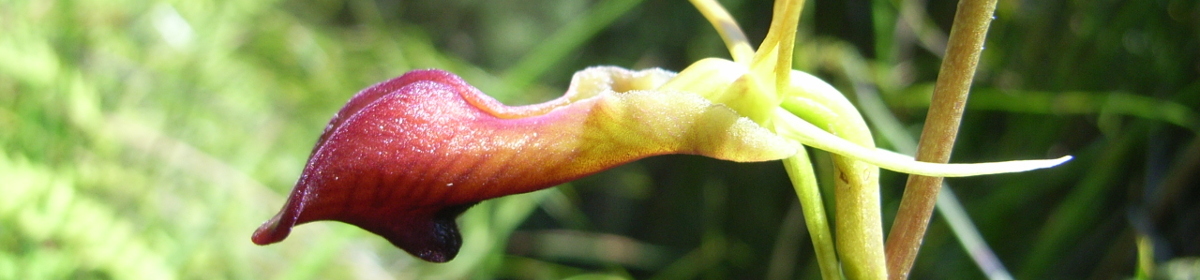
Corunastylis littoralis (Photo: Colin Bower)In 2015 a paper was published in the Journal of Plant Systematics Telopea (Vol 18:43-55) titled “Reproductive success and pollination of the Tuncurry MidgeOrchid (Genoplesium littorale)(Orchidaceae) by Chloropid Flies “. Much of the same material had been published earlier in a consultancy report for UrbanGrowth NSW, under the title “Pollination of The Tuncurry Midge Orchid (Corunastylis littoralis) Amended June 2014″ Prepared by Colin C Bower PhD.

Because of their details, research papers can contain some very interesting facts of interest to a wide range of readers. This paper was no different. The aim of the paper was to identify the pollinator(s), how the attractant worked, confirm that C. littoralis was not autogamous (self-fertilizing) or apomictic (reproduction without pollination) and to assess the requirements & long-term viability of the pollinator.

The following summary notes have been drawn from both the research paper and the consultancy report.  Note that Corunastylis littoralis is a synonym of Genoplesium littorale.

One of the interesting issues discussed was the different types of pollination strategies employed by orchids. It is commonly accepted that about one third of orchids use deceptive practices to attract a pollinator whereby they promise but don’t deliver. Some of these strategies are quite unusual. It would appear that there are at least four strategies now known. In order of frequency they are

  1. Food mimicry
  2. Sexual mimicry
  3. Brood-site mimicry
  4. Prey/carrion mimicry

The first two are well known to many orchid lovers. The orchid promises food such as nectar but does not produce any nectar or it has the appearance and even odour of the female insect pollinator so that it fools the male. The lesser known deception is brood-site mimicry where the female insect pollinator is tricked into laying the eggs on the flower but there is no chance for survival of the off-spring. Finally the most uncommon and unusual deception of prey or carrion mimicry, known as kleptomyiophily.

This method was discussed in detail in the report and made for fascinating reading although it was helpful to have a dictionary on hand.

Some insects are kleptoparasitic that is they feed on the haemolymph (roughly similar to blood) but from freshly killed insects. The researchers established that the pollinator for C. littoralis was not Drosophilidae (vinegar fly) but were instead from the families Chloropidae and Milichiidae known kleptoparasitic flies.

It has been observed that the pollinators swarm around the Corunastylis. This is a known behavioural pattern of kleptoparasitic flies that are attracted to the prey of other predators such as spiders, robber flies and other predatory insects.

It was noted that the pollinators were dominated by females. This precludes sexual deception and suggests that the females may require the haemolymph, which is protein rich, for egg maturation. It was also noted that C littoralis is a nectar producing orchid. It was considered that the nectar contained properties that mimic haemolymph.

Based upon these observations it was hypothesized that prey mimicry pollination syndrome was the best fit for the Corunastylis. Though this syndrome has been observed in orchids in the northern hemisphere, this would be the first time that this has been demonstrated as a possibility for Australian orchids.

Photo: Colin Bower
Photo: Colin Bower

Part two will consider the fourth aim of the paper which was to determine the method of reproduction.

Thank you to Colin Bower for checking this post and for allowing the use of his photographs.


2015 June Winning Photograph

06 sm PM Arachnorchis argocallaOf the five entries this month, four featured winter orchids. Lorraine Badger entered a Diplodium robustum, whilst Claire Chesson, Robert and Rosalie Lawrence all entered Urochilus sangineus. Though not the winning photographs it was interesting to see the differences between the U. sangineus with one being no taller than the small Acianthus pusillus next to it and another being taller than the rapier sedge.

But the winning photograph was the spring flowering Arachnorchis argocalla (White Beauty Spider Orchid) by Pauline Meyers. This is amongst our most threatened orchids and is dealt with in depth in the Recovery Plan For Twelve Threatened Orchids in the Lofty Block Region of South Australia 2010. This fungi dependent endemic orchid is rated Endangered both at State and National level.

Found in the Southern and Northern Lofty regions, it range has been severely reduced by possibly 80%. Since 1918 no plant has been found south of Adelaide.

Flowering from September to October, it is often found in grassy woodlands often growing on gentle southerly-facing hill slopes. The soil is a clay loam with a high humus content.

This beautiful orchid has one to two non-perfumed white flowers with thickened but not clubbed drooping lateral sepals and petals. The strongly recurved broad labellum is usually white, sometimes crimson, fringed with short teeth.

This is one of our larger spider orchids reaching a height of 60cms. The size of the plant flower and leaf help to distinguish it from other similar appearing orchids such as A. brumalis and albino flowers of A. behrii.

Like many of the spider orchids it takes 2 – 5 years to reach maturity and then has a potential reproductive life of 10 years. With an average pollination rate of less than 10%, the potential to increase the population is low and any threat to survival of the individual plants needs to taken seriously.

Some threats are obvious such as weed invasion including the garden escapees such as Topped lavender (Lavandula stoechas spp. stoechas) and action is being taken to curb the spread of weeds through targeted weeding programs.

Another threat is habitat loss. This has been the result of land clearing but sites are being protected either through conservation legislation or Heritage Agreements. Habitat loss can also occur indirectly and that is through Phytophthora being introduced into the sites. Although the direct effect of Phytophtora on the orchid is unknown, it is known that it can affect the plants that grow in association with this orchid. This threat can be reduced by all of us implementing good hygiene practices.

These were some of the threats noted in the Recovery Plan. This plan was not just defensive, ie attempt to halt and minimalize the damage; but it was also proactive with measures outlined to increase the population. These included seed and fungi collection eventually resulting in germination and cultivation with a view to re-introduction.

It is good to see that there is a plan and active steps are being taken to bring this orchid back from threat of extinction.

June 2015 other entrants
Photographers from L to R: Claire Chesson, Rosalie Lawrence, Lorraine Badger, Robert Lawrence

References

Websites accessed 1 July 2015

White Beauty Spider Orchid (Caladenia argocalla) Recovery Plan
http://www.environment.gov.au/archive/biodiversity/threatened/publications/recovery/c-argocalla/index.html
Caladenia argocalla – White-beauty spider-orchid, biodiversity species Profile and Threats Database
http://www.environment.gov.au/cgi-bin/sprat/public/publicspecies.pl?taxon_id=54991
Recovery Plan For twelve threatened Orchids in the Lofty Block Region of South Australia
http://www.environment.gov.au/system/files/resources/e362cfd2-a37b-443a-b007-db3a2b7b64dd/files/lofty-block-orchids-recovery-plan.pdf

Bates R J, South Australia’s Native Orchids 2011 DVD

Moving Labellums

The following article titled Moving Lablellums written by Helen Lawrence is reproduced from the NOSSA Journal Volume 36 (1) February 2012

Labellums are fascinating. Well I think they are fascinating, especially the ones that move.

Bunochilus viriosus labellum down
Bunochilus viriosus with the labellum down

Why do these labellum move? You may have observed that the orchids which have labellums often have “hoods” and inside these “hoods” are the pollen. It is quite simple, the pollinator lands on the labellum, triggers it and is held captive by the labellum. As it struggles to free itself it pollinates the orchid. Clever, isn’t it?

Bunochilus viriosus labellum up
Bunochilus viriosus with the labellum up

So that these labellums can capture the insect they need to be sensitive. Consequently they can easily be “set off.” This can happen with of a gust of wind, or if the plant is in a pot, the labellum may trigger if the plant is moved/knocked.

It is easy to see these labellums as they move up into their “triggered position.” They move reasonably quickly, so the insect does not have time to respond.

However, how does the labellum return to its “normal” position? Does it slowly return to the position, or does it happen in a sudden movement in the same manner as when it is triggered?

One day when I was travelling in the car with a Pterostylis curta (Blunt Greenhood), I observed something very interesting. When I looked at the flower, the labellum was up, but then when I looked at it a minute or two later, the labellum was down. The labellum had to move quickly. However was it the bumps in the road which caused it to move? I had to find out.

I devised an experiment to satisfy my curiosity, and find out what these fascinating labellums actually do.

First I had to find an orchid with a labellum that could be triggered. I ended up using an Oligochaetochhilus bisetus (Two-bristle Greenhood).

Oligochaetochilus arenicola

Second I had found a good camera that could take high definition video. I placed it on a “tripod” (a pile of books).

So I had set up my apparatus, set the camera rolling, triggered the labellum, and left the room.

So what happened?

For the first six minutes after I had triggered the flowers nothing happened. There was no movement that I could see.

In the next five minutes, the labellums of the two flowers slowly moved downwards until they were half way down.

After twelve minutes of the flower being triggered, the labellum returned rapidly to its original position. This final stage of the labellum moving lasted for less than five seconds, and appeared to move at the same speed as when it was triggered.

So it looks like the labellum returns to it normal position first moving slowly and then in a rapid final movement which returns the labellum to its original position.

Urochilus sanguineus

If I thought it would be that simple, I was mistaken.

As I briefly looked through the fifty minute video I took, I came upon something that made no sense to me.

A minute after the labellum had returned to its resting position, one of the labellums suddenly returned to its “triggered” position. What’s more, there was nothing in the room to trigger the labellum: no wind, no insects, and no people. So what triggered the flower?

I do not know. Six minutes after the labellum was triggered it returned to its original position, and then two minutes later the other flower’s labellum moved into the triggered position. The first flower was triggered again for no apparent reason at all, four minutes after the second flower was triggered and still remained up.

Once the labellums returned to their original position, there was no more movement.

Maybe triggering the labellum causes a chain reaction. Maybe the labellums periodically “trigger themselves.” Well, I can’t give you any answers, all I can tell you is that it looks like this is an example of how we barely know anything about these wild gems. They are beautiful but bizarre and of course fascinating!

After 7 minutes, just before the labellum moved
After 12 minutes, labellum about to fall
After 13 minutes, labellum in original position


As a 50 minute video is a bit long to watch, Helen has produced a four minute video, so watch and enjoy the music!

2015 May Winning Photograph

05 sm PM Diuris hazeliae

Western Australia produces a lovely array of orchids and so it is not surprising to find in NOSSA photograph competitions that when a Western Australian species is entered it can often be the winner. This month was no different with Pauline Myers beautiful picture of a mass of Diuris hazeliae which was kindly identified by Andrew Brown.

This species has only recently been named in 2013 and as a result finding information was a challenge. Obviously there was no information in Jones Native Orchids of Australia (2006); and surprisingly the definitive Field guide to the Orchids of Western Australia (2013) A Brown et al did not appear to have any information.

But

  • the Western Australian Herbarium’s FloraBase (Western Australian Flora), has a map of distribution which is roughly a diagonal line from east of Geraldton to the north of Esperance. It is not listed as threatened.

    Distribution of Diuris hazeliae.  Map taken from the Western Australian Flora Base
    Distribution of Diuris hazeliae. Map taken from the Western Australian Flora Base
  • the Western Australian Herbarium lists the species as one of 59 new taxa added to their plant census in 2014.
  • from the Atlas of Living Australia it can be deduced that the flowering time is mainly August and September and is likely to be found in various types of shrublands margins including Eucalypt and mallee woodlands and appears to be mainly associated with rocky or granite outcrops.
  • and the National Species List APNI/APC yields the information that it was named after Hazel King, plant collector and conservationist with a special interest in orchids and was previously known by the phrase name Diuris ‘northern granite’ with a common name of Rosy-cheeked Donkey Orchid. It was found in a granite outcrop on her property Tampu (north of Beacon).

Fortunately Andrew Brown was able to help with extra information. It is listed in his book (page 212) but under the phrase name Diuris sp. Eastern Wheatbelt (Yellow Granite Donkey Orchid). Diuris sp. Northern Granite was found to be the same species and so the use of that name was discontinued but it does remain a synonym for Diuris hazeliae.

The following description is information updated from his book “Field Guide to the Orchids of Western Australia”

Diuris hazeliae D.L. Jones & C.J. French (yellow granite donkey orchid)

Flowering: August to September.

Description:

A common, inland donkey orchid 100 to 300 mm high with two to three basal leaves 50 to 150 mm long by 5 to 10 mm wide and up to seven predominantly yellow, brown marked flowers 20 to 40 mm across. Flowers are characterised by their broad petals, very broad dorsal sepal, narrow, reflexed, usually crossed lateral sepals and tri-lobed labellum with broad, spreading lateral lobes and a broad, flattened to convex mid lobe.

Distribution and habitat:

Found between Mullewa, Salmon Gums and Balladonia, growing in shallow soil pockets on granite outcrops and along drainage lines below rocky breakaways.

Notes:

Named in 2013 from specimens collected at Tampu, north of Beacon in September 1997. The species often forms very large colonies on granite outcrops.

Distinctive features:

Inland granite and breakaway habitat.

Very broad dorsal sepal.

Diuris hazeliae is part of the Diuris corymbosa complex of which, in 2013, there were only 10 of the 26 Western Australian species formally named. This situation has now changed with 14 now formally named. As a final word, Diuris orientis is South Australia’s only member of this complex.

More images of this species can be seen on Retired Aussies website http://www.retiredaussies.com/ColinsHome%20Page/OrchidsWA/Diuris/Diuris%20sp%20northen%20granite/Diuris%20sp%20northern%20granite.htm


References – All websites accessed on 29th May 2015-06-04

https://florabase.dpaw.wa.gov.au/science/nuytsia/755.pdf

https://florabase.dpaw.wa.gov.au/browse/profile/44161

https://biodiversity.org.au/nsl/services/api/instance/apni/772000

Jones, Native Orchids of Australia and its Territories (2006)

Brown, Field Guide to the Orchids of Western Australia (2013)

An Examination of Two Rufoushoods

This week’s post is taking a brief look at a paper by Noushka Reiter, Mark Clements and Kate Vlcek which appeared in Muelleria, Volume 31: 69 – 76, 2013.

Titled “An examination of Pterostylis xerophila (Orchidaceae) and the confirmation of P. lingua as a new species in Victoria” this paper seeks to ascertain whether the records collected are correctly identified, that there are differences between them both in morphology and associated vegetation.

Both P. xerophila and P. lingua are found in South Australia where they are known, respectively, by the synonyms Oligochaetochilus xerophilus and O. linguus. In fact the type specimen for O. xerophilus is from South Australia.

In the introduction, the authors give a detailed description of Oligochaetochilus otherwise known as the ‘rufa group’ which differs from Pterostylis, in the strict sense, in several features. Some of the main features of this group are:

  • Basal rosette of overlapping stemless leaves
  • Leaves senesced, withered and died, by flowering
  • Erect multi-flowered
  • Flowers
    • Lateral sepals
      • hang down
      • basal half joined
      • tips become long and threadlike
    • Labellum
      • is very mobile
      • has obvious long white hairs and often short hairs as well
Typical of the rufus hood this Oligochaetochilus arenicola shows the sencesing leaves, pendent petals and hairs on the labellum. Photographer: H Lawrence
Typical of the rufus hood, this Oligochaetochilus arenicola shows the sencesing leaves, pendent petals and hairs on the labellum.
Photographer: H Lawrence

Later in the articles, the differences between the two species are discussed. There is much of interest concerning the two species but one outcome of the research was to establish that P. lingua (O. linguus) had been incorrectly identified in the records and by correcting the names of the specimens the authors were able to confirm that it did occur in Victoria.

To find the answer to the authors other questions, read the paper

And for those that need a glossary of the terminology used, click here

For images of P. xerophila (O. xerophilus) click here

For images of P. lingua (O. linguus) click here

Australia’s Most Popular Orchid?

Australia has some of the most varied, if not the most varied, terrestrial orchids.  This variety is reflected in the words used in their commons names – spiders, hoods, moose, cowslip, mosquito, comb, fingers, fairies, bearded, ant, bird, frog, helmet, midge, shell, donkey, bulldogs, parsons, bunnies, daddy long-legs, hare, rabbit, onion, leek, gremlin, duck.  This list is from words used for describing just the South Australian orchids.  The other states particularly Western Australia have even more common descriptive names!

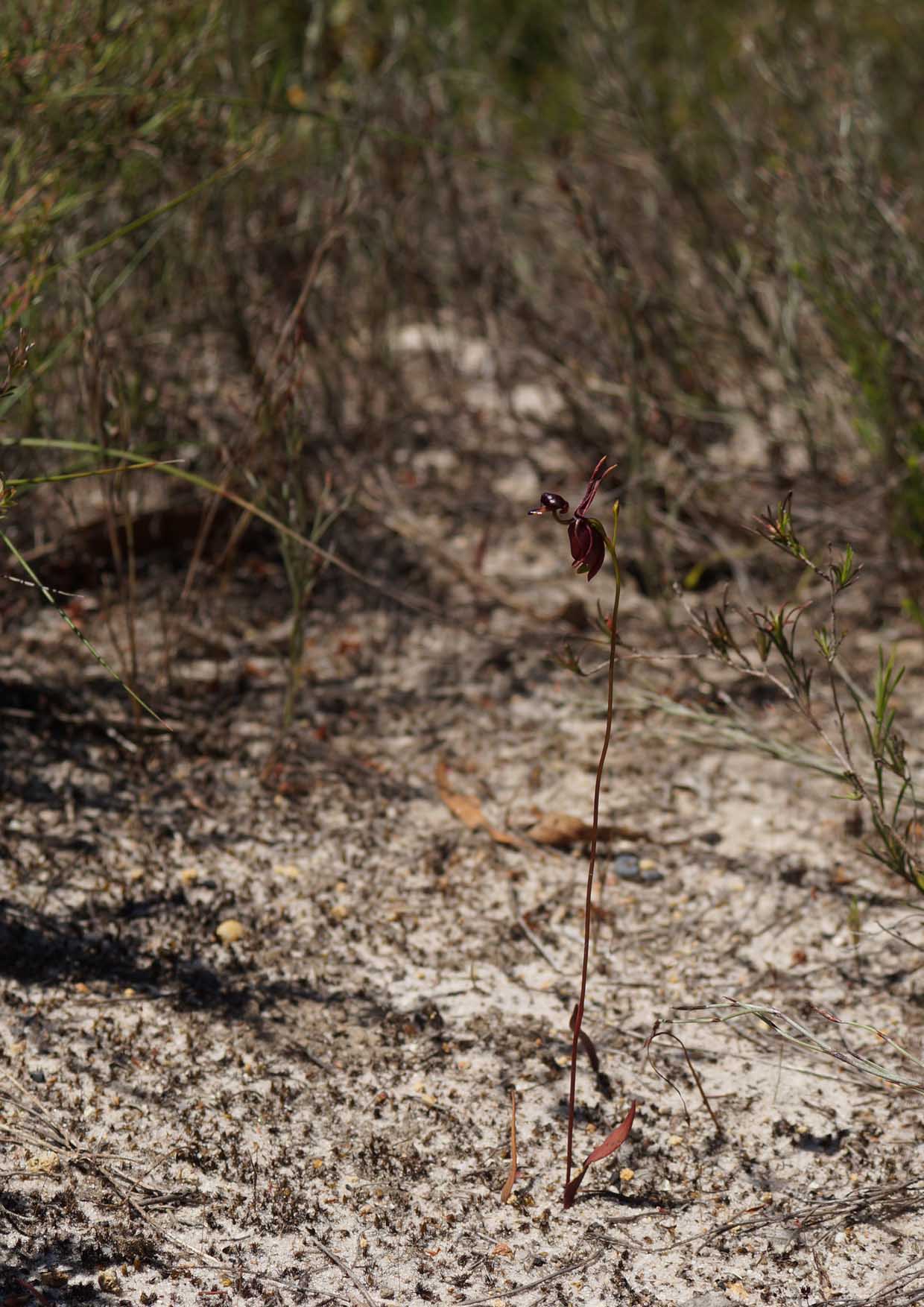
With such a variety is there a favourite one?  From the searches and questions that come to this site, it would have to be the Flying Duck Orchid.  This orchid never fails to amaze people with its resemblance to a duck in full flight.

It was no surprise than to discover that the winner for the Australian Orchid Foundation 2014 Essay titled Our Favourite Orchid featured the Flying Duck Orchid.

The essay began “It all started with the arrival of an email ……. click here to continue reading

And just a reminder, it is only ever found in the wild.  No-one has ever been able to grow one and it cannot be bought or sold!  But so that we can all enjoy them, here is a short video clip …..

caleana major
Ducks in full flight
11sm C major actual size
To get an idea of the size of this superb orchid, bring this image up to A4 paper size


2015 April Winning Photograph: Calochilus cupreus

04 sm HL Calochilus cupreusDespite having five very different but high quality photographs, Helen Lawrence’s photograph of Calochilus cupreus (Aldinga Bearded Orchid) was the clear winner with the vast majority of votes.

In South Australia it is considered endemic and endangered. Researching it was interesting. For instance, there is no mention of it in Jones extensive book (2006) yet it was named by R S Rogers in 1918 with a description appearing in Black’s Flora of South Australia (1922 edition), including a drawing by Rosa Fiveash. Between then and now there was a shift. In the Third edition of Black’s (1978) C. cupreus is absent but C. campestris present. In Bates and Weber 1990 the authors describe C. campetris (C. cupreus). Currently, the eflora of South Australia (the electronic version of 1986 Flora of South Australia) considers it a synonym of C. campestris. This is reflected in the Census.

It would appear that as C. campestris was studied and its variations documented (e.g. article by Jones 1976 Orchadian 5:83) the distinction with C. cupreus was lost. Clements and Jones (2006) state “Calochilus cupreus R.S.Rogers = Calochilus campestris” which means that they are not using C. cupreus. But in Jones’ book an anomaly occurs – he does not include South Australia in the distribution of C. campestris and as result Bates, from 2008, states that it is not recognized as occurring in South Australia.

Though C. cupreus disappeared from the literature the name still continued to be discussed amongst orchid enthusiasts. So when in 1995 NOSSA members found a distinctively different colony at Aldinga they identified it as Rogers’ C. cupreus.

Below is a chart, based upon Dr Rogers’ description, of some of the differences that made him consider C. cupreus a separate species:

C. cupreus C. campestris C. robertsonii
Shorter leaf

Rather rigid or fleshy erect triangular section

Longer leaf

Crescentic section

Longer leaf

Crescentic section

Base of labellum oblong glabrous (without hairs) with several raised longitudinal line Base of labellum round thickened, smooth no raised longitudinal lines Whole of labellum hirsute (hairy)
8 – 15 flowers About 8 flowers maximum About 8 flowers maximum

It will be interesting to watch what happens.

References

Bates personal communications

Bates & Weber (1990) Orchids of South Australia

Bates (2011) NOSSA South Australia’s Native Orchids

Bates (2005 to present) Orchids of South Australia CDs various editions

Clements and Jones An Australian Orchid Name Index (27/4/2006)

https://www.anbg.gov.au/cpbr/cd-keys/orchidkey/html/AustralianOrchidNameIndex.pdf

Jones (2006) A Complete Guide to Native Orchids of Australia

NOSSA Journal Vol 25 No 10 November 2001

Rogers R S Transactions of the Royal Society of South Australia V42 (1918) Pages 24, 25

http://www.biodiversitylibrary.org/item/113409#page/40/mode/1up

Australian Orchids & the Doctors they Commemorate Part 20 of 20

 This series ends with Dr John Pearn’s summary below.

Enduring memorials

Scientific names of living things will be used as long as scientists find it useful to do so. Names change as taxonomists revise plant groupings and there is a proposal to dispense with scientific names, in favour of an alternative system called the PhyloCode.

In the past, the doctrine of signatures linked the forms of plants with their supposed therapeutic uses. But the world of binomial nomenclature (which Linnaeus introduced in 1753), allows for the most fitting memorials in medicine and botany. In the scientific names of Australian orchids, the lives of many doctors and botanists endure.

Though this series has been divided into 20 parts, it does not cover the whole of his original article which can be viewed here and downloaded as a pdf.

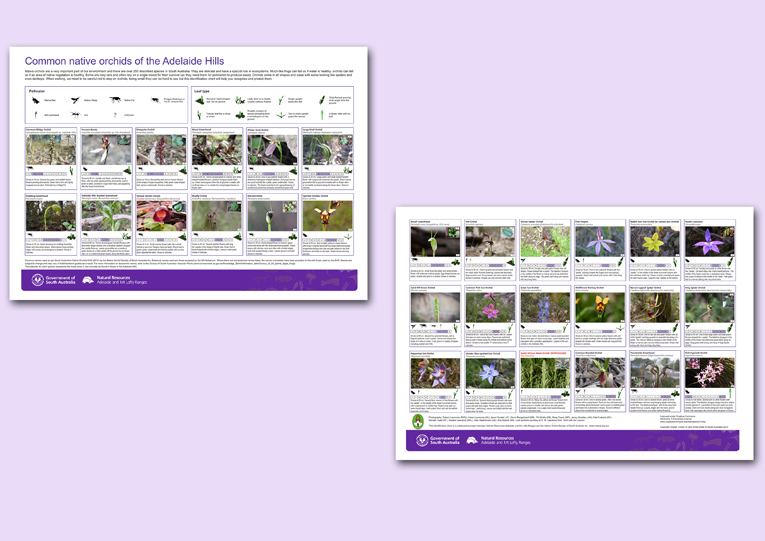
Native Orchid Identification Poster Launched

Over the years, Natural Resources Adelaide and Mount Lofty Ranges (NRM) have been involved with providing educational resources for schools and the community.  One resource has been A3 Identification Charts.

This week has seen the release of  another identification chart – Common Orchids of the Adelaide Hills.  Produced in collaboration with the Native Orchid Society of SA, it was launched at our general meeting on April 28.

These charts are available free from the NRM website.  To get a copy of the poster, click on the image below and scroll down to Identification Charts.  Whilst there have a look at some of their other posters.

NRM & NOSSA Orchid PosterPS the chart looks good on a smart phone which makes it convenient for out in the field.


March 2015 Winning Photograph

Three winners; three very different orchids but that is typical of Australian Orchids, there is no one species that you can point to and say that is a typical orchid as illustrated by the the winners which were Sarchochilus falcatus (Kris Kopicki), Diuris palustris (David Mangelsdorf) and Simpliglottis valida synonym Chiloglottis valida (Pauline Meyers).

Sarchochilus falcatus (common name Orange Blossom Orchid) is an epiphyte.  03 KK sm Sarcochilus falcatus Mt Banda BandaThe cultivated plant in this photo originated from the Blue Mountains just north of Macquarie.  Epiphytic/lithophytic orchids are found across northern Western Australia through the Top End and from a narrow band down the east coast to Tasmania; that is in all States except South Australia.  About a quarter of Australian orchids are epiphytes and despite the widespread distribution, 90% of epiphytic orchids are found primarily in the rainforests of northeastern Queensland.

S. valida (common name Large Bird Orchid or Frog Orchid) 03 sm PM Chiloglottis validaand D. palustris (common name Little Donkey Orchid or Cinnamon Donkey Orchid) are terrestrial, the larger of the two orchid groups.03 sm DM Diuris palustris  Terrestrials are mainly found across the southern part of the continent with some occurring in the north and tropics.  Their optimal habitat is the various types of sclerophyll forests found in Australia.

There is some distribution overlap but the two groups mainly occupy different habitats.

Concerning the habitat of the two terrestrials, S. valida ranges from tall moist closed forest to shaded places of drier open forests to sphagnum bogs and in the mature pine plantations of the South East.  Whereas D. palustris occurs in wet and swampy habitats in the Eastern states (hence it is named from the Latin palustre meaning swampy), in South Australia it is not so. Instead it is found in open terrain of grassland, grassy woodland, mallee and shrubland.

Some Odd Facts:

S. valida is a small ground hugging plant the scape (flowering stalk) of which elongates to 10cm or more after pollination.  Click on this video link to see these plants ‘talking’.  In New Zealand it is described as a vagrant having been introduced from Australia.

Sarchochilus falcatus is the most common and widely distributed species of this genus in Australia.  Occassionally it is lithophytic (grows on rocks). Though it had been rated Endangered and downgraded to Vulnerable in 2005, it is still under major threat from illegal collecting, trampling, water pollution, weeds and fire. New Zealand has epiphytes and the common name for them is Perching Orchids.

D. palustris is uncommon in South Australia and Tasmania; and rare in Victoria.  D. palustris was one of the subjects painted by Adelaide colonial artist and cartoonist Margaret Cochrane Scott in 1890s who had an affinity for native orchids.


References:

All internet references accessed on 31st March 2015

https://www.anbg.gov.au/cpbr/cd-keys/orchidkey/html/intro-c_habitat.html

http://anpsa.org.au/APOL19/sep00-1.html

http://www.nativeorchids.co.nz/Species/Simpliglottis_valida.html

http://data.rbg.vic.gov.au/vicflora/flora/taxon/4cebc1f9-38da-4c61-9c3c-37c2efc6da32

Mark Clements The Allure of Orchids 2014

http://www.iucnredlist.org/details/44392876/0

Bates 2011 South Australia’s Native Orchids DVD