Eyre Peninsula – Finding the Records for South Australia’s First Collected Orchid

Recently, Jodie Hamilton (ABC reporter) wrote a good orchid article highlighting the importance of and threats to orchids. Click on the link to read her article – Orchid enthusiasts call for greater protection for native species facing habitat threats When she emailed me with some orchid questions (28 November 2025), I gave a comprehensive answer from which she was able to take what she needed for her article.

Possibly Genoplesium nigricans (Photo June Niejalke)

As there is additional information in my answer, I thought others might be interested in my reply. Here it is –

“Hi Jodie,

As to numbers, the answer to some of your questions depends upon who you ask. So the figures will vary. Orchid taxonomy is being reviewed with several researchers looking into South Australian orchids and in coming years we will see the numbers change. But regardless of the detail, it can be confidently said that over half of South Australian orchids are threatened.  Threats are clearance & development, weeds, herbicide, overgrazing, isolated “island” population (orchids need room to spread).

So having said that, looking at the Atlas of Australia (ALA), there are 4,470 observations of 141 species of orchids in EP collected between 1850 and 2025. Since 2015, iNaturalist, a citizen science project, 117 observers have collected over 1,200 of those ALA observations.  iNaturalist is significant because in recent years individuals are adding observations exponentially to the database, a thing we have not been able to do in the past. The more people that get involved with iNaturalist, the more data we will have and be able to have a better understanding of not only orchids, but all our other species.

My numbers are more aligned to the herbarium numbers. Approximately 12 species are endemic to EP (~162 species for the whole of SA).*

As to why orchids are important, the following information is taken from a talk I gave earlier this year – Orchids are bio-indicators of the health of the bushland. Because they have great visual appeal, we notice them and when aware of them we are able to use their presence to determine what is happening.

  • They have a low tolerance for change/disruption whereas other plants will show stress signs later, making them an early indicator of what’s happening.
  • Pollinated orchids indicate pollinator presence i.e. insects as many orchids do not provide food for the pollinators.
  • They have a strong reliance upon mycorrhizal fungi from germination and with some species through the whole of their life cycle.
    • The significance of the fungi is that they contribute to the soil health, are involved in nutrient recycling and contribute to plant growth. 

This makes orchids a potential flagship for conservation work. I’ve attached a pdf of the talk.

Fun Fact you might like.

The first orchid found in South Australia was March 3,1802 by Robert Brown, botanist on the Investigator with Matthew Flinders. This was at Port Lincoln. Initially it was called  Prasophyllum nigricans but today is known as Genoplesium nigricans. I find it amazing that he managed to find such a small sticklike orchid which often gets overlooked in our modern species lists.

June Nieljalke would also be able to help you.”

Close up (Photo June Nieljalke)

In giving Jodie the fun fact about the first orchid found (or rather I should say first documented), I went down a bit of a rabbit warren on the ‘net as I couldn’t find my original research material for a 2019 talk and wanted to double check the accuracy of my information.

So, I typed into Google “when was the first orchid found in south australia” only for it to give a wrong answer. I do appreciate that the Google AI gives references (other ChatBots such as Co-Pilot do not). This is important as it pointed me to an article I’d written about Caladenia cardiochila which was a few decades after settlement and therefore unlikely to be correct as other orchids would have been found before that.

Screenshot of Google’s AI reply

As a tool, AI does not do research, let alone original research. It does not understand concepts but recognises individual words and word patterns. The words it picked was “first”, “orchids” “found” and “south australia”. All four words were in the article but the concept was about when Caladenia cardiochila was first described but it was not the first orchid found in South Australia which is what the question was about.
 

As AI did not have a summary, it meant I needed to do some research, potentially looking for original material. This took me to the Internet Archive, the Biodiversity Heritage Library (a very useful source as it contains a lot of original source material), Digital Herbariums, etc from which I was able through deduction to come to the answer of “when was the first orchid found in south australia”

Now when you type in the same question, Google hopefully will give the correct answer.
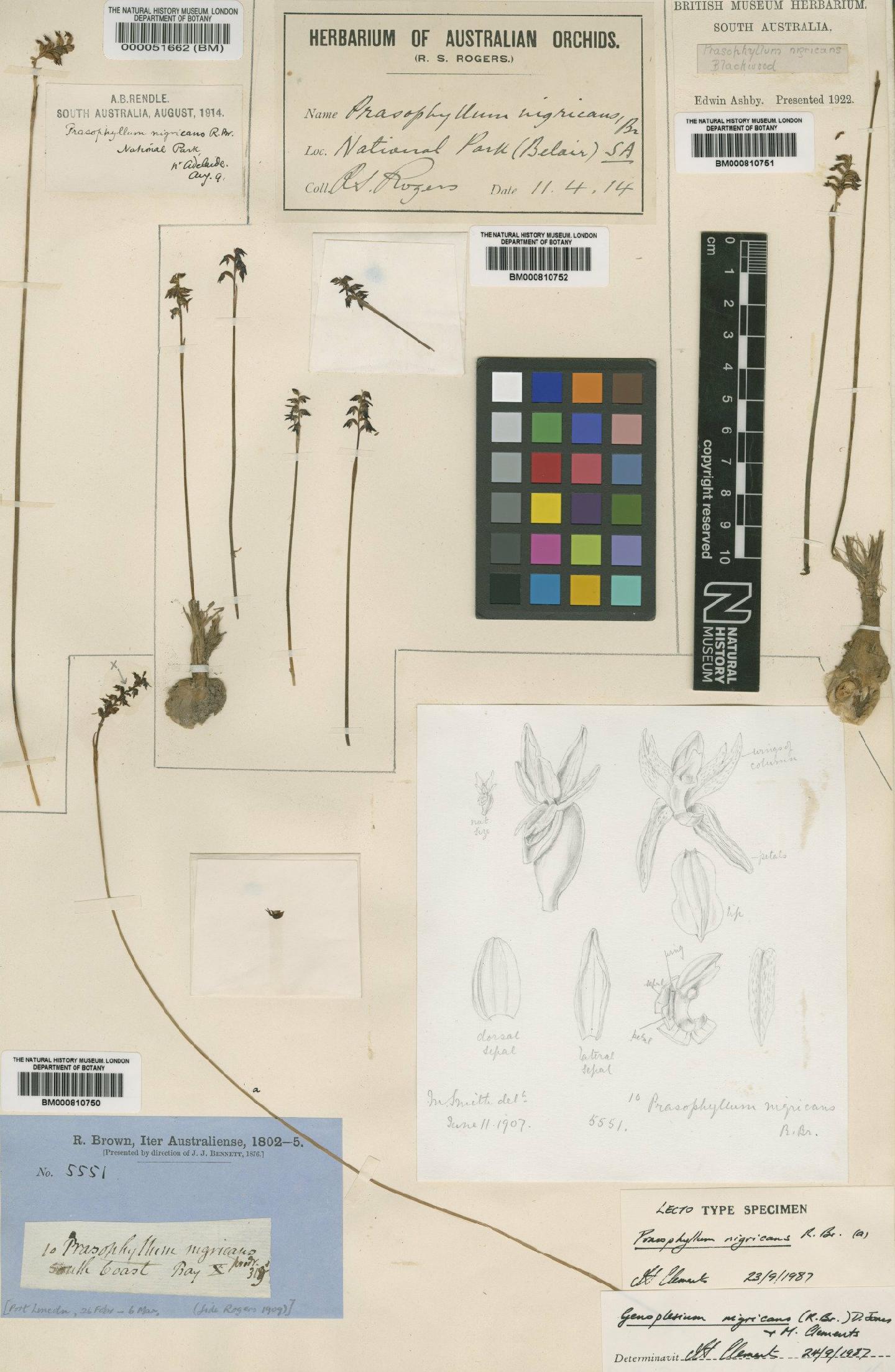
Lectotype for Prasophyllum nigricans – note Brown’s handwriting is on the blue slip

References

Lectotype
Natural History Museum (2014). Specimens (from Collection specimens) [Data set resource]. Natural History Museum. https://data.nhm.ac.uk/dataset/collection-specimens/resource/05ff2255-c38a-40c9-b657-4ccb55ab2feb

https://data.environment.sa.gov.au/Content/publications/JABG21P004_Barker.pdf
 Appendix 2 page 34/35 Plant Collections by the British from South Australian waters in 1802. This reference gave the dates and locations of where the Investigator was as well as the specimens collected

https://archive.org/details/mobot31753003393979/page/318/mode/2up  page 319 Latin description of Prasophyllum nigricans

Disentangling the history of the Robert Brown specimens at RBGE – Botanics Stories some background history on Robert Brown and his collection

Personal correspondence Jurgen Kellermann, South Australian Herbarium

*My figures for the endemic species numbers came from a spreadsheet, I’d initially complied years ago based upon 2011 Native Orchids of South Australia and updated.

Orchids, Geology and Evolution’ by Mike Burrell

Article by John Eaton from the NOSSA, general meeting held 23rd Sept ‘25, Published in the NOSSA Journal Volume 49 No 10

(Video of the complete talk is here)

I put together this NOSSA presentation as I thought it would be interesting to understand how orchid distribution is related to geology and evolution. My background is in the oil and gas industry, having studied geology at Flinders University. I am the current President of the Field Geology Club of South Australia. I am also interested in evolution, particularly of marine molluscs. I am the President of the Malacological Society of S.A., member of the Flinders University Paleontology Society and a volunteer in the South Australian Museum in the marine invertebrates department. So I have a good understanding of geology, and a reasonable understanding of evolution, but I had no knowledge of how these two topics relate to orchids. With this in mind, I started my research in ‘A Complete Guide to Native Orchids of Australia’ by David L. Jones, 3rd Edition – Revised, 30 July 2024. This book referred to (Givnish et al.2016) and stated that:
• Orchidaceae originated 80 – 120 million years ago (mya).
• Originated in Australia 112 mya then migrated to South America via Antarctica.

To further research this topic I had to seek out the scientific literature as there is limited information in general orchid books. My first reference was: ‘Terrestrial Orchids Speciation across the Earth Driven by Global Cooling’, Jamie B. Thompsona,1 , Katie E. Davisb, Harry O. Dodda , Matthew A. Willsa, and Nicholas K. Priesta, Edited by Nils Stenseth, University of Oslo, Oslo, Norway; received February 7, 2021; accepted June 3, 2023.

Charles Darwin proposed that orchids adapted gradually through natural selection to attract different pollinators. It is now known that evolution is not a gradual process but can occur very rapidly at times.

In this study, the analysis of DNA of 1,475 orchidoid taxa produced a phylogeny chart against the geological time scale. It found that global cooling has been responsible for the rapid speciation across Orchidoideae in the last 5 million years.

The study stated that it is not clear how global cooling drives evolution and diversification. A possible explanation is that Milankovitch (orbital) cycles change the exposure to annual solar energy in predictable ways. The relatively short-term oscillations in global temperature occurring during longer- term trends of global cooling.

It was the geologist Reg Sprigg who first noticed the relationship between Milankovitch cycles and the series of ancient barrier shorelines now preserved as sand dunes in the South East of South Australia. The modern Australian coastline has only existed in its present general form since the sea surface attained its current level about 7000 years ago. 22,000 ago, at the height of the Last Glacial Maximum, most of the continental shelf was exposed as dry land. There would have been a larger area of potential habitat for orchids. The global expansion of grasslands which peaked 4 to 8 mya could also have contributed to more recent orchidoid speciation by creating new habitats.

The next paper I looked at was: ‘Tracing the origin and evolution of the orchid family through genes and trees’, release date 22 February 2024. This study presented a new Orchidaceae phylogeny based on DNA sequencing data, covering all 5 subfamilies, 17/22 tribes, 40/49 subtribes, 285/736 genera,1921 of the 29,524 accepted species (7%).

This study’s conclusions were:
• Orchidaceae evolution commenced 120 +/- 6Ma (Early Cretaceous).
• Ancestral area estimations revealed that the most recent common ancestor of extant orchids originated in Laurasia ~83 Myr ago (+/-10 Ma). This result contradicts the Neotropical-Australian estimation of Givnish et al. (2016).
• Highest current diversification (speciation) rate of orchids is Southern Central America (not Southeast Asia).

Leaves of Pyrorchis nigricans (L) with Leporella fimbriata (R)


The next paper I researched was: ‘Evolutionary Relationships and Range Evolution of Greenhood Orchids (Subtribe Pterostylidinae): Insights’ From Plastid Phylogenomics.

Australia’s high rate of endemic species is due to geographic isolation. 110 mya Australia/Antarctica separated from Gondwana. 55 to 35 mya Australia separated from Antarctica.

The study’s conclusions were:
• Divergence between Pterostylidinae and the remainder of the tribe occurred in the early Oligocene, 32 mya
• Divergence of all major lineages occurred during the Miocene, 15 mya.
• Accompanied by increased aridification and seasonality of the Australian continent.
• Resulted in strong vegetational changes from rainforest to more open sclerophyllous vegetation.
• Greenhood orchids evolved mainly within their ancestral range in eastern Australia, and then moved to South West Australia.
• Modern distributions of greenhood orchids in other Australasian regions, such as New Zealand and New Caledonia, are of a more recent origin, resulting from long-distance travel of tiny dust-like seeds over the Pacific Ocean.

On the question of orchid relationship to geology, it is known that orchids are found on a wide range of geological substrates. They include igneous, metaphoric, and sedimentary rock substrates, which in turn influences the soil profile.

3. Caladenia sticta
3. Caladenia sticta


Looking closely at orchids’ relationship to soil type in the field can be illuminating as to the harsh conditions orchids can thrive in. Large areas of South Australian have soils that are very nutrient poor with a high sand and/or calcareous content. This is often the case on Yorke Peninsula and in the South East of S.A.

Orchids can also become geographically isolated by geological processes as is the case in the Grampians, Victoria.

So in conclusion:
• Orchids have been around since the Early Cretaceous (120 mya).
• Orchid evolution has not been linear – most orchid species originated over the past 5 million years.
• Southern Central America has the highest current diversification (speciation) rate of orchids.
• The initial diversification of orchids occurred in Laurasia (now North America in the Late Cretaceous (83 mya).
• Global distribution is primarily controlled by temperature and rainfall.
• Local distribution is also controlled by the physical, chemical, and biological properties of soil (which is functionally of rock type / geology).
• Local distribution is also controlled by geography, (which is function of rock type / geology).

Caleana major (Flying Duck Orchid)

From Humble Potato to South Aussie Grand  Orchids: Gold at Chelsea

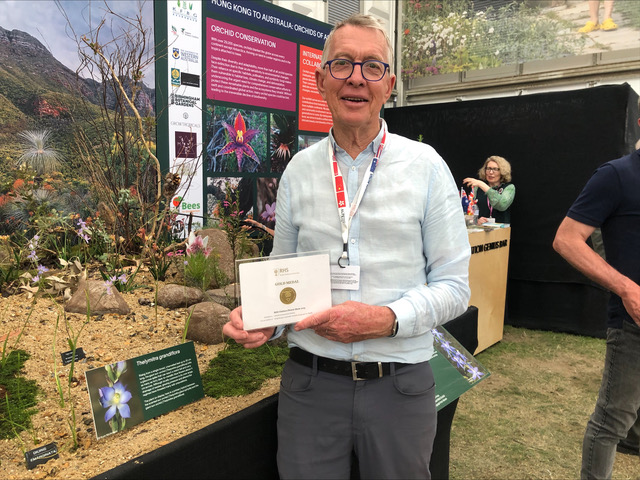
So the news is out – Aussie orchid (as part of a display with South east Asia and the Pacific) wins Gold Medal for conservation at the 2025 Chelsea Flower Show and according to Professor Kingsley Dixon this is the equivalent to winning Gold at the Olympics. One orchid was a hybrid, Thelymitra glaucaphylla x grandiflora.

Professor Kingsley Dixon (Image from Australian Orchid Foundation)

The Chelsea Flower Show is a prestigious event managed by the Royal Horticulture Society (RHS) who’s beginnings start with the presentation of a potato at a 1805 meeting. Over time, various exhibitions were developed with the Flower Show Fete first held at Cheswick in 1827 and moving to Chelsea Hospital in 1913  where it became known as the Chelsea Flower Show. The show was popular with exhibitors but only half of the applicants were accepted that first year. But in that group, McBean Orchids (Britain’s oldest orchid nursery) was one of the fortunate exhibitors and so orchids have always been present at the Show, though they were generally not terrestrial orchids.

Image from Australian Orchid Foundation

To win such an award, the team needed to put together a meticulously curated display to meet the RHS stringent standards; even a wrong font can result in disqualification. But there were other barriers to be overcome. Australian terrestrial orchids are not easy to grow. They require skill and attention to detail. Not many people are able to grow this exquisite orchid. In fact less than 10% of our orchid species are in cultivation. So this was quite an achievement in itself.

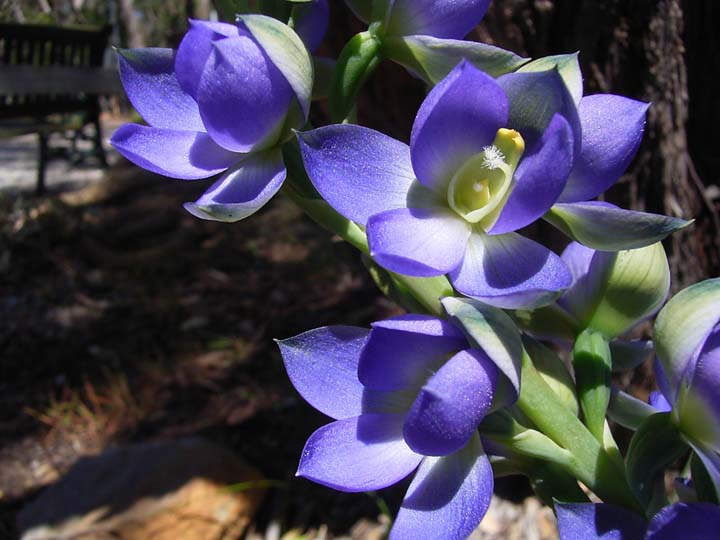
Thelymitra grandiflora (Photographer Robert Lawrence)

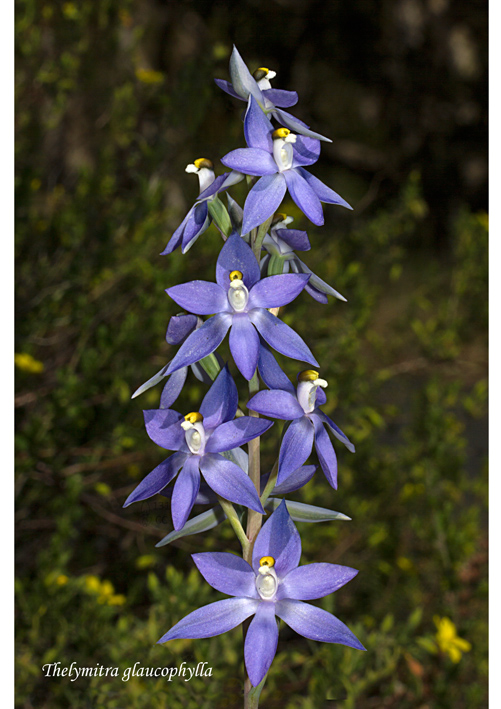
Over 90% of Australian orchids are unique to Australia with about half considered threatened;  and so though T glaucophylla does not have a rating, it is still under threat being uncommon. T grandiflora is rated rare. Both are endemic to similar limited areas in South Australia. That is the Southern Mt Lofty Ranges and the Southern Flinders Ranges. Both are under threat from habitat loss, weed invasion, grazing, trampling, etc.  So in-situ conservation is important if these, as well as other orchids, are to survive. 

Working toward conservation of Australian orchids is a major pillar of NOSSA and it was encouraging that two of South Australian endemics played a part in this display. Congratulations for the immense effort that Kinsley Dixon and his collaborators have put into bringing orchid conservation awareness to the Chelsea Flower Show and to the world.

Thelymitra glaucophylla Photographer Claire Chesson

References

History of Chelsea Flower Show
https://www.rhs.org.uk/digital-collections/making-chelsea

McBean Nursery
https://www.mcbeansorchids.com/about-us/

Niejalke June, Native Orchids of South Australia 2022

ABC Aussie Orchid Turns Heads at London’s Prestigious Chelsea Flower Show
https://www.abc.net.au/news/2025-05-23/charles-and-camilla-view-aussie-orchid-at-chelsea-flower-show/105326104

Thelymitra – Atlas of Living Australia
https://bie.ala.org.au/species/https://id.biodiversity.org.au/taxon/apni/51414292#

https://bie.ala.org.au/species/https://id.biodiversity.org.au/taxon/apni/51631246#overview

https://bie.ala.org.au/species/https://id.biodiversity.org.au/taxon/apni/51414288

List of orchids in the display

https://www.bhg.com.au/garden/garden-tours/australian-orchid-at-chelsea-flower-show/

https://www.instagram.com/p/DJ6hGOnINCm/?img_index=1


Links Accessed on 24 May 2025

Do we meet or not meet? -Basal Flanges in Subgenera Bunochilus

The following article by Rosalie Lawrence appeared in the electronic version of the Native Orchid Society of South Australia Journal, Vol 47 #6 July 2023. For the purpose of this article, the segregate genera Bunochilus was used to narrow it down and differentiate it from the rest of the Pterostylis genus. This article includes additional information not in the Journal article

Recently Robert & I visited Diamond Creek, Victoria where we photographed a Bunochilus which we thought looked remarkably similar to our hills B viriosus. Anyway it was subsequently identified on iNaturalist as B smaragdynus. In the iNats comments, the Victorians often mentioned the meeting together of the broad basal flanges within the flower as an identifying feature.

So on our recent NOSSA trip to Hardy’s Scrub, Robert made it a point to photograph the basal flanges of the Bunochilus. I too did the same. Lo and behold, we had flowers with the flanges touching and others where it did not! So did we have two species of Bunochilus at Hardy’s Scrub?

Well when we get home we read June’s descriptions for the two species and note that she has underlined the touching of the basal flanges for B smaragdynus but mentions in the description of  B viriosus that they can also touch. Puzzlement! Solution – give June a call! It’s always great chatting with June because it is hard to get everything into one small volume and with talking a better picture emerges.

After talking to June, keeping in mind what we discussed, I then spent time on iNaturalist viewing all 285 observations of B smaragdynus and 115 B viriosus observations but I soon noticed from the Victorian commentators that I also needed to look at the 41 B chlorogramma and some of the B melagramma observations (1,619 was way too many to go through!).  I also viewed Vicflora pages on the description of their three species.

Basal flanges of Bunochilus viriosus not touching

Photographer Robert Lawrence


The following is what I noticed

  • The Victorians were often using the flanges as an identifying feature for identifying B melagramma
  • There was great difficulty in separating out B chlorogramma from B smaragdynus. To quote one Victorian –  ‘It is notoriously difficult to tell the difference between P smaragdya  & P chlorogramma’
  • B melagramma has small basal flanges (appear parallel) and never touch but the other three species have well developed basal flanges (triangular shaped) and may or may not touch (see Vicflora’s descriptions).
  • Published descriptions of the species occurred

~ Pterostylis smaragdyna 1993

~ B chlorogramma 2002

~ B melagramma 2002

~ B viriosus 2006

But it was the differences between B smaragdynus and B viriosus that I needed to look up and particularly whether the flanges were of significance or not. Also, June has always stressed that features are not hard and fast, so I needed to keep that in mind as I made my comparison.

My general observations of the observations of B smaragdynus and B. viriosus are~

  • B smaragdynus
    • Although most flowers opened at once, there was still a large proportion that didn’t
    • Flowers mainly a few and tended to be top heavy
    • There were some pollinated flowers
    • Along the way, I noticed the growth habitat (when I could see the background), was at the most one or two, or to quote Gary Backhouse – “small, sparse colonies”
    • Basal flanges did not always touch but were always a wedge shape
  • B viriosus
    • Most flowers opened consecutively but there were some where all the flowers opened at once.
    • Mainly lots of flowers on an inflorescence but there was a reasonable amount with just one or two flowers.
    • Growth habit, probably the most notable difference, colonies consisted of several flowering plants (sparse would not be the word to apply!)
    • Did not see any pollinated flowers
    • Rare to find an image of the flanges, but they were variable concerning touching yet always wedge shape

Basal flanges of Bunochilus viriosus touching

Photographer Rosalie Lawrence

Conclusion

There doesn’t appear to be a reason to include observing the flanges as there is no difference between these two species. But when there is a possibility of B melagramma being present such as in the South East and on Kangaroo Island, then it becomes necessary to include looking at the flanges when making an observation.

A surprise was to notice that the growth habit is significant point of difference between B viriosus and B smaragdynus as I was mainly looking at the flanges. Of course, there are some other features to be considered but that is for another time.

A curiosity, whilst researching this article I discovered that Diamond Creek is the type location for B smaragdynus

For images of basal flanges see page 202 of June’s book.

Where Have All the Growers Gone?


The following article is the longer version of the summary that will appear in the September 2021 NOSSA Journal. John Eaton, the NOSSA Speaker Co-ordinaor, has written passionately on his summary of Les Nesbitt’s talk given at the August General meeting. He completes his summary with an echo of Les’ appeal for the next generation of orchid growers whose expertise is so necessary for the continuting conservation of our unique orchids.


In one of NOSSA’s most significant and challenging meetings for many years, members were treated to a talk by our Patron, Les Nesbitt – whimsically titled – “Where have all the Growers Gone?” – after the 1955 Pete Seeger song-lament. Les integrated our NOSSA history into his talk.

Les was a founding member of NOSSA which was formed on 22nd March, 1977 – 44 years ago, with 44 very keen members. NOSSA membership had grown to 100 members by the year’s end.

The fledgling Native Orchid Society of SA first met at “Goody Tech” alias Goodwood Boys Technical High School. From then on – it was “All Go!” in those early years.

NOSSA’s second meeting soon saw the formation of the Seed Bank where new members were given Ptst. curta tubers from Roy Hargreave’s wash trough.

Our first three orchid displays – between 1978-1980 – were held in conjunction with the South Coast Orchid Club at Marion. The first (judged) NOSSA Show was held in 1981 – in the Supper Room at the September monthly meeting. By the following year (1982) it had expanded into the first NOSSA Public Show –held at The Orphanage, Goodwood.

The aims of the Public Show were four-fold

  • To educate the public
  • To raise Society funds
  • To exhibit members plants
  • To obtain new members

Over one thousand people attended this first public show! – almost ten times the number we would expect nowadays.

In 1983, these NOSSA Public Orchid Shows moved to The St Peters Town Hall where they remained for many years until the venue became too expensive.

Native Orchid “Rescue Digs” to preserve native orchid species threatened by development, occurred throughout the 80’s & 90’s. Les regarded these as the “golden years” for Native Orchid growers which continued until 1996 – the year that NOSSA sponsored the Australian Native Orchid Society (ANOS) Conference at Flinders University.

Thereafter the Shows were transferred to St Bernadette’s where they remained until 2019. Les then presented some pictures of these Native Orchid exhibits and pots from previous years and from the SAROC Fairs of 2017-2019 and 2021.

Les outlined NOSSA’s many efforts to create a new cohort of growers amongst members. Early members were growers, exhibitors, bushwalkers & photographers. However our current membership seems less interested in growing and exhibiting, preferring to focus instead on recording native orchids in the field – during bushwalking.

Les stressed the importance of growing in the preservation of indigenous native orchid species, especially as we face climate change. He then threw members a challenge, stressing the importance of growing native orchids to ensure their preservation in the hard years ahead – for all things green!

To support would-be growers, he referred members to some valuable references – such as NOSSA’s Green 1985 handbook: “Native Orchids of South Australia” – an invaluable guide to members interested in growing Native Orchids. There are also numerous articles on orchid culture in the early NOSSA Journals.

Lamentably, the emphasis nowadays is more on photographing and recording terrestrial native orchids in the field.

Les also mentioned the Tuber Bank, successfully run by Jane Higgs until severe frosts killed her orchids. Sadly, there are no members prepared to organise it now.

Les also mentioned other significant initiatives such as the New Members’ Group that met before General meetings, the 2016 “Flagship Orchids” 1-day orchid workshop initiative of the Australian Association of Bush Regenerators – in creating orchid-enhanced habitats.

Les also mentioned the $2.00 seedling plant-growing competitions with annual recalls until the first plant flowerings and the 2016 and 2017 Seed kits for the culture of – (mycorrhizal) fungus-dependent terrestrial orchids. These included detailed growing instructions –still available to those willing to “give growing a go!”

Notwithstanding the Covid-19 challenges, there were the most recent propagation initiatives of 2020-2021.

In a recent talk, Robert Lawrence has described the importance of indigenous native orchids as an indicator species of a healthy bushland. If we don’t respond to the challenges Les has thrown out to our membership – it may be a matter of “Where have all the orchids gone – long time passing”! There won’t be any orchids left for us to photograph. So it’s really up to us!

Who’s prepared to step up to the challenge?

I’m rapidly approaching 80! It’s too late for me to build space-demanding infrastructure such as a temperature-regulated shade-house/green-house and benching tables. But I do want to “step up to the plate” as a native orchid mini grower! I believe that the years ahead will be challenging ones for anything green, including me! Les reminded us that our common terrestrial are most at threat as the seedbanks of researchers tend to focus on the rare and endangered terrestrials.

Les’s talk has challenged me to establish a local (indigenous) terrestrial orchid presence in my native garden – where I’ve already got a burgeoning population of Microtis – dumped accidently in one of the loads of woodchips that replaced my lawn – 30 years ago. I’m hoping this indicates the presence of sufficient mycorrhizae to help me to establish some of the common greenhoods that Les said were most at threat from climate change. And hopefully, they will keep the microtis company! Dr Teresa Lebel, a speaker I’ve scheduled for March 22nd, 2022 is a fungi expert.

I hope Les’s talk – or if you missed it – this inadequate account of it – will challenge you, also – to become a mini-grower. As Henry Schoenheimer once said of our finite, depleting – and depleted – planet – in his book of the same name – “Small is Beautiful”!

John Eaton, NOSSA Speaker Coordinator, 28/08/2021

2021 June Talk – Photostacking Australian Orchids

For the June Native Orchid Society of South Australia’s meeting we were privelaged to have June Niejalke speak to our members about how to use photostacking when photographing our beautiful orchids.

Photographing our exquisite orchids is a challenge due to their size and the need to use macro. Sharp focus seems to elude many of us and for many years, we have admired her sharp images that has enabled us to see the hidden details of these tiny bush gems.

It was a pleasure to listen to her share her photographic methods. I hope you too find this video as helpful as those who were at the meeting found it.

COVID-19 Could Not Stop Us

2020 started like most other years but that didn’t last for long. March is the anniversary of when the world went into lockdown. All due to Covid 19!

So like most other organisations here in Adelaide, NOSSA was immediately and suddenly impacted. All plans went out the window. Face to face activities ceased and it was some months before even a semblance of meetings resumed.

Yet despite all the difficulties and challenges, when the committee looked back over the year we were amazed at what we did achieve and so here is our list of 2020 – Covid19 could not keep us down!

NOSSA 2020 highlights instigated – Lindy McCallum, adapted from the February 2021 Journal

AGM

Delayed but not out.
Held in September (instead of March) via Zoom and face-to-face meeting.

Committee Meetings

Following a brief hiatus, the committee made use of email communications and then Zoom meetings. From June the committee used a mix of face-to-face and Zoom meetings.

  • Finally the opportunity to have members present when unable to attend!

Monthly meetings

Combination Face to Face and Zoom meetings from July
Results

  • Speaker Zoomed from Sydney
  • Country, interstate and overseas members are now able to join the meeting from afar

Shows and Displays

  • Display at Mt Pleasant Library
  • Stand at Australian Plant Society Spring Show
    • New location within the RAH Showgrounds
    • Good interest and good sales

YouTube Channel

Conservation Activity

  • NOSSA and other friends group worked with Forestry SA monitoring a damaged site at Knott Hill
    • We were heartened by the recovery that is happening
  • Monitoring
    • Thelymitra cyanapicata
    • Calochilus cupreus
  • Seed collection
    • Caladenia gladiolata
    • Thelymitra epipactoides
    • Caladenia strigosa

Propagation

  • New people trained in propagation techniques
  • Members completed the full cycle of propagation
    • Flasking
    • Replating
    • Deflasking and planting out the new plants
  • Two benches of shadehouse rescued Dendrobiums grown on for sale and raffles

Grants

  • Diuris behrii Project from Hillgrove Copper (project is almost complete)
    • 190 plants returned to Hillgrove
  • ForestrySA
    • Orchid identification and Wild Orchid Watch workshops
      • General public
      • Highschool children from Oakbank

Research

  • NOSSA members were able to locate and set up orchid quadrats for a Uni of NSW PHD candidate who was unable to visit South Australia because lockdown.

Field trips

  • After a brief hiatus, regular fieldtrips were recommenced from spring
  • August Yorke Peninsula to Crosser Scrub & Edithburgh
  • September Eyre Peninsula field trip went ahead with COVID 19 modifications

Wild Orchid Watch

  • NOSSA supported the launch of WOW
  • WOW presentation given at the August General Meeting and uploaded onto YouTube

Orchid Code of Ethics

  • Covered Sensitive Site visits and ethical photography
    • This had been in the pipeline for many years but finally came to fruition
  • Presented at the November General meeting, videoed and uploaded onto YouTube

Constitution

  • Ratified at the Annual General Meeting in September

Calendar 2021

  • Despite some hurdles, was produced in time for  2021

What a year—despite COVID we achieved so many things!

South Australia’s Arachnorchis cardiochila

The following article, March Winning Photograph, is from Volume 44 no 4, May 2020 Native Orchid Society of South Australia Journal.

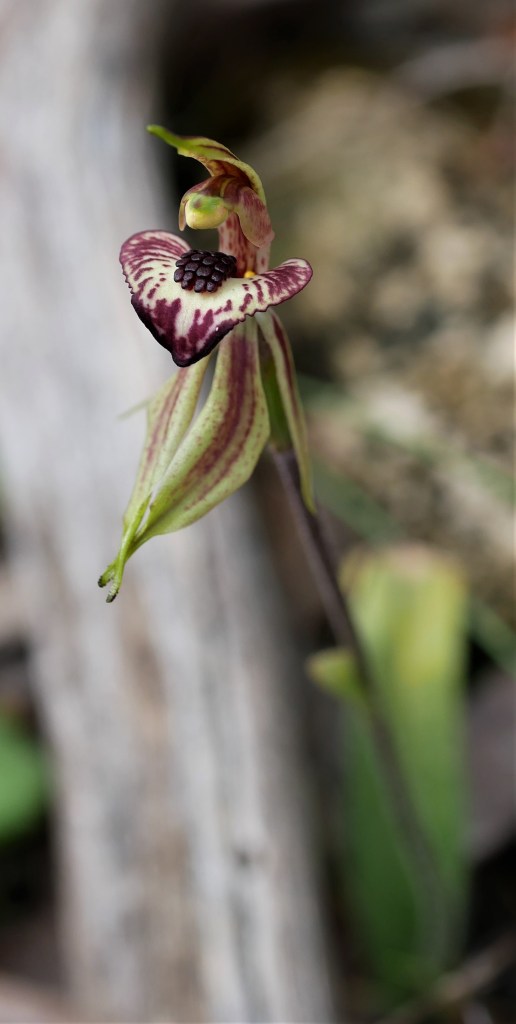
Pauline Myers’ Arachnorchis cardiochila was the winning picture. Synonyms for Arachnorchis cardiochila are Caladenia cardiochila, Phlebochilus cardiochilus and Caladenia tessellata. Common names include Heart Lipped Spider Orchid, Thick Lipped Spider Orchid, Fleshy Lipped Caladenia.

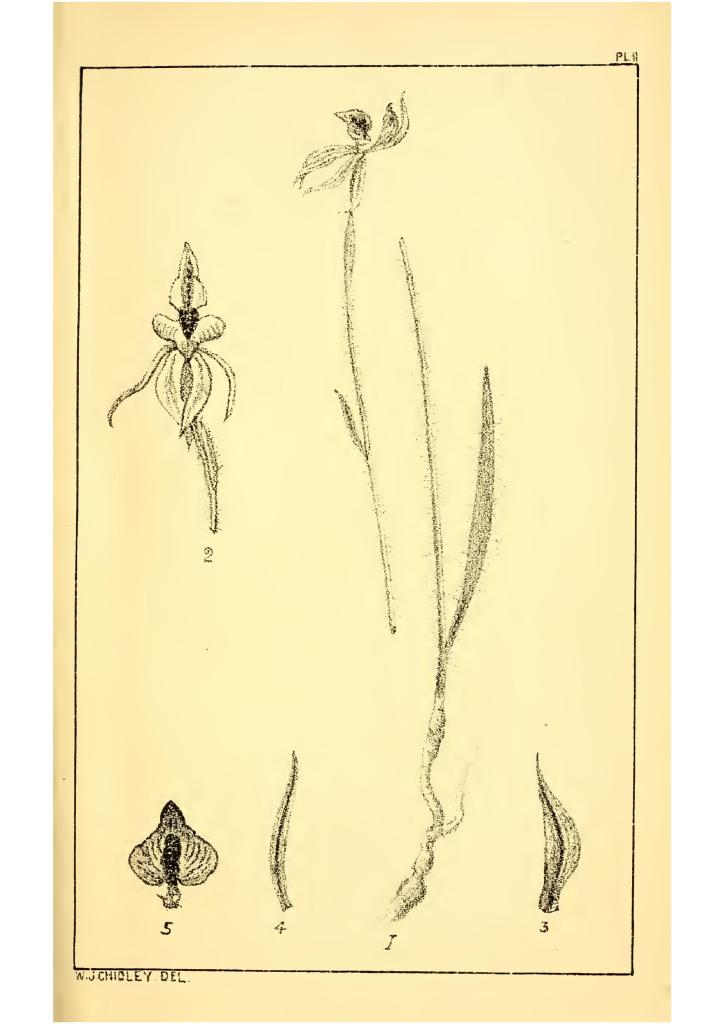
This species was named in 1886 by Professor Tate who presented it at the Royal Society of South australia at the October meeting. He did the original drawing.

The type specimen was collected at Golden Grove on October 2 1886 but it had also been collected much earlier (1865) at Barraba Scrub which is in the region of Mallalla.

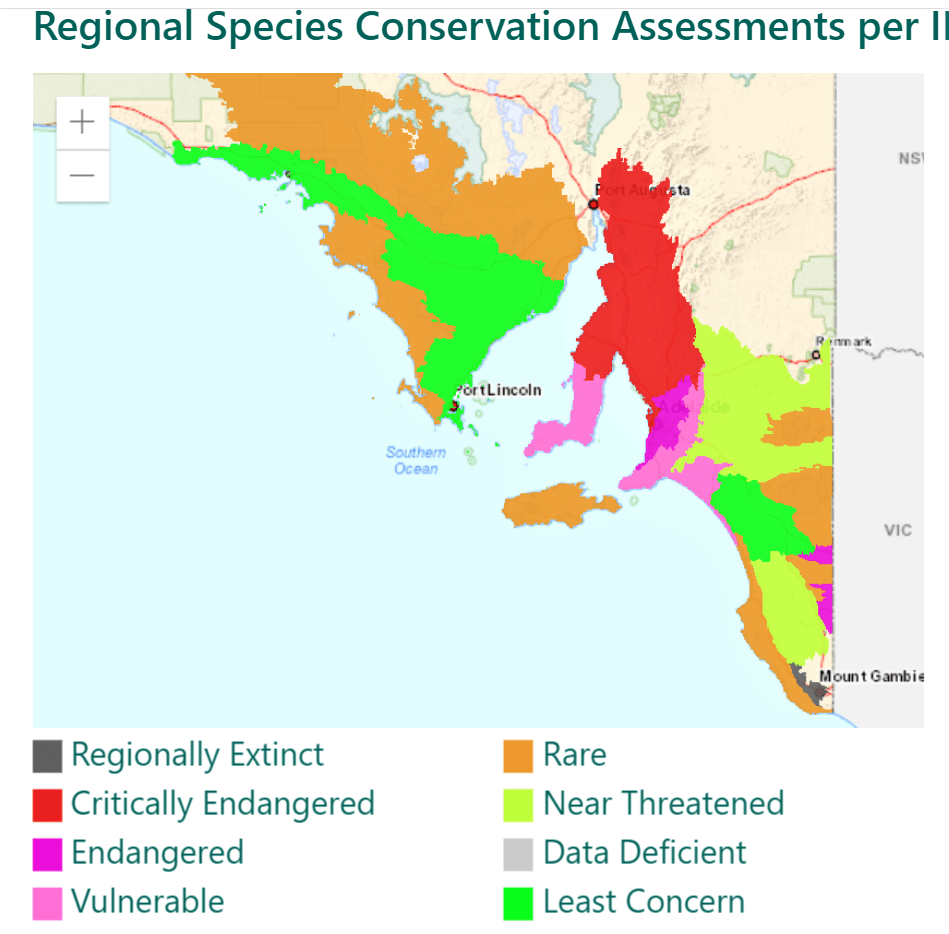
Its fate in both these areas has not been good; it is extinct in Golden Grove and critically endangered in the region containing Barabba Scrub. Although, it is considered to be a reasonably common orchid throughout its range in South Australia, Victoria and Southern New South Wales, there are areas of concern as seen the Seedbank of South Australia map below.

It should be noted that though Caladenia tessallata is listed as a synonym that this was used incorrectly, as C. tessallata is a separate but similar species found in the eastern states. Its main difference from C. cardiochila is that the edge of the labellum (lip) is toothed, not smooth as seen in Pauline’s photo.

End with the Pods #1

In 2011, Robert Lawrence wrote a book titled Start with the Leaves, a beginners guide to orchids and lillies of the Adelaide Hills. Bob Bates, editor of South Australia’s Native Orchid 2011, suggested that the next title should be End with the Pods. Well another field guide has not been written but following Bob’s suggestion, it might be interesting to see how far one can go with orchid identification based upon the pods, or finished seed capsules.

As most of the orchids for the Adelaide Hills and Fleurieu Peninsula have finished, it might be worth a look at some capsules found this year and see how far we can go with identification.

Here is the first one:
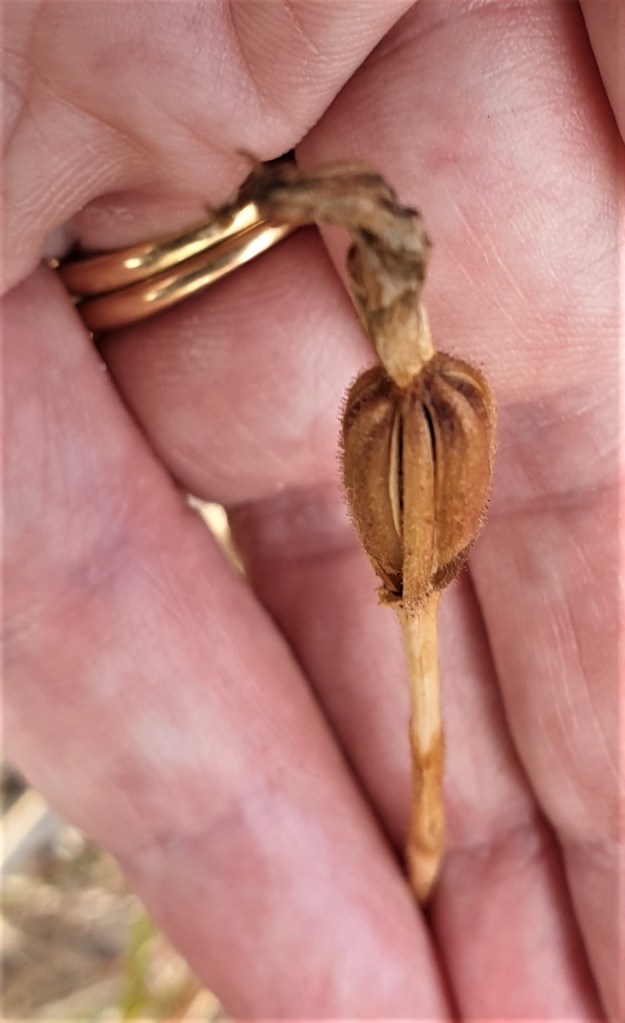
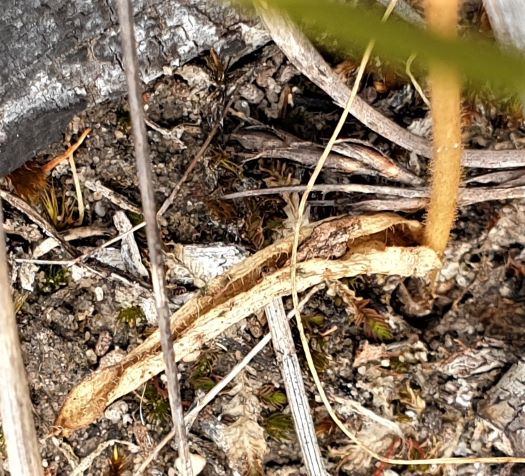
These pictures were taken on a mobile phone on the 30th November, 2019 on the Fleurieu Peninsula. There were several plants with single pods scattered across the park. The stems were reasonably tall (est 30cm) and surprisingly easy to spot.

The habitat is open forest consisting of Eucalyptus leucoxylon (Blue Gum), E. baxteri (Brown Stringybark) and E. fasciculosa (Pink Gum).

Seed pod
Senensced leaf of the same plant above

Is there enough information to identify this plant to species level?
Comment on what you think it is and why.

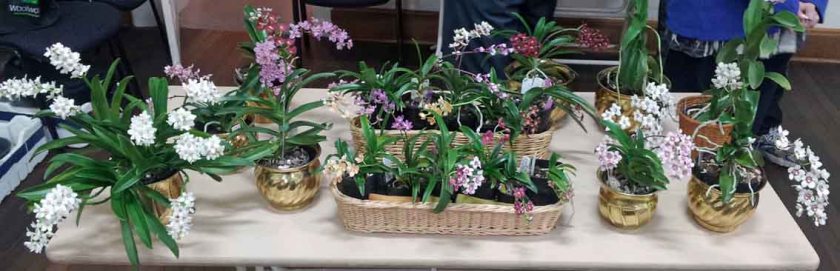
2019 SARCOCHILUS OPEN DAY & BBQ

WESTERN ORCHIDS / LABORATORIES

333 Ackland Hill Rd, Coromandel East, 5157

OPEN DAY & BBQ Saturday 23 November 2019 between 10:30 and 3:30

TEA & COFFEE ON SITE – BRING YOUR OWN DRINKS & CHAIRS

Members of all orchid clubs welcome

Western Orchids / Laboratories is run by Kevin Western and the main business is to produce a wide range of flasks containing quality plants with decent root and top growth such that they have the maximum probably chance to thrive after deflask for our customers.

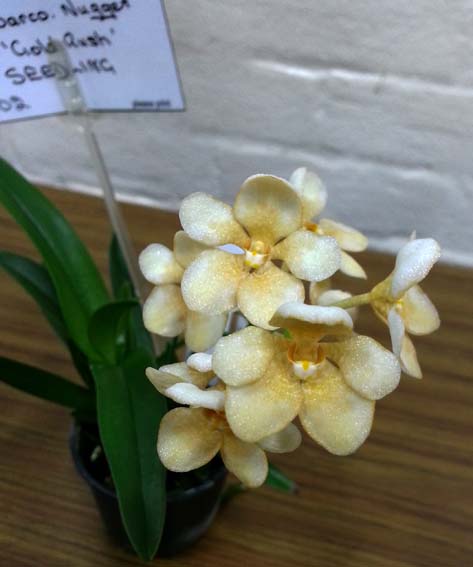
Come and see whit is probably the largest collection of Sarchochilus orchids in South Australia with a significant proportion of them in flower at the moment.

The property features a Tissue Culture laboratory where the seeds are sown, where the clones are generated and where the final replate flasks are housed until ready for sale.

Western Orchids / Laboratories was started back in 1995 when we were at at Coromandel Valley. the current property was purchased in late 1995 and the laboratory, glass house and first shade house built and commissioned in October of 1996.

Visitors will be able to see the laboratory as well as the glass house and shade houses.

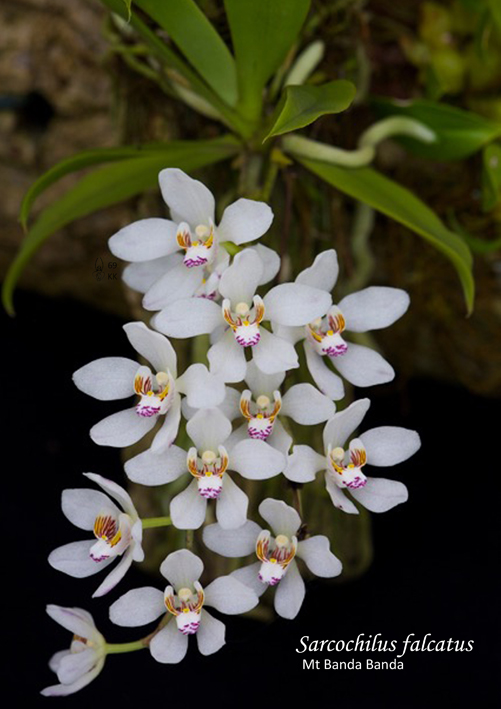
Sarcochilus falcatus

I (Kevin Western) am a plant breeder and constantly seek to buy and to breed better orchids for the orchid public of Australia.

I attend several interstate orchid fairs each year where a significant proportion of my sales occur. I also have a website (https://westernorchids.com.au/ ) and a string of regular customers who regularly purchase flasks and / or tissue culture medium from me. Many of my flasks are sold to other orchid nurseries who raise them in pot or on mount and then on-sell to the orchid public.

There will be Sarchochilus seedlings and plants available for sale AND I would like to sell as many of them as possible to make room for the next lot of deflasked seedlings to be reaised in their place and grown to flowering size when I will again choose my breeding stock from them.

Because I neet the room to grow them up I only want to keep the current breeders and unflowered seedlings.

THE REST WILL BE AVAILABLE FOR SALE.

Many plants at ridiculous prices – $5; $10; $15 & $20 with a few that just didn’t qualify as breeders individually priced to match their quality.