An Orchid Legend Recognized …

As one of the principle founders of NOSSA back in 1977, Les has worked tirelessly and continuously with cultivation and conservation of our native orchids. It was a delight to see Les’ work recognized earlier this year for his work with the next generation of orchid growers and conservations.

Along with all the others, we too at NOSSA add our congratulations.

Congratulations Les Nesbitt! 🌿
A true legend and mentor, Les has been awarded Volunteer of the Year 2025 by Catholic Education SA! πŸ‘
Since 2014, Les has generously volunteered at Kildare College, inspiring students through hands-on workshops in native orchid ecology and conservation. His work led to the creation of a full tissue culture lab and multiple student wins at the Royal Adelaide Show! πŸ†πŸŒ±
Beyond the classroom, Les’s impact includes groundbreaking conservation work with the Native Orchid Society of SA and the development of a germination kit for endangered orchids. 🌾
Thank you, Les, for your dedication, passion, and for cultivating the next generation of environmental stewards. πŸ’š

Reshared from Gawler Districts Orchid Club Inc. Facebook page

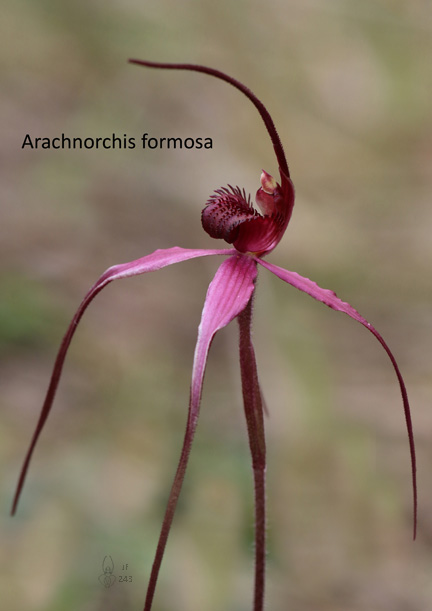
Caladenia haemantha is no more ….

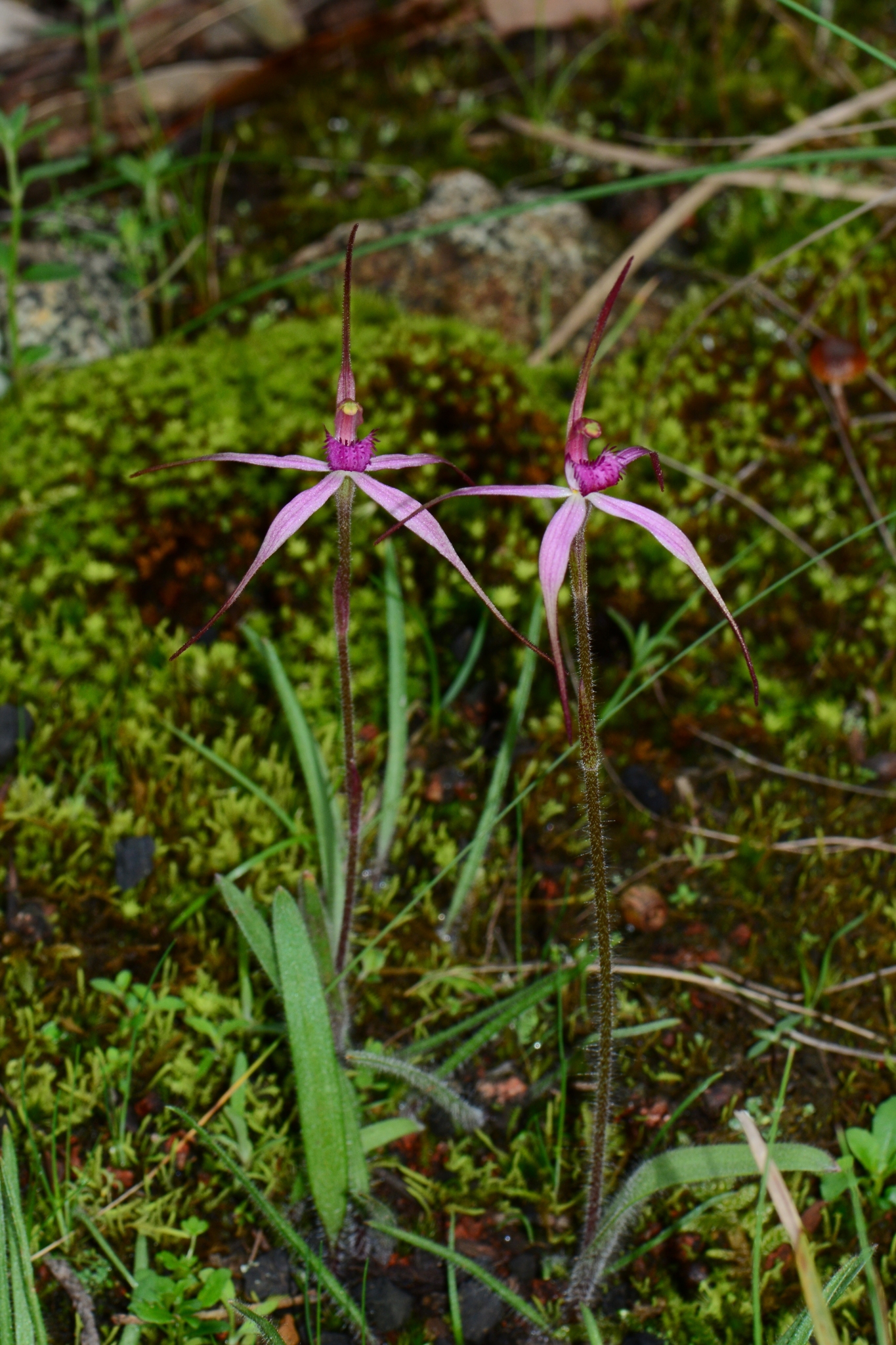
Orchid taxonomy can take some interesting turns. This has just happened to Caladenia haemantha. Based upon the examination of the type specimens collected for C haemantha and C formosa, authors Andrew McDougall & Timothy Hammer have just published an article reinstating C haemantha as C formosa.

Soon after C formosa was described and named in 1991 by GW Carr, David L Jones came along and described and named C haemantha; but in 1993, Mark Clements took a look and listed it as a synonymy of C formosa, where is stayed for many years until 2021 when Jones reinstated it as C haemantha.

But, through the beauty of science, along comes Andrew and Tim to have a closer look at the two type specimens. Meticulously they counted the details and duly documented their findings. Their conclusion – C haemantha is a synonym of C formosa.

To read more of the detail in Swainsona, click on the image below –

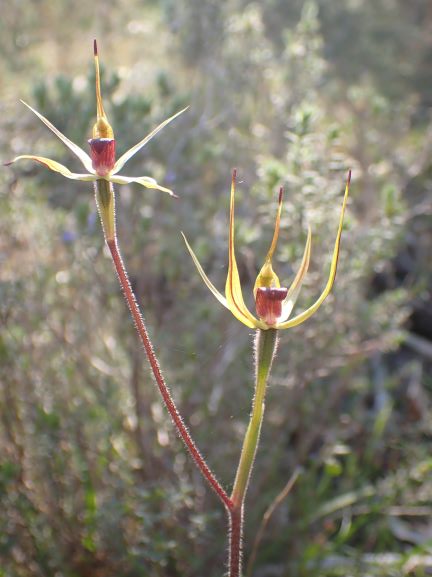
KUDOS TO NILLUMBIK SHIRE – SAFEGUARDING SPIDER ORCHIDS

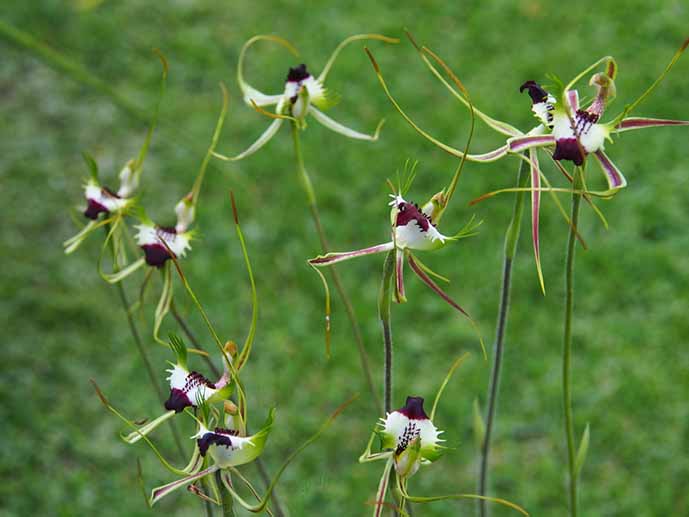
It is well known that many of our Australian orchids are facing extinction. But across the nation, there are many groups actively seeking to save them. One such group being the Nillumbik Shire near Melbourne with their Nillumbik Threatened Orchid Recovery Team. Effort has been preventing extinction of very threatened orchids – Charming Spider-orchid (Caladenia amoena) and Rosella Spider-orchidΒ (Caladenia rosella). Both these species have highly restricted populations with less than 150 wild plants each. The shire has teamed up with the Royal Botanic Gardens Victoria’s Orchid Conservation Program to propagate and return to the wild plants of these beautiful orchids.
For details see these two articles – https://www.nillumbik.vic.gov.au/Council/News-and-publications/Latest-news/Safeguarding-Nillumbik%E2%80%99s-Charming-Spider-orchid-from-extinction

and

https://www.nillumbik.vic.gov.au/Explore/Environment/Natural-environment/Animals/Native-animals/Rosella-Spider-Orchid

Rosella Spider-orchidΒ (Caladenia rosella)
Photographer: Micheal Keogh – https://www.inaturalist.org/observations/91826364

Charming Spider-orchid (Caladenia amoena)
Photographer: Michael Keogh https://www.inaturalist.org/observations/51880159

Protected: Photograph Competition April 2021

This content is password-protected. To view it, please enter the password below.

COVID-19 Could Not Stop Us

2020 started like most other years but that didn’t last for long. March is the anniversary of when the world went into lockdown. All due to Covid 19!

So like most other organisations here in Adelaide, NOSSA was immediately and suddenly impacted. All plans went out the window. Face to face activities ceased and it was some months before even a semblance of meetings resumed.

Yet despite all the difficulties and challenges, when the committee looked back over the year we were amazed at what we did achieve and so here is our list of 2020 – Covid19 could not keep us down!

NOSSA 2020 highlights instigated – Lindy McCallum, adapted from the February 2021 Journal

AGM

Delayed but not out.
Held in September (instead of March) via Zoom and face-to-face meeting.

Committee Meetings

Following a brief hiatus, the committee made use of email communications and then Zoom meetings. From June the committee used a mix of face-to-face and Zoom meetings.

  • Finally the opportunity to have members present when unable to attend!

Monthly meetings

Combination Face to Face and Zoom meetings from July
Results

  • Speaker Zoomed from Sydney
  • Country, interstate and overseas members are now able to join the meeting from afar

Shows and Displays

  • Display at Mt Pleasant Library
  • Stand at Australian Plant Society Spring Show
    • New location within the RAH Showgrounds
    • Good interest and good sales

YouTube Channel

Conservation Activity

  • NOSSA and other friends group worked with Forestry SA monitoring a damaged site at Knott Hill
    • We were heartened by the recovery that is happening
  • Monitoring
    • Thelymitra cyanapicata
    • Calochilus cupreus
  • Seed collection
    • Caladenia gladiolata
    • Thelymitra epipactoides
    • Caladenia strigosa

Propagation

  • New people trained in propagation techniques
  • Members completed the full cycle of propagation
    • Flasking
    • Replating
    • Deflasking and planting out the new plants
  • Two benches of shadehouse rescued Dendrobiums grown on for sale and raffles

Grants

  • Diuris behrii Project from Hillgrove Copper (project is almost complete)
    • 190 plants returned to Hillgrove
  • ForestrySA
    • Orchid identification and Wild Orchid Watch workshops
      • General public
      • Highschool children from Oakbank

Research

  • NOSSA members were able to locate and set up orchid quadrats for a Uni of NSW PHD candidate who was unable to visit South Australia because lockdown.

Field trips

  • After a brief hiatus, regular fieldtrips were recommenced from spring
  • August Yorke Peninsula to Crosser Scrub & Edithburgh
  • September Eyre Peninsula field trip went ahead with COVID 19 modifications

Wild Orchid Watch

  • NOSSA supported the launch of WOW
  • WOW presentation given at the August General Meeting and uploaded onto YouTube

Orchid Code of Ethics

  • Covered Sensitive Site visits and ethical photography
    • This had been in the pipeline for many years but finally came to fruition
  • Presented at the November General meeting, videoed and uploaded onto YouTube

Constitution

  • Ratified at the Annual General Meeting in September

Calendar 2021

  • Despite some hurdles, was produced in time for  2021

What a yearβ€”despite COVID we achieved so many things!

Photograph Competition & Benched Plants July 2020

Email your votes for both the competition and benched plants to Marg Paech, nossa.editor@gmail.com by 5 pm July 27 2020

1. Thelymitra jacksonii
2. Diuris magnifica
3. Thelymitra cyanapicta
4. Urochilus sanguineus (syn Pterostylis sanguinea
5. Diuris sp
6. Urochilus sanguineus (synonym Pterostylis sanguinea)
7. Pyrorchis nigricans
8. Arachnorchis leptochila (synonym Caladenia leptochila)
9. Prasophyllum australae
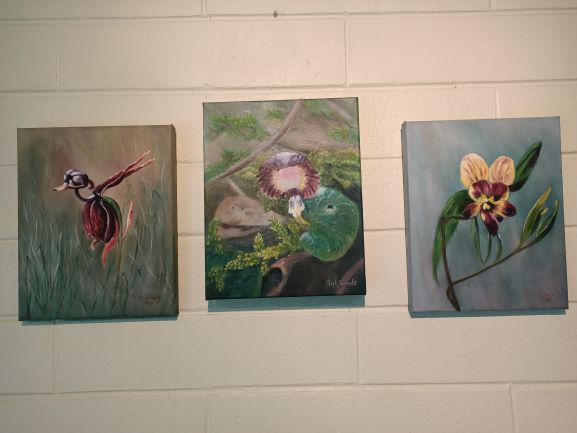
10 Paintings of Caleana major, Corybas diemenica and Diuris orientis

BENCHED PLANTS

A. Pterostylis robusta, Red Form
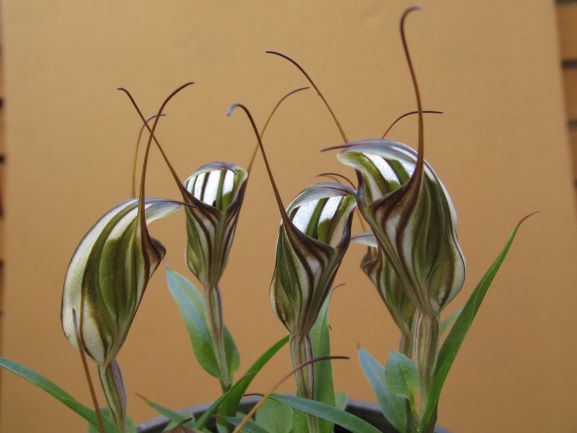
B. Pterostylis ‘Nodding Grace’
C. Pterostylis robusta
D. Pterostylis sanguinea
E. Acianthus pusillus

Together in Conservation – ForestrySA & Volunteers

Volunteers (pictured with ForestrySA staff) from NOSSA and other friends groups have been assisting ForestrySA with the monitoring and weeding of a slashed firebreak at Kuipto.

Caleana major (Flying Duck Orchid)

The firebreak has been periodically slashed for over 20 years resulting in a unique assemblage of flora adjacent to a native forest reserve. While the perennial shrubby vegetation is revocering there is limited protection for more delicate species like orchids so the site is currently closed for public access.

Diuris brevifolia (Late Donkey Orchid)

Pedestrian access will be allowed again after summer but horse access will be permanently restricted with the recent installation of fencing and locked gates.

Paracaleana minor (Small Duck Orchid)
Urochilus sanguineus (Maroon Banded Greenhood)
Thelymitra benthamiana (Leopard Sun Orchid)
Arachnorchis tentacullata (King Comb Spider Orchid)
Leporella fimbriata (Fringed Hare Orchid)

Orchids pictured are a sample of the different orchid species found at the Kuipto site.

Terrestrial Culture – October

Les Nesbitt’s Culture Notes from the October 2019 Journal

The days get gradually longer, hotter and drier this month. In a dry year there may be no useful rain in October. Keep up the watering while leaves remain green. Aphids can infest flower spikes so be on guard. Break off the tops of old flower spikes to discourage these pests. Microtis species flower this month.

Complete tuber removal by the middle of the month. These pots will have to be kept watered as long as the leaves stay green, hopefully well into November, to give time for additional tubers to form. Group these pots together to make watering easier. Diuris punctata plants may not die down until December.

Some seed pods will be ready to harvest usually on a warm day. Pick them as the ribs start to change colour from green to biscuit and before they split open and release the seed. Place the pods in paper envelopes & store inside in a dry place until sowing time next autumn. The cauline autumn flowering greenhoods will go dormant so once the leaves go yellow let these pots gradually dry out completely.

Sort out which pots to repot in summer. Stand small pots in a larger pot to denote those to make a show pot for next year. This applies to colony forming species which are expected to multiply.

2017 September Cultural Notes

Steve Howard’s September Australian Epiphytes and Terrestrials Orchids Cultural Notes for Adelaide’s conditions.

Watering

Epiphytes

Mounts daily. Generally moistening roots only.

Pots weekly. Small pots twice weekly depending on weather.

Terrestrial

Pots can dry out faster on warmer days so keep a watch on conditions. Note some terrestrials will commence summer dormancy towards the end of the month. Those that do show signs can have water reduced somewhat.

Feeding

Terrestrials

Weak organics like Seasol and Powerfeed applied in low doses can benefit colony type greenhoods.

Epiphytes

Low nitrogen always best for native epiphytes. Top up epiphyteΒ  pots with dolomite lime and a dash of blood and bone. Seasol a useful additive now as new seasons root start.

Pests and Disease

Epiphytes

Botrytis will rot new buds in cold damp weather as fast as it attacks new growths from now. Aphids will increase sharply this month and favour new growth and spikes.Β  Pyrethrum sprays eco friendly and work well, so does a hose but dry spike straight after.

Terrestrials

Some terrestrials will rot this month if conditions have been too wet or stagnant over winter. Note this for next season and add more drainage if this has been an issue.

General Advice

Keep flowering plants under cover to enjoy as can be rather wet and cold as well sunny and warm this month. Start repotting and division once flowering finished to give plants longest possible time to establish over new growing season.

Time to get busy and take note of the jobs of potting and division to be done. Sept and October are the best months to work on the collection before the hot weather sets in.

Do you have small slugs and snails in your pots?Β  Get a cheap coffee grinder and grind up your snail pellets. Sprinkle in the pot and water them in. Bite size for micro slugs and the baits get right into where they hide.

[Terrestrials are not repotted until summer – Steve will have more on that later]

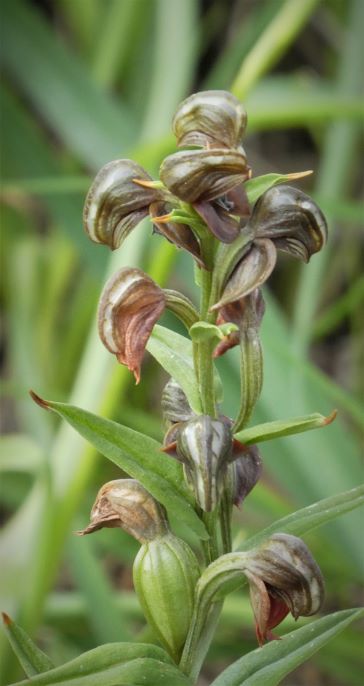
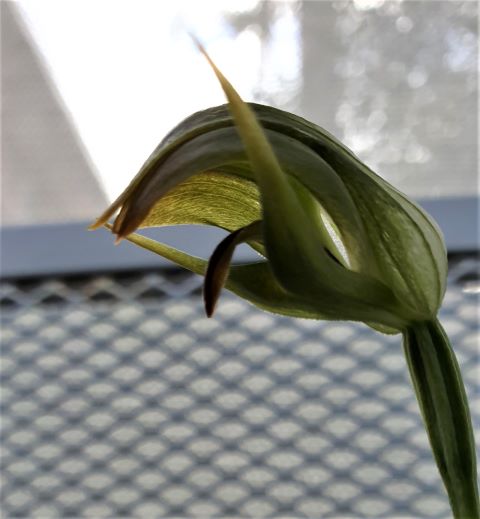
Pterostylis 'Nodding Grace'