
Robert Lawrence, NOSSA vice-President, was the speaker at the May 25th meeting. He spoke on his work in Native Vegetation Restoration projects in South Australia. Throughout his years of work, Robert monitored the orchids using them as a tool to assess the effectiveness of weed control.
In this talk, he shares the lessons learnt and conclusions he has drawn as a result. He concludes that orchids can be used as a Key Performance Indicator of the success of native restoration work. He cites Heather Whiting – the understorey drives the ecosystem in successful restoration.
So onto the video …
Author: nossaorchids
2021 June Talk – Photostacking Australian Orchids
For the June Native Orchid Society of South Australia’s meeting we were privelaged to have June Niejalke speak to our members about how to use photostacking when photographing our beautiful orchids.
Photographing our exquisite orchids is a challenge due to their size and the need to use macro. Sharp focus seems to elude many of us and for many years, we have admired her sharp images that has enabled us to see the hidden details of these tiny bush gems.
It was a pleasure to listen to her share her photographic methods. I hope you too find this video as helpful as those who were at the meeting found it.
2020 September Talk – Orchids and Fire
The Native Orchid Society is involved in many different activities, one of them being to assist researchers. In 2020, Covid 19 struck bringing many university projects to a halt. But in South Australia, NOSSA members were able to help PhD candidate Alex Thomsen, University of New South Wales, set up her project titled Impacts of Changing Fire Seasons on Orchids. The following video is her brief presentation of her planned research that she gave to the general membership at the September meeting.
COVID-19 Could Not Stop Us
2020 started like most other years but that didn’t last for long. March is the anniversary of when the world went into lockdown. All due to Covid 19!
So like most other organisations here in Adelaide, NOSSA was immediately and suddenly impacted. All plans went out the window. Face to face activities ceased and it was some months before even a semblance of meetings resumed.
Yet despite all the difficulties and challenges, when the committee looked back over the year we were amazed at what we did achieve and so here is our list of 2020 – Covid19 could not keep us down!
NOSSA 2020 highlights instigated – Lindy McCallum, adapted from the February 2021 Journal

AGM
Delayed but not out.
Held in September (instead of March) via Zoom and face-to-face meeting.
Committee Meetings
Following a brief hiatus, the committee made use of email communications and then Zoom meetings. From June the committee used a mix of face-to-face and Zoom meetings.
- Finally the opportunity to have members present when unable to attend!
Monthly meetings
Combination Face to Face and Zoom meetings from July
Results
- Speaker Zoomed from Sydney
- Country, interstate and overseas members are now able to join the meeting from afar
Shows and Displays
- Display at Mt Pleasant Library
- Stand at Australian Plant Society Spring Show
- New location within the RAH Showgrounds
- Good interest and good sales
YouTube Channel
- Talks recorded and upload to YouTube
- https://www.youtube.com/channel/UCmxHVRgyyMxO-SwjTSNG-tw/featured
- Captions added for those with hearing problems
Conservation Activity

- NOSSA and other friends group worked with Forestry SA monitoring a damaged site at Knott Hill
- We were heartened by the recovery that is happening
- Monitoring
- Thelymitra cyanapicata
- Calochilus cupreus
- Seed collection
- Caladenia gladiolata
- Thelymitra epipactoides
- Caladenia strigosa
Propagation

- New people trained in propagation techniques
- Members completed the full cycle of propagation
- Flasking
- Replating
- Deflasking and planting out the new plants
- Two benches of shadehouse rescued Dendrobiums grown on for sale and raffles
Grants
- Diuris behrii Project from Hillgrove Copper (project is almost complete)
- 190 plants returned to Hillgrove
- ForestrySA
- Orchid identification and Wild Orchid Watch workshops
- General public
- Highschool children from Oakbank
- Orchid identification and Wild Orchid Watch workshops
Research
- NOSSA members were able to locate and set up orchid quadrats for a Uni of NSW PHD candidate who was unable to visit South Australia because lockdown.
Field trips
- After a brief hiatus, regular fieldtrips were recommenced from spring
- August Yorke Peninsula to Crosser Scrub & Edithburgh
- September Eyre Peninsula field trip went ahead with COVID 19 modifications
Wild Orchid Watch

- NOSSA supported the launch of WOW
- WOW presentation given at the August General Meeting and uploaded onto YouTube
Orchid Code of Ethics
- Covered Sensitive Site visits and ethical photography
- This had been in the pipeline for many years but finally came to fruition
- Presented at the November General meeting, videoed and uploaded onto YouTube
Constitution
- Ratified at the Annual General Meeting in September
Calendar 2021

- Despite some hurdles, was produced in time for 2021
What a year—despite COVID we achieved so many things!
Orchid Code of Ethics or How I can conserve our native orchids
So many of us are interested in preserving our native flora and fauna, and for NOSSA it is the native orchids. But many of us may not be aware of how we can play a significant role in minimising our impact upon the environment so that they are still around for our children and grandchildren
The following video is a brief overview of two documents that NOSSA has produced. They are guidelines to help individuals know how they can minimalize their impact on the environment and so assist in the conservation of our beautiful and unique native orchids.
Below are the links to the documents referred to in the video:
Code of Ethics – Sensitive Sites 2 page
Code of Ethics – Sensitive Sites 3 page
Code of Ethics – Photography
Ethical Nature Photography in Tasmania
Australian Orchids: Their Role in Human Lives
In July, NOSSA resumed face to face meetings but with an innovation. We introduced Zoom meeting as part of our face to face meeting. We are hoping that this will allow more members to become involve with the meetings.
Our first speaker, Greg Steenbeeke, spoke to the meeting from Sydney; and we had another member joining in from Victoria. Greg kindly allowed us to record his talk which is available for all to hear.
Speaker: Greg Steenbeeke
Anyone wanting to join our General Meeting, please contact the treasurer via email – nossa.treasurer@gmail.com
Petalochilus – when use of a segregate or common name is helpful
The following article is from the Native Orchid Society of South Australia Journal Volume 44 No 7, author Rosalie Lawrence.
Over the years there have been many orchid name changes (particularly at genus level), some quite drastic, some multiple times and for many there can be a reversion back. Yes, this creates confusion but there are times when some of these name changes, known as segregates (both at species and genus level) can be useful.
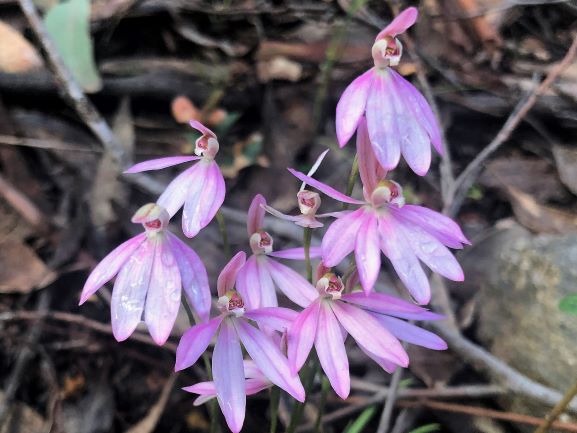
A case in point, is Lindsay Ames’ winning photograph (June) – Caladenia carnea synonym Petalochilus carneus. Petalochilus was proposed as a genus in 2001 by DL Jones, MA Clements, et al. It was one of many proposed genera changes. Many discussion papers followed but in 2015 after further taxonomic and DNA work, Mark Clements et al published a paper that “points to Lindley’s 1840 interpretation of Caladenia (…..) as being the most accurate reflection of the group.” Hence the discontinued use of Petalochilus and the other segregate genera.
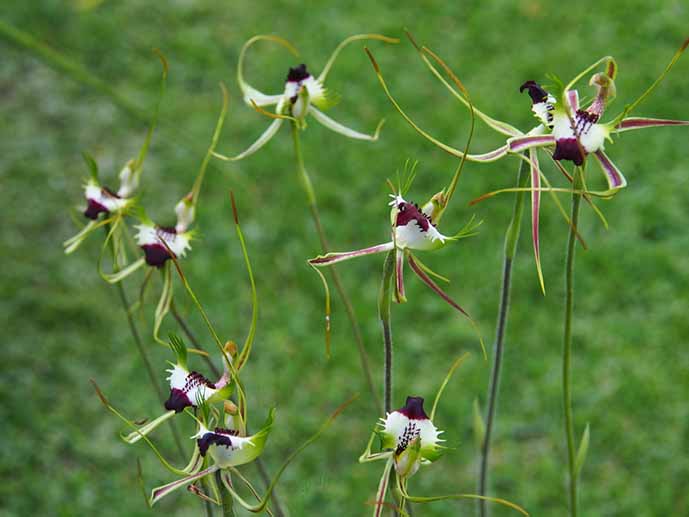
So, it currently belongs with Caladenia, a large genus with over 350 species (mainly in Australia). It is a genus with great morphological (visual) diversity – compare Caladenia tentaculata with C. cucullata or C. flava. But Caladenia
subgenera Caladenia (synonym Petalochilus*), as a much smaller segregate genus allows us to visualize a specific group within the Caladenia genus.
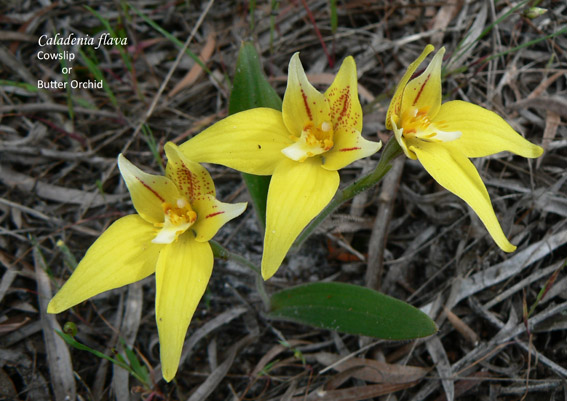
Caladenia sens. lat. are characterised by single hairy leaf, lacking lobes or serrations; hairy stem; showy flowers with similar sepals & petals. The labellum is highly modified consisting of three lobes with calli on the middle lobe.
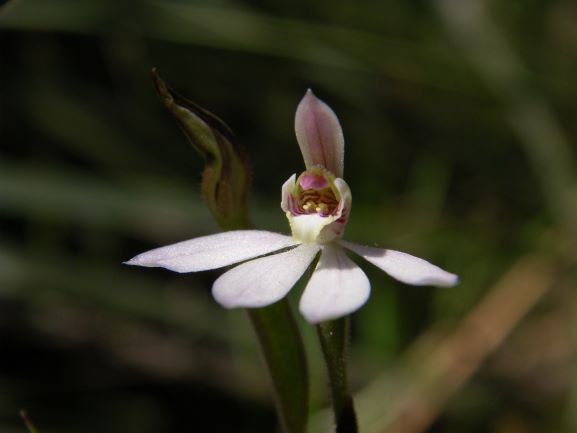
Petalochilus is further characterised by small (1 – 5 cm) pink to white flowers,
short broad forward projecting tepals; erect to slightly incurved dorsal sepal,
distinct trilobe labellum, hinged, with calli and red transverse bars, column
green to pink with red to purple bars.
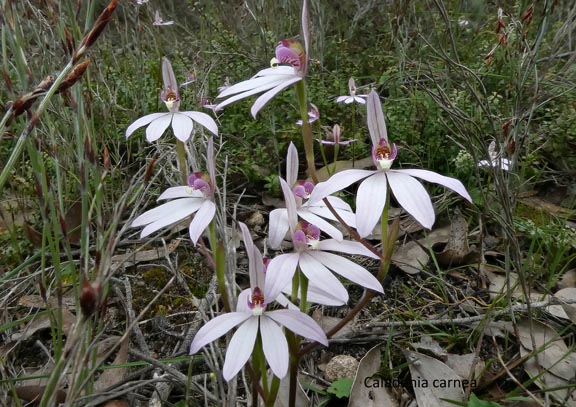
Yet within Petalochilus itself there can be further groupings of which P carneus is most likely the main one. This consists of at least 8 species – P carneus (C carnea), P catenatus (C catenata), P coactilis (C coactilis), P fuscatus (C fuscata), P ornatus (C ornata), P prolatus (C prolata) , P. vulgaris (C vulgaris) and P xantholeucus (C xantholeuca). When a specimen cannot be identified to species level, it may be helpful to refer to it as a complex.
This is where comes the fun of trying to identify the specific species in the field (or for that matter from a photograph). To help myself understand, I often produce comparison charts based on descriptions found in the literature. The chart comparing the eight species is available as a pdf.
*Throughout the article the synonym Petalochilus is used for Caladenia subgenera Caladenia to make a clear distinction from Caladenia sens lat. It needs
to be noted C carnea is considered the type specimen for Caladenia so with any splits, it will remain in Caladenia.
References
Backhouse G et al,Bush Gems: a guide to the Wild Orchids of Victoria 2016
Bates R B South Australia’s Native Orchids 2011
Clements MA, et al, Caladenia Revisited: Results of Molecular Phylogenetic Analyses of Caladeniinae Plastid and Nuclear Loci 2015
Jones DJ, A Complete Guide to Australian Orchids including it Territories and Islands 2006
https://en.wikipedia.org/wiki/Caladenia Accessed 3 August 2020
https://www.pacificbulbsociety.org/pbswiki/index.php/Petalochilus Accessed 3 August 2020
Thank you to Andrew Brown for reviewing this article.
Protected: Photograph Competition August 2020
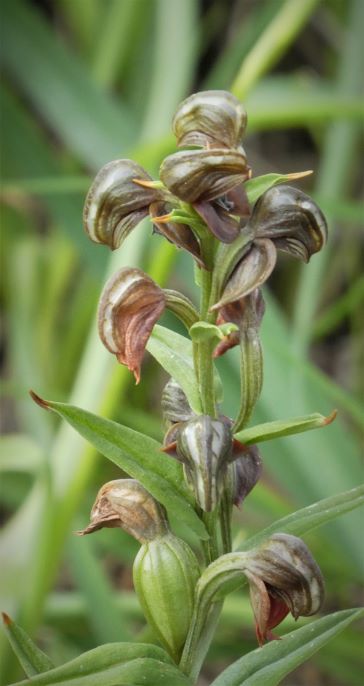
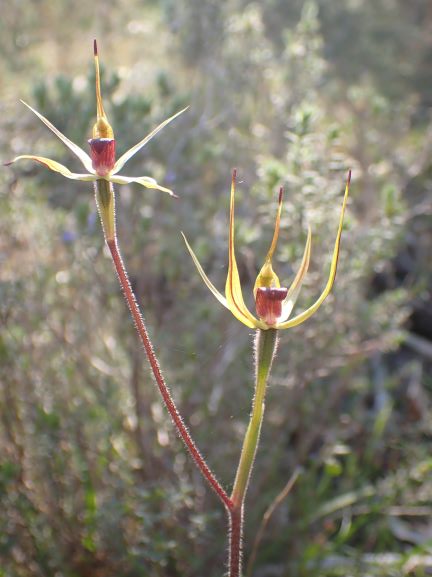
Photograph Competition & Benched Plants July 2020
Email your votes for both the competition and benched plants to Marg Paech, nossa.editor@gmail.com by 5 pm July 27 2020




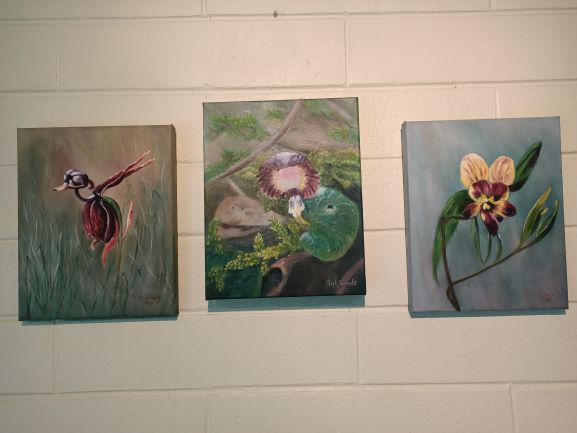
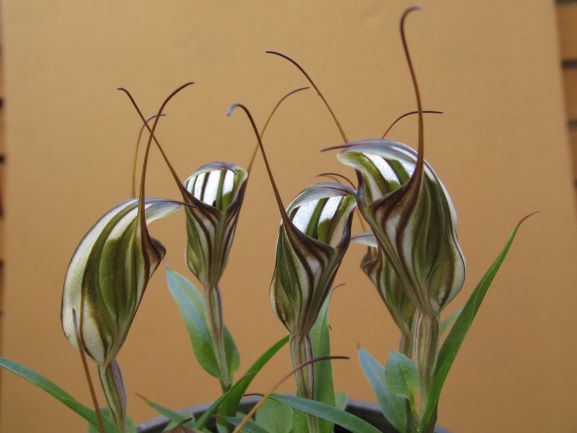
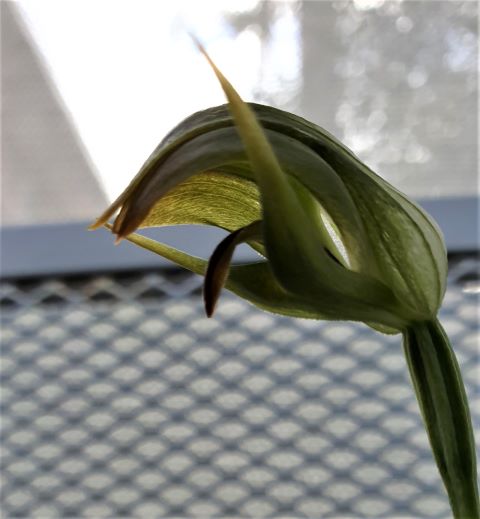
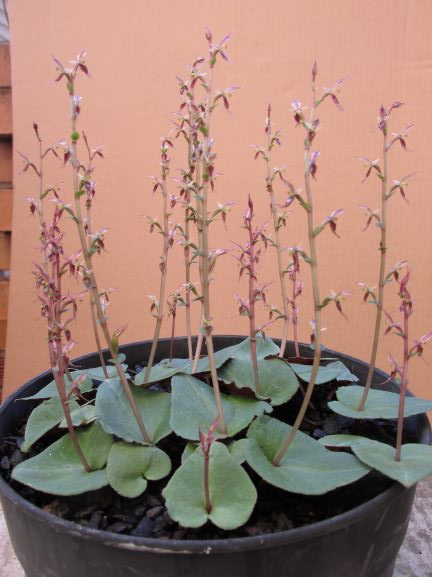
BENCHED PLANTS


NOSSA: The Doco
Last year, UniSA second year media students were required to produce a short documentary about a local organised. Three of their students, Vanessa Rossi, Tayla Elliot and Emma Sullivan, chose to produce a video about the work of the Native Orchid Society of South Australia. And for this we thank them. It was interesting working with them and they learnt a few things about our bush gems – namely that they are not big and showy!
Some adjustment needed to be made to the original video, but it is now available for viewing
 NOSSA
NOSSA 