The short answer is very little to none at all. As long as there is some organic matter in the soil mix terrestrial orchids will grow and flower without added fertiliser.
For fungus dependent orchids, such as Caladenia, a fresh layer of leaf litter added in summer to the top of the pot is all that is required. These orchids are seldom repotted.
Growers who show their non fungus dependent orchid plants for judging want strong superior plants. They add a pinch of blood & bone fertilizer to each pot during the annual summer repotting. Vigorous orchids like the colony forming greenhoods will respond to weak foliar feeding in the early growth stages, (April to July). If fertilizing is overdone the plants can burn or produce multiple flowers that grow into one another and ruin the spectacle of flowers.
Other factors are more important than fertilizer. Strong light in winter, constantly moist potting mix, excellent drainage, good air movement and a pest free environment are more important.
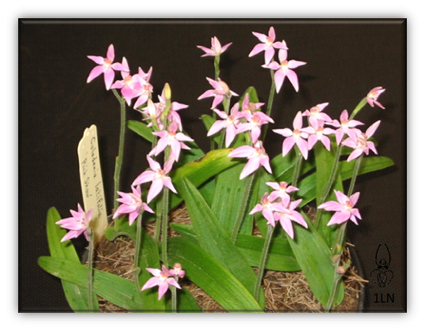
Thelymitra (Sun Orchids) in cultivationCaladenia latifolia in cultivationDiplodium robustum – one of the cauline greenhoods
In 1983, Ron Robjohns, NOSSA’s first treasurer, wrote a comprehensive series of articles about growing epiphytes in South Australia. Thirty years on Ron’s information for growing is still helpful and applicable for today. Any updates or extra information are in black text.
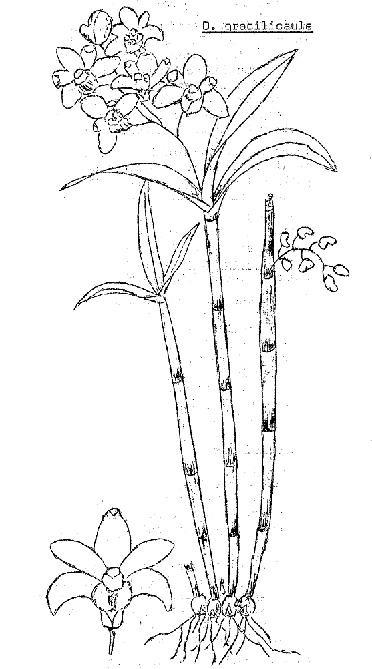
NATIVE ORCHID SOCIETY OF SOUTH AUSTRALIA JOURNAL Volume 7, No. 8, September, 1983 GROWING EPIPHYTIC ORCHIDS IN SOUTH AUSTRALIA – R.T. Robjohns Dendrobium gracilicaule D. gracilicaule is found from Kiama in eastern New South Wales to the Bloomfield River in the south east of Cape York Peninsula in Queensland. It has one of the widest ranges of habitat of any of our epiphytic orchids, growing in the light coastal scrubs, the dense rainforests and, in the tropical areas, on the tablelands. With such a variation in altitude (from near sea-level to about 1200 metres) it follows that there is a wide variety of hosts, even occasionally growing as a lithophyte on rocks. The stems are long, thin and cylindrical, ½ to 1 cm thick, and from 20 to 60 cm in length with 3 to 6 ovate to lanceolate, terminal leaves, 5 to 13 cm long and of rather thin, leathery texture. The racemes are short (5 to 12 cm) and bear 5 to 14 small, cup-shaped flowers of a dull or light yellow colour having the outer sepals lightly to heavily blotched or spotted with a brown or red-brown. Occasionally they are found a brighter yellow and without blotching. The flowering season is from July to September. D. gracilicaule must surely be one of the hardiest and easily cultivated of our Australian epiphytic orchid species as it is adaptable to almost any conditions. I have it growing and flowering on hardwood slabs, paperbark limbs and in a pot, but I think it is better if mounted. It receives 50% – 60% shade and occasional foliar fertiliser. I protect it from frost but the cold does not affect it. It does not flower from first year stems but will flower from mature stems for several years, even after they are leafless. Although most racemes are terminal or near, I have had racemes occurring from nodes halfway along a leafless canes. There are two natural hybrids, i.e. D. x suffusum and D. x gracillimum. D. x gracillimum is a natural hybrid between D. gracilicaule and D. speciosum in which the features of D. gracilicaule are dominant in the flower while in D. x suffusum, the natural hybrid between D. gracilicaule and D. kingianum, D. kingianum is the dominant parent. D. gracilicaule has not attracted professional hybridists, probably because the flowers are not as outstanding as many of our other epiphytes, only two crosses appear to be registered: D. Susan (D. gracilicaule x D. falcorostrum) and D. Shan Leaney (D. gracilicaule x D. gracillimum).
With the development of cities here in Australia, many of our orchids were lost as habitat was cleared and the newly arrived settlers built houses and reconstructed the gardens they knew from the Old World; but the odd pocket of native bushland has survived. Cemeteries and golf courses have often been the only refuge for remnant bushland. One such refuge has been The Pinery, Grange Golf Club, the only known location of Oligochaetochilus arenicola (syn. Pterostylis arenicola) on the Adelaide Plains. In the National Parks and Wildlife Act, this orchid is scheduled as vulnerable. The Golf Club left this site intact and has been supportive of the conservation efforts of the Threatened Plant Action Group who in turn have received assistance from the Native Orchid Society of SA and the Natural Resources Adelaide and Mt Lofty Ranges.
Typical of the rufushoods, this Oligochaetochilus arenicola shows the sencesing leaves, pendent petals and hairs on the labellum. Photographer: H Lawrence
Below is a media release from the Natural Resources, Adelaide and Mt Lofty Ranges
Orchids come in ‘under par’ at Grange Golf course
News release
30 September 2015
A tiny remnant population of rare orchids which survives in a patch of bush on Grange Golf Course has increased 50% since last year, according to a new survey.
The survey conducted this month found 1200 individuals of the Sandhill Greenhood Orchid (Pterostyllis arenicola), a nationally threatened species which is considered critically endangered in the Adelaide and Mt Lofty Ranges region.
When surveys began 20 years ago, only about 100 plants survived at this site. But the latest survey has revealed the population is steadily increasing
The orchid comeback is thanks to decades of care by four groups involved with the annual survey: the Threatened Plant Action Group, the Native Orchid Society of SA, Natural Resources Adelaide and Mt Lofty Ranges, and with support from the Grange Golf Club.
The tiny fragment of native pine bushland in the middle of Grange Golf Course is one of the only known locations of this species within the entire Adelaide and Mt Lofty Ranges region, with other small populations known from near Wellington and Tailem Bend.
The orchid grows 10cm-25 cm high and produces hood-shaped flowers that are green and brown or red-brown with white markings. Most species of orchid flower for only a short period and for the Sandhill Greenhood, it will flower only for the next few weeks.
Grange Golf Course just happens to provide ideal conditions for the plant: red sandy soils and an over-story of native cypress pine trees.
Dedicated project partners have tackled the main threat to orchids – suffocation by Perennial Veldt Grass and Soursob weeds – through years of patient hand weeding.
The orchid comeback is a great success story of collaboration across the community to save one of our state’s tiny floral gems.
As a demonstration of nature’s interdependence, conserving the Sandhill Greenhood also means conserving a particular mycorrhizal fungus that must be in the soil for Sandhill Greenhood seeds to germinate. In addition, the flowers must be pollinated by a particular type of insect, the fungus gnat. The gnat is attracted by the orchid’s pheromones and tries to mate with the flower, only to find itself loaded up with a packet of pollen which it then transfers to the next flower as it continues its romantic adventures.
While the survey results are good news, the Sandhill Greenhood population is still precariously small, and it is hoped that as the population grows, so do the options to secure the species into the future.
South Australia has over 260 species of orchids, including 50 species of greenhood.
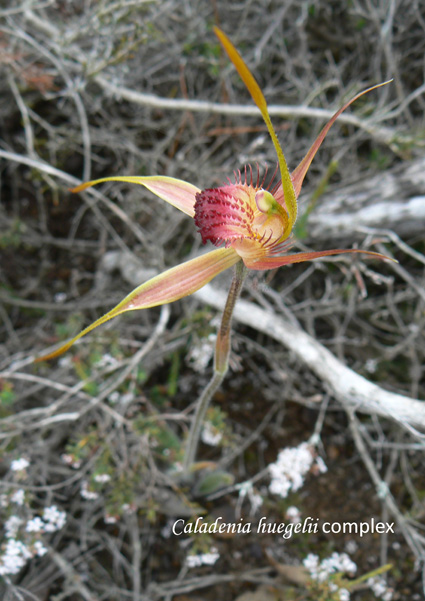
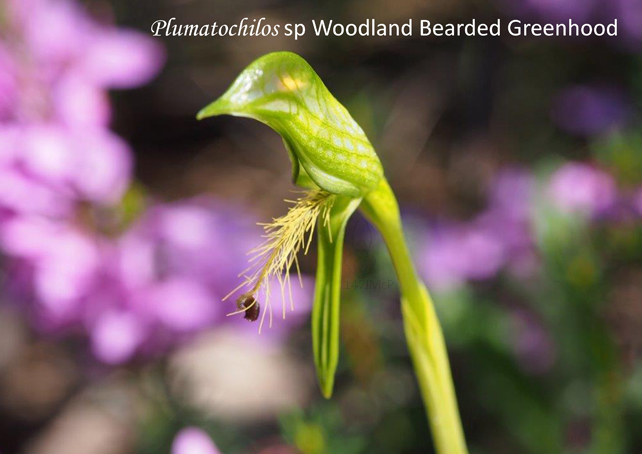
Five photos were entered for the September competition and there was a draw, Pauline Meyers’ flower of a plant from the Caladenia hueguelii complex from Western Australia and Jill McPherson’s Plumatichilos sp. Woodland Bearded Greenhood from Scott Creek Conservation Park. The other three by Chris Davey were photographed on Yorke Peninsula (see Letter to the Editor in this September Journal).
As winners they showcase the great diversity that are found in our Australian terrestrial orchids.
Plumatichilos belongs to the greenhoods but the features that set it apart from the other greenhoods are the long thin bristled labellum, the galea pinched in the middle resulting in two openings and the rosette of leaves growing a short way up the stem. Nationally there are thought to be several species but only a small handful have been named. In South Australia, there may be a few distinct species but currently they are usually identified with a phrase name such as Plumatichilos sp Woodland Bearded Greenhood.
Mainly flowering in spring the flowers of the Caladenia huegelii complex are characterised by the thickened clubs on the three sepals, petals shorter than the long sepals, fringed (either short or long) labellum with four or more rows of calli. All of these features can be seen in Pauline’s photograph but the leaf is not so easily seen which should be long, hairy and curve inward. In all there are said to be twenty two species within this complex of which twenty are named.
References:
Brown et al (2013) Field Guide to the Orchids of Western Australia, Floreat, WA Simon Nevill Publications.
Jones, David L (2006) A complete Guide to Native Orchids of Australia, Frenchs Forest, NSW: Reed New Holland
Jeans, Jeffrey & Gary Backhouse (2006) Wild Orchids of Victoria, Seaford Vic: Aquatic Photographics.
Bates, R. J. (2011) South Australia’s Native Orchids NOSSA DVD, Adelaide
This was the question posed to Les Nesbitt at the September monthly meeting. Later there was some further discussion, of which see below:
When do I stop watering my Greenhoods?
The short answer is when the leaves go yellow and start to die off, usually in October- November. Allow the pot to dry out completely to dry up the roots and old tubers so that they do not go mouldy and rot the new tubers.
Australian terrestrial orchids form tubers underground. The mature plant dies back at the end of the growing season and enters a period of dormancy which for South Australian terrestrials is over summer.
A general principle of watering is to match the watering to the rainfall pattern. Whilst there is minimal rain over summer, when dormant tubers are in pots it is important to not let them stay dry for months and become desiccated. A light sprinkling every week or two is sufficient.
Pterostylis ‘Nodding Grace’ This is an hybrid between P. nutans and P. curta. Obviously it is not time to stop watering.
When do I start watering again?
For the cauline group (Diplodiums) from South-eastern Australia start watering at the end of January as the tubers are starting to shoot by then. For other greenhoods start light watering in late February and gradually increase the water until shoots appear usually in March-April. Do not let the pots dry out once leaves are visible.
Diplodium robustum – one of the cauline greenhoods. Note difference the between the leaves of the non-flowering rosettes and the flowering plants.
Other cultivated Australian terrestrial orchids require a similar watering regime although leaves of some appear later in May or June.
100 years ago on 15 July 1915, the state government declared Morialta a National Pleasure Resort. The Friends of Black Hill and Morialta have been holding a series of public events to celebrate the Centenary of Morialta. As part of the celebrations, the Native Orchid Society of South Australia has conducted some orchid walks in the park.
In 2004, an interim Flora Species List was produced by the then Department for Environment and Heritage and 39 orchid species were listed. It is an interim list and considering that the park is 5.33 square kilometres with a range of different habitats, it is possible that there are more species than originally listed.
One native species not included on the list is Caladenia latifolia but its presence is well known to members of the Native Orchid Society. Unfortunately the South African weed orchid Disa bracteata (Monadenia bracteata) hasalso been found in the park.
In this video most of the shots have not been taken at Morialta but it does showcase some of the orchids that can be found in the park.
In 1983, Ron Robjohns, NOSSA’s first treasurer, wrote a comprehensive series of articles about growing epiphytes in South Australia. Thirty years on Ron’s information for growing is still helpful and applicable for today. Any updates or extra information are in black text.
NATIVE ORCHID SOCIETY OF SOUTH AUSTRALIA JOURNAL
Volume 7, No. 7, August, 1983
GROWING EPIPHYTIC ORCHIDS IN SOUTH AUSTRALIA – R.T. Robjohns
Dendrobium pugioniforme (Dagger Orchid)
This is an epiphyte frequently growing into large pendulous masses on the branches or trunks of trees, mainly in the rain forest areas from Mt. Dromedary on the south coast of New South Wales northwards to the Bunyah Mountains in south eastern Queensland. The stems are slender, wiry and branching, often quite long and usually tangled. Thin creeping roots develop freely from nodes at the branches.
The distinguishing feature of the numerous shiny, thick flat, ovate to lanceolate leaves is the sharply pointed tip.
The flowers are usually single but sometimes 2 or 3 per inflorescence and are 2 to 2½ cm in diameter. The petals and sepals are light green, the labellum pale with bright red or purple markings. The flowering season is September to November.
It is a reasonably hardy plant which will respond to cultivation on quite a variety of hosts. I have had success using Melaleuca, and find that it responds to a position having plenty of shade and moisture, particularly during our summer. Although in the wild it will tolerate cold conditions, (being found from near sea level to around 1300 metres), it will require shelter from our winter frosts
Most authorities designate it an epiphyte, however, in “The Orchadian” Vol. 4, No. 2, p. 24 (1972) D.L. Jones reports having found a bleached and tough looking plant growing on Alum Mountain with its roots amongst leaf litter in a crevice. Again in “The Orchadian” Vol. 7, No. 7, p. 164 (1983) G. Walsh describes ‘inter alia‘ lithophytic forms of D. pugioniforme growing in the Illawarra District of New South Wales.
In view of this it could possibly be grown in a pot, but as it grows quite readily on a slab I have felt it pointless to possibly waste a plant just to grow it in a pot. Fertilise in the growing season with foliar fertiliser at half the recommended strength.
Two naturally occurring hybrids of D. pugioniforme have been recorded – D. pugioniforme x D. tenuissimum and D. pugioniforme x D. beckleri but they are relatively rare (Ford, “The Orchadian”, Vol, 3, No. 7, p.88: Dockerill, Aust. Indig. Orch. Vol. 1, pp 370-371) and as yet it has not yet attracted the hybridists as there does not appear to be any registered crossings.
Of the five entries this month, three were spider orchids and the winner was from this group. It was Rob Pauley’s Arachnorchis cardiochila (syn Caladenia cardiochila), Heart Lip Spider Orchid which can be found across South Australia and into western Victoria. At one time a specimen was found on Flinders Island, Tasmania but as it was collected in 1947 it is considered extinct in that region.
This lovely flower is quite variable in colour and form.
The heart shape labellum is a distinctive feature of this spider orchid, so it is not surprising that this is reflected in the name. Cardio means heart and chila lip.
What probably is surprising is that the traditional heart shape symbol has come full circle. It had a botanical origin. According to cardiologist Professor Armin Dietz the symbol was originally a stylized vine/ivy leaf as evidenced from paintings on goblets from the 3rd millennium. In the Middle Ages, doctors and anatomists used the shape to represent the heart. As at that time Latin and Greek were both the international languages of scholars, including doctors, the word associated with the symbol was the Greek word kardia (ie cardio) meaning heart. Consequently, by the time Ralph Tate names this species in 1887, the shape has become intrinsically linked with the heart and so it must have appeared to him as an obvious descriptive name.
There are several field guides which give a detailed description of the species including South Australia’s Native Orchids DVD-ROM which is available for sale from NOSSA.
The texts published on this website are taken from his book “Ewige Herzen – Kleine Kulturgeschichte der Herzbestattungen” (“Eternal Hearts – a short cultural history of heart burials”), published 1998 in MMV Medien und Medizin Verlag, Munich. (English translation by Pauline Liesenfeld.)
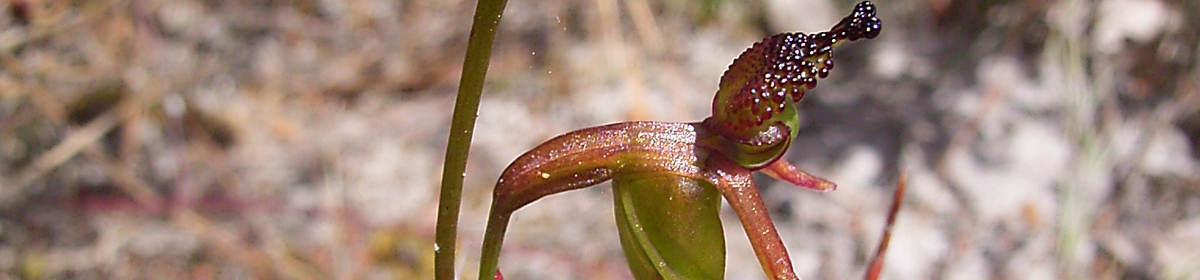
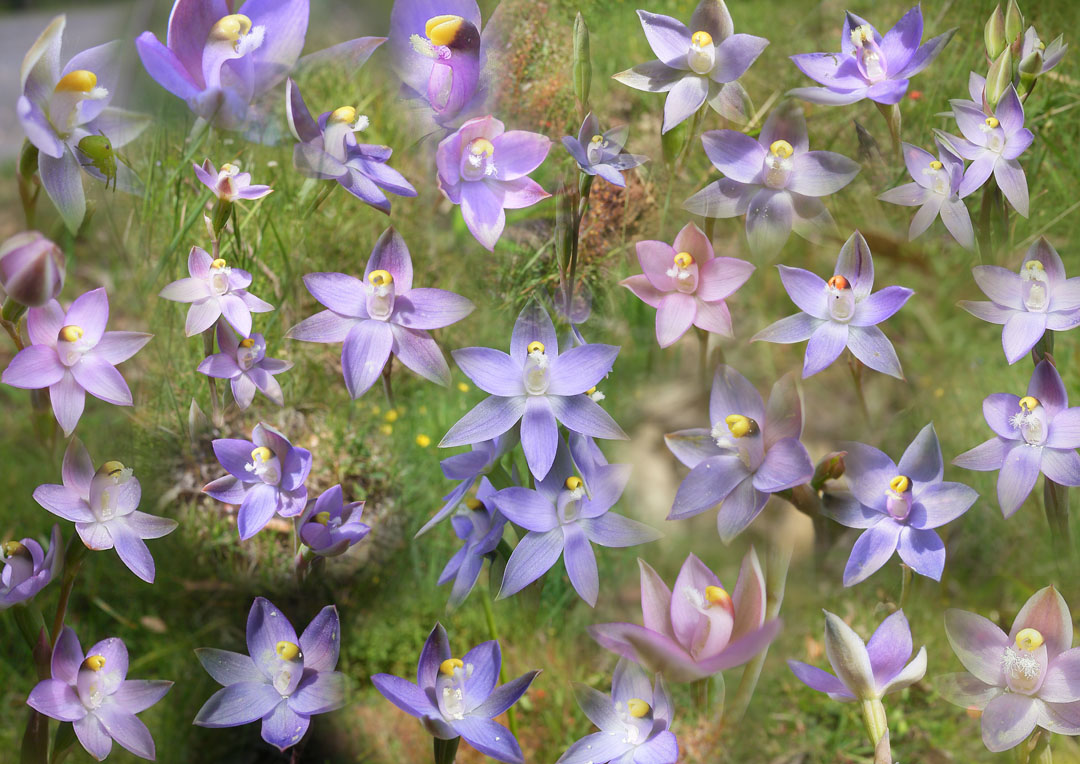
Orchids can be incredibly easy to identify or frustratingly difficult. For instance, the Flying Duck orchid is easily recognizable. The name says it all. But for many other orchids, particularly the ubiquitous blue sun orchids, it is necessary to make careful observations.
In this collage there are several species, but which is which?
For sun orchids the most important distinguishing feature will often be the column, details of which are described or illustrated in orchid keys. For example Bates and Weber, Orchids of South Australia (1990) has an illustrated dichotomous keys showing the different types of columns.
Images from Bates & Weber, Orchids of South Australia, pages 147 to 150; courtesy of the Board of the Botanic Gardens and State Herbarium.
With today’s cameras, it is possible to photograph the column, preferably from front, side and above. This helps greatly with identification.
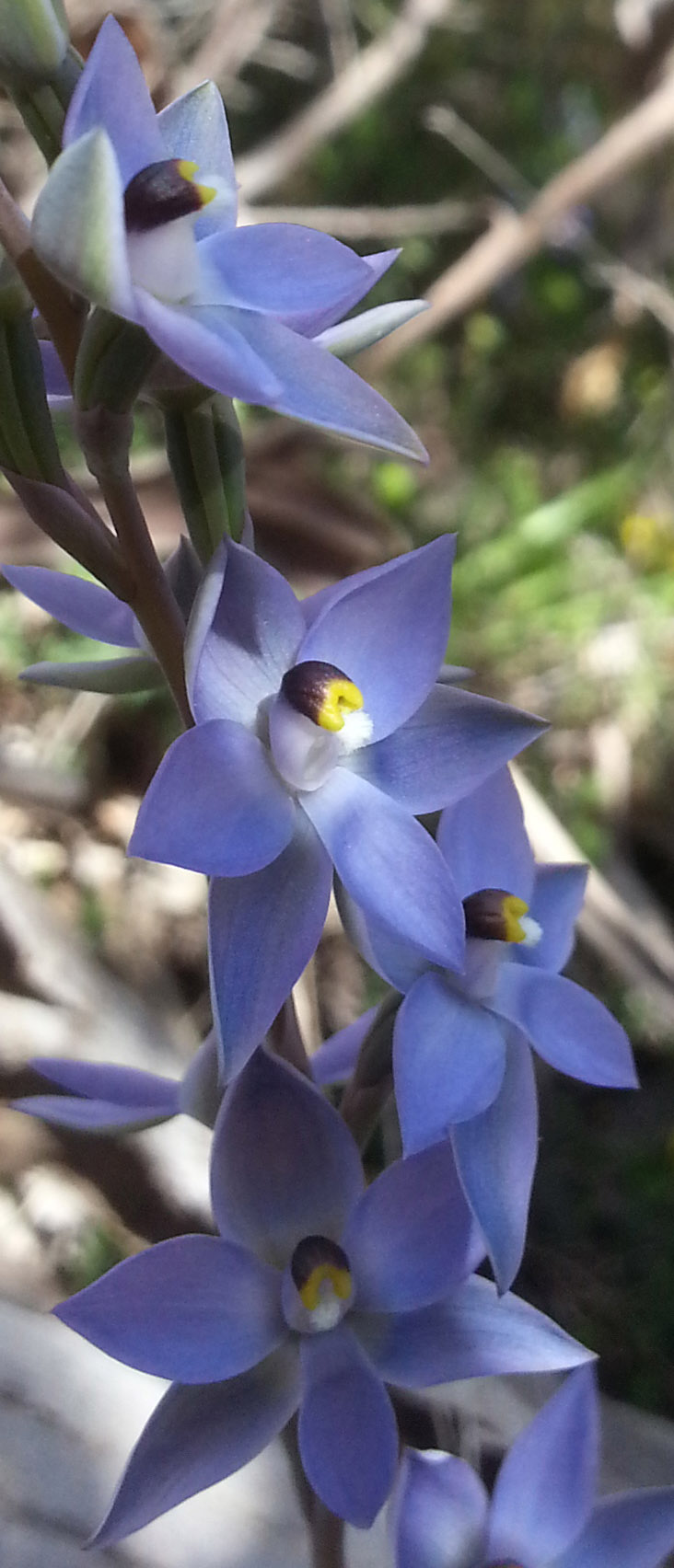
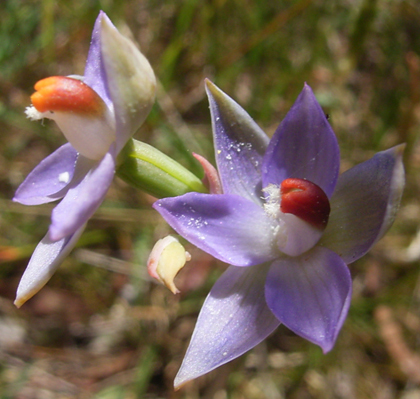
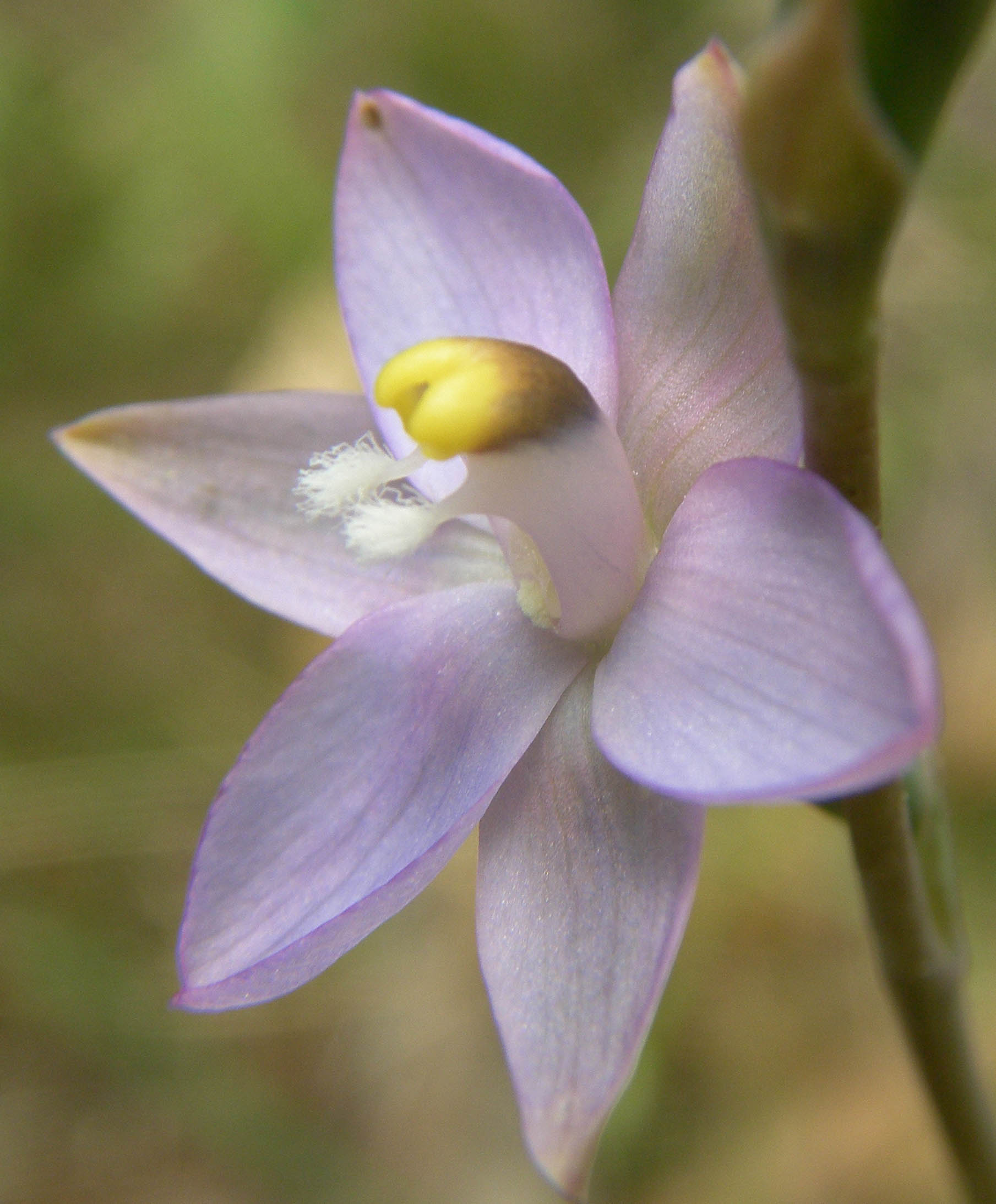
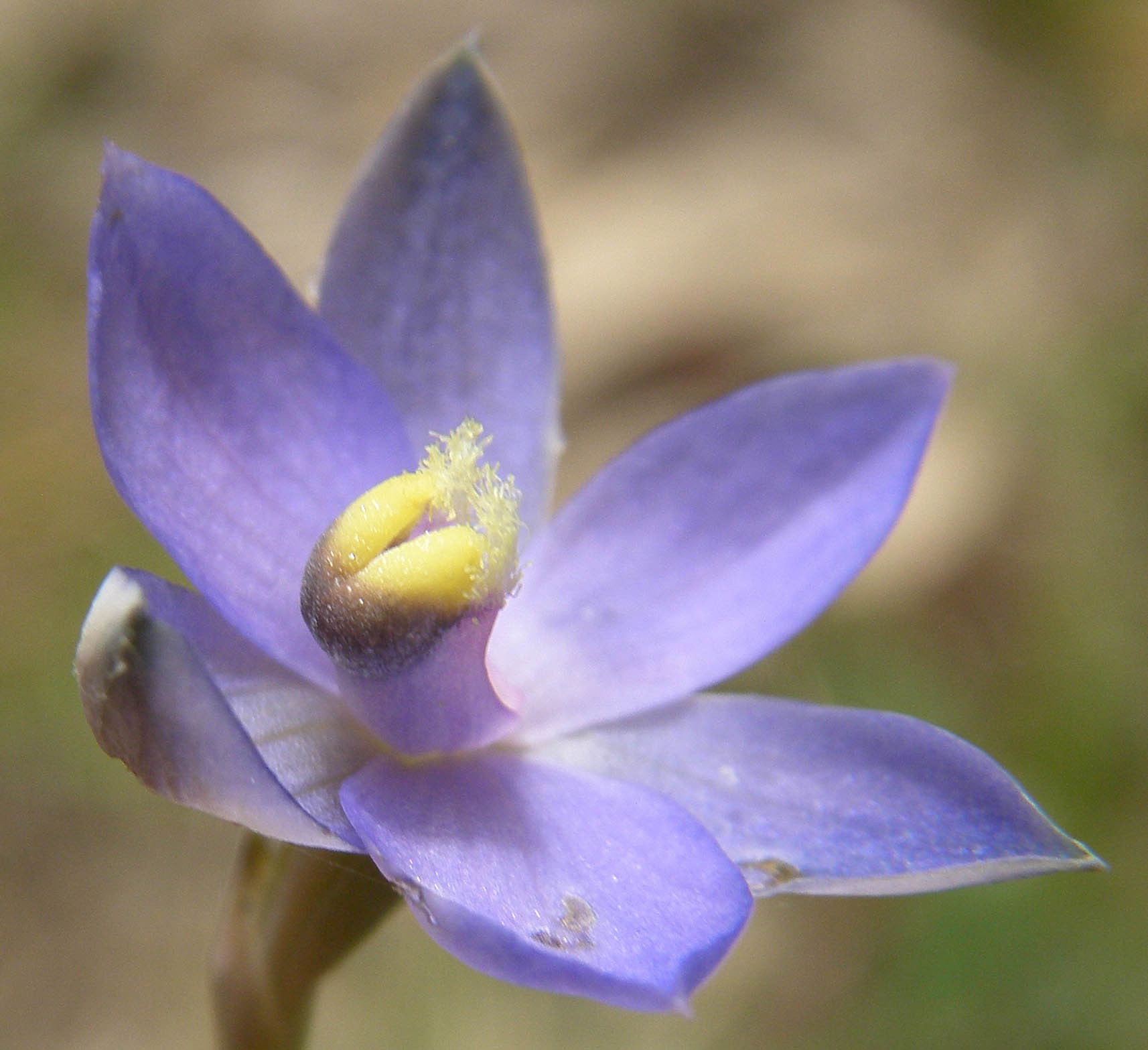
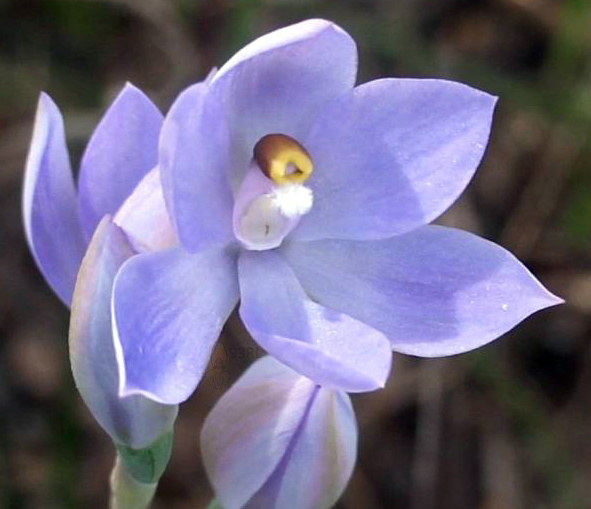
The following photographs illustrate the variety of columns.
Thelymitra megcalyptraThelymitra X truncata – a natural hybrid
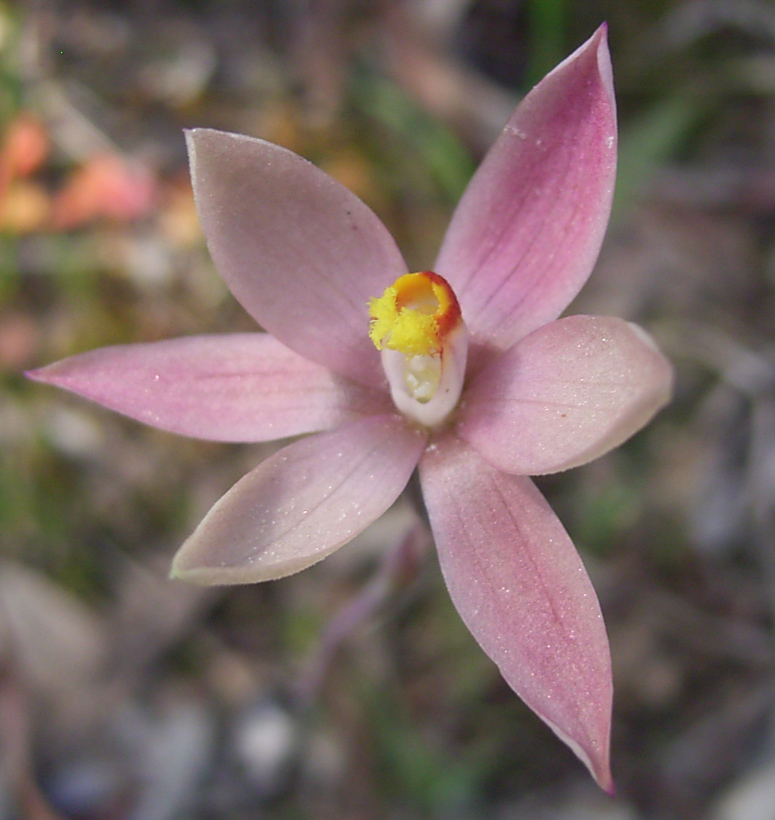
And it is not only the blue orchids that can be a problem, in South Australia; there are three pink orchids which are different in size and flowering time, features that are not obvious in a photograph, so the column is a helpful identification tool.
Thelymitra luteocilium – has tufted hairy column armsThelymitra rubra – has finger-like column arms and no tuftThelymitra carnea – has smooth column arms
And just what is the column? It is the reproductive organ of the orchid flower and is unique amongst plants because it is the fusion of the male (stamens) and female (pistil) parts. It is usually found in the centre of the flower and both releases and receives the pollen sac.
One of the orchids currently flowering is Nemacianthus caudatus (syn Acianthus caudatus). The common name is Mayfly orchid. Robert Lawrence’s post in OrchidNotes gives an interesting background to the resemblance of the flower both to the Mayfly’s three tails and its mass swarming.
The Mayfly Orchid is a small orchid with very dark reddish brown flowers with long, hair-like sepals. It flowers from late July to August. One might question what sort of insect was behind the naming of this orchid, which does not even flower in May. Mayflies are an insect with which many of us are not acquainted.
Close view of a typical flowering Mayfly Orchid
One source attributed the naming or the orchid being similar to the long legs of a Mayfly. However, a quick search in the Internet revealed that Mayflies have fairly short legs, as in the image below:
It turns out that it is the appendages on the end of the abdomen that the sepals of the Mayfly Orchid resemble. Mayflies usually have three tails (two cerci, one middle filament), although the middle tail is rarely reduced or absent. …














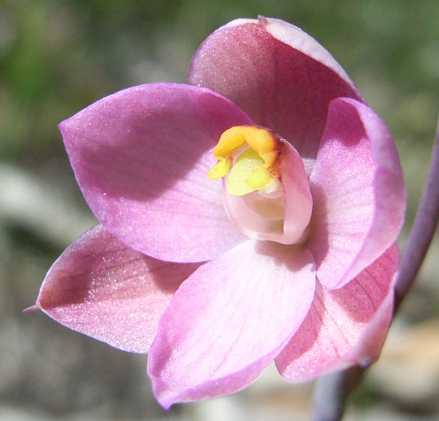

 Close view of a typical flowering Mayfly Orchid
 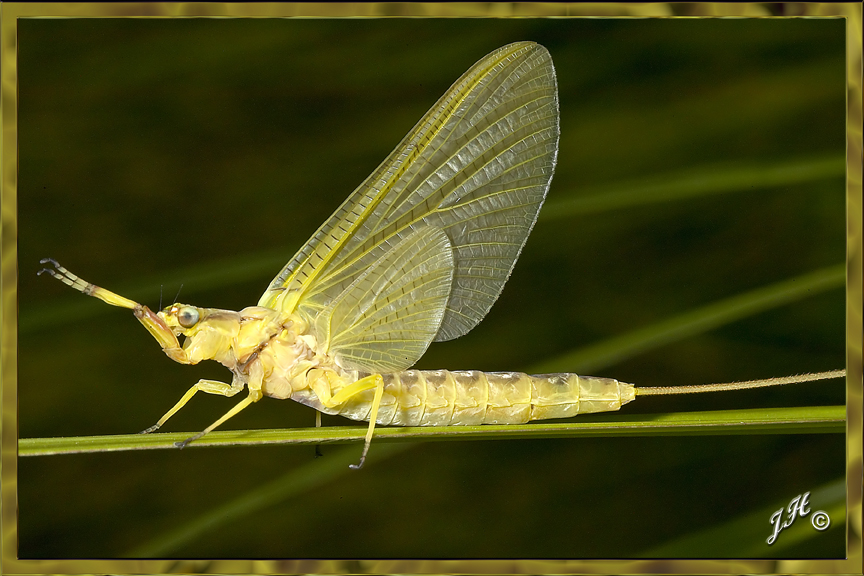 Mayflies have relatively short legs … Source:
  NOSSA
NOSSA 