2015 August Winning Photograph

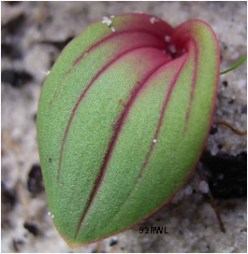
08 RP Arachnorchis cardiochila smOf the five entries this month, three were spider orchids and the winner was from this group. It was Rob Pauley’s Arachnorchis cardiochila (syn Caladenia cardiochila), Heart Lip Spider Orchid which can be found across South Australia and into western Victoria. At one time a specimen was found on Flinders Island, Tasmania but as it was collected in 1947 it is considered extinct in that region.

This lovely flower is quite variable in colour and form.

The heart shape labellum is a distinctive feature of this spider orchid, so it is not surprising that this is reflected in the name. Cardio means heart and chila lip.

What probably is surprising is that the traditional heart shape symbol has come full circle. It had a botanical origin. According to cardiologist Professor Armin Dietz the symbol was originally a stylized vine/ivy leaf as evidenced from paintings on goblets from the 3rd millennium. In the Middle Ages, doctors and anatomists used the shape to represent the heart. As at that time Latin and Greek were both the international languages of scholars, including doctors, the word associated with the symbol was the Greek word kardia (ie cardio) meaning heart. Consequently, by the time Ralph Tate names this species in 1887, the shape has become intrinsically linked with the heart and so it must have appeared to him as an obvious descriptive name.

There are several field guides which give a detailed description of the species including South Australia’s Native Orchids DVD-ROM which is available for sale from NOSSA.


References:

http://www.heartsymbol.com/english/index.html accessed 28th August 2015

The texts published on this website are taken from his book “Ewige Herzen – Kleine Kulturgeschichte der Herzbestattungen” (“Eternal Hearts – a short cultural history of heart burials”), published 1998 in MMV Medien und Medizin Verlag, Munich. (English translation by Pauline Liesenfeld.)

http://data.rbg.vic.gov.au/vicflora/flora/taxon/bca2495d-3325-4c1b-b2c3-782566fb6bce accessed 28th August 2015

http://dpipwe.tas.gov.au/Documents/Caladenia-cardiochila-listing-statement.pdf acessed 28th August 2015
 

Clues to Orchid Identification – Columns

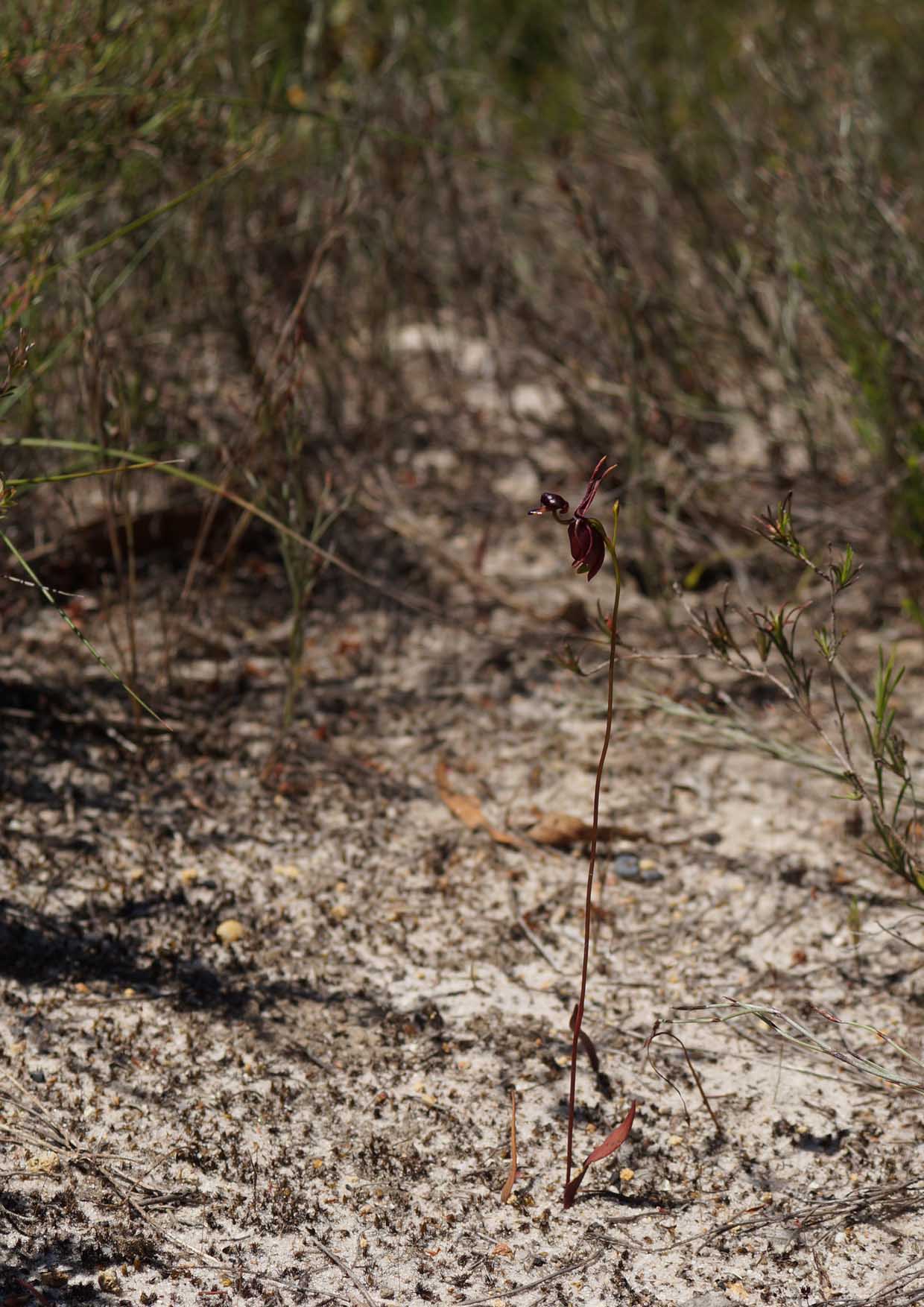
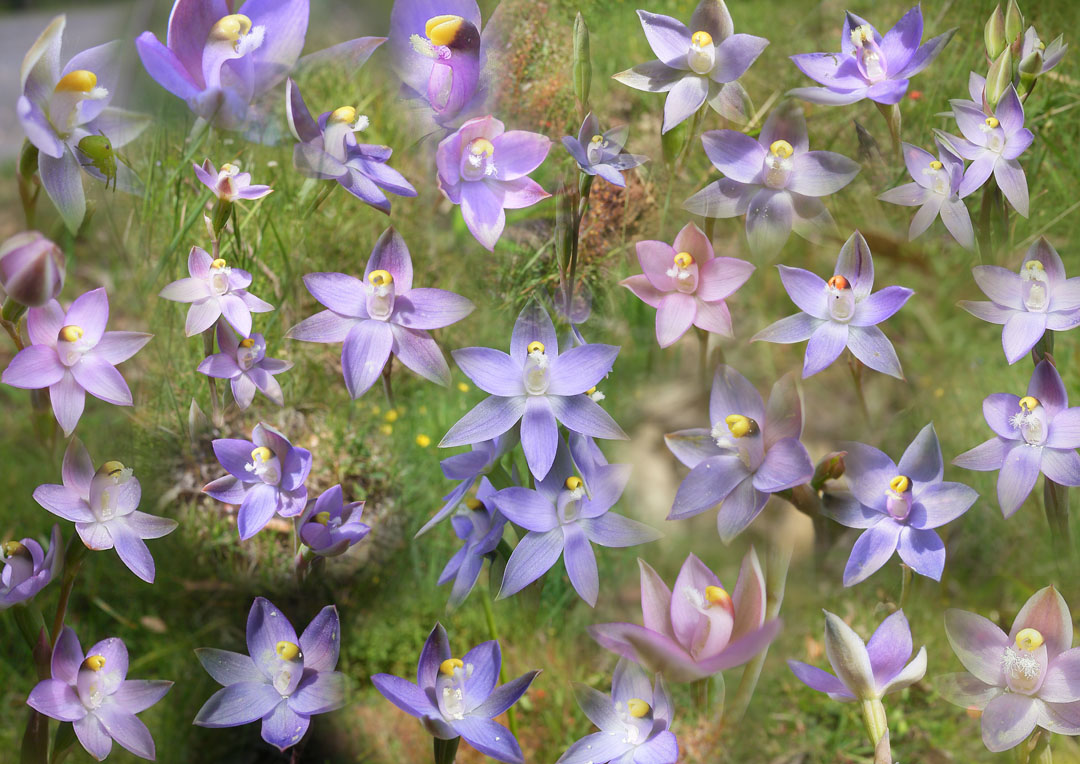
Orchids can be incredibly easy to identify or frustratingly difficult.  For instance, the Flying Duck orchid is easily recognizable.  The name says it all. But for many other orchids, particularly the ubiquitous blue sun orchids, it is necessary to make careful observations.


Which is which
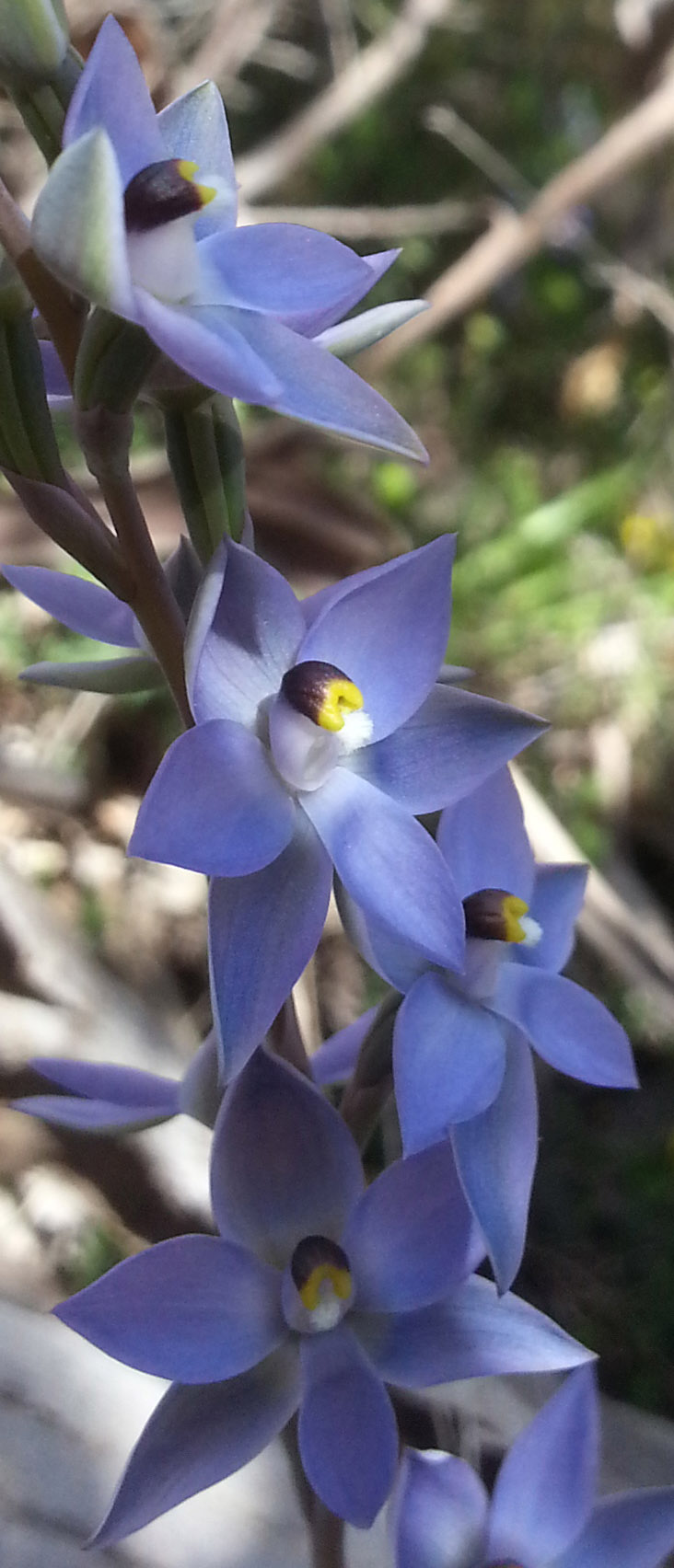
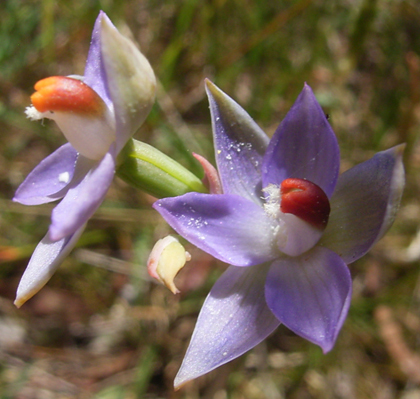
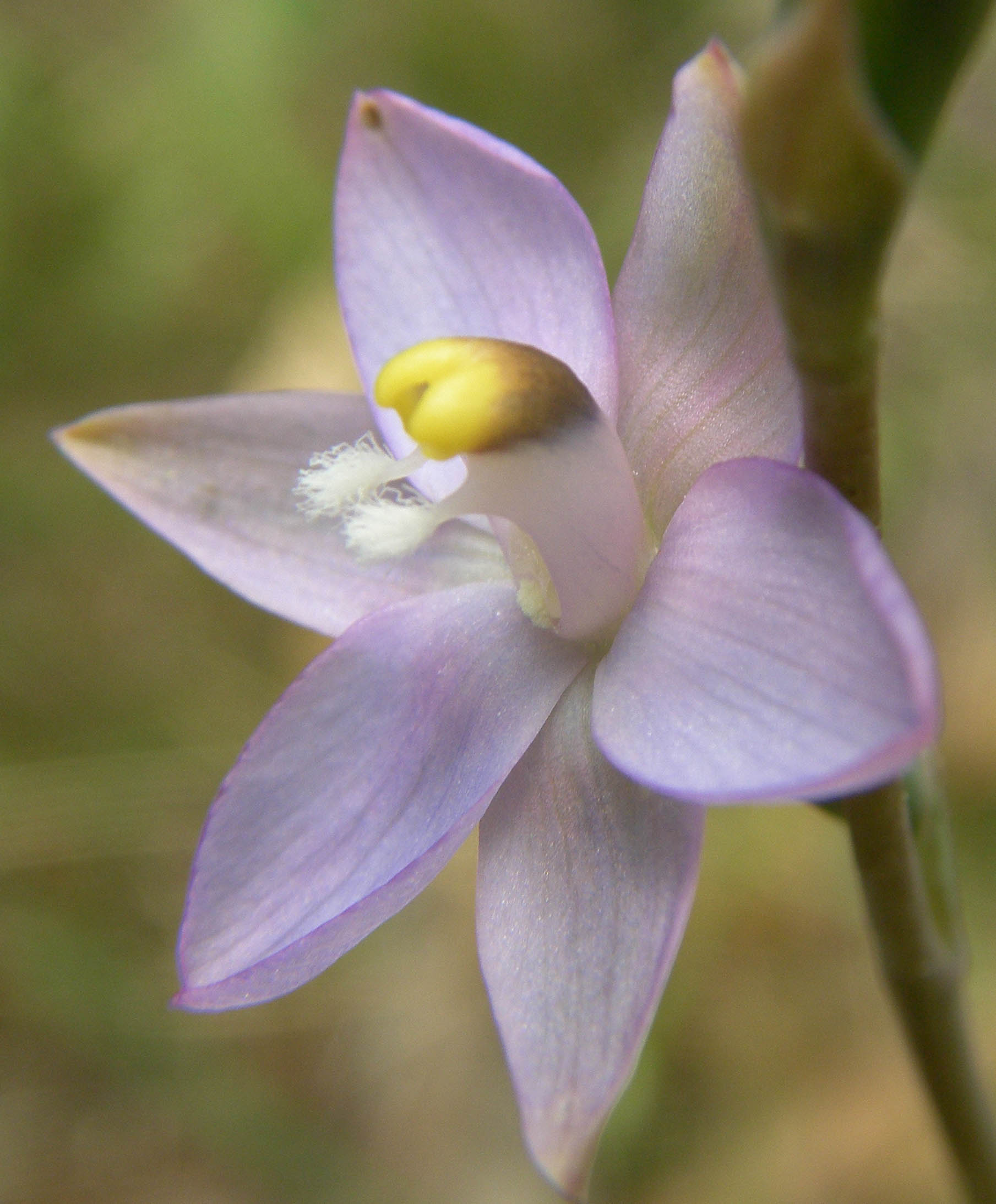
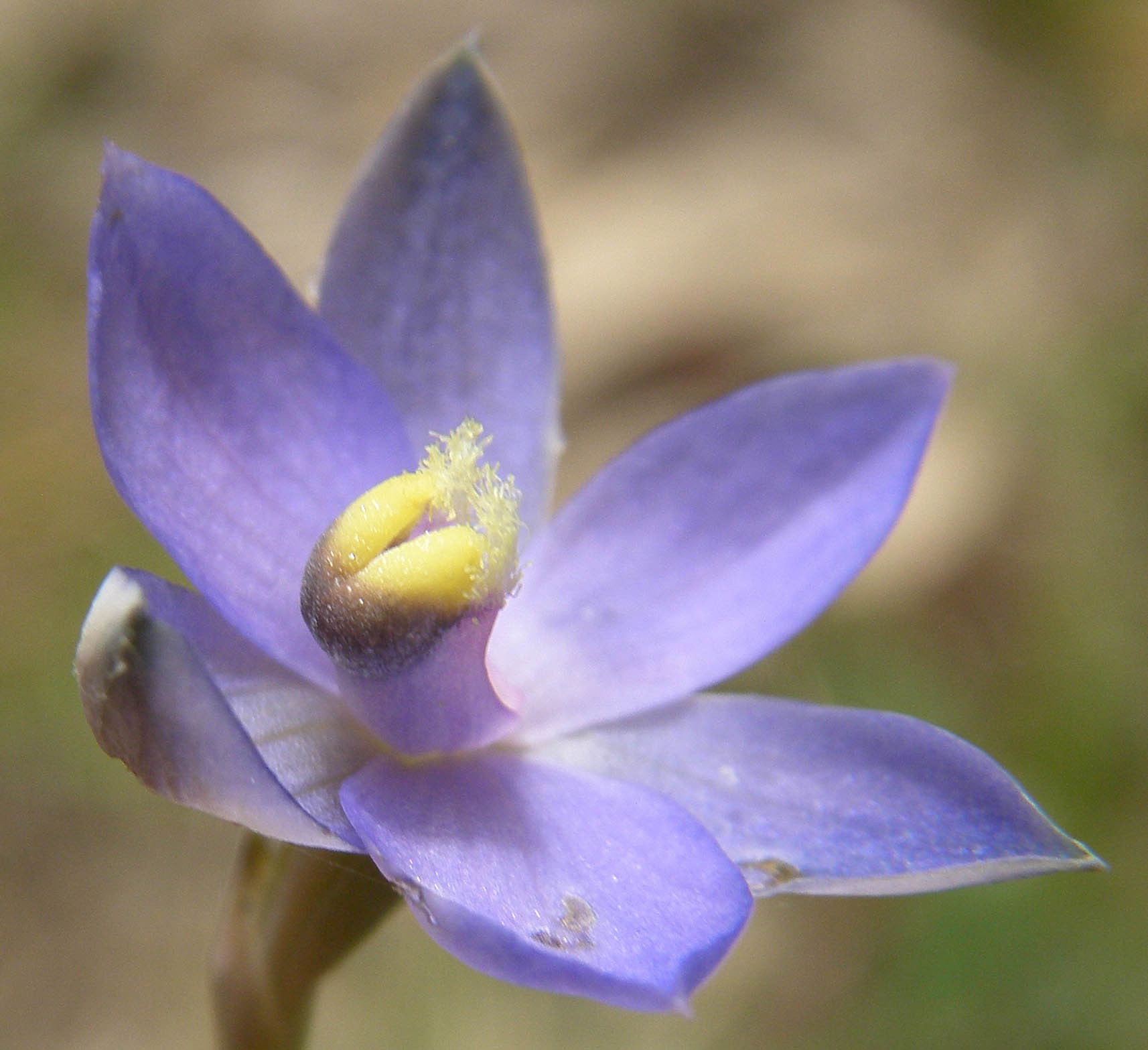
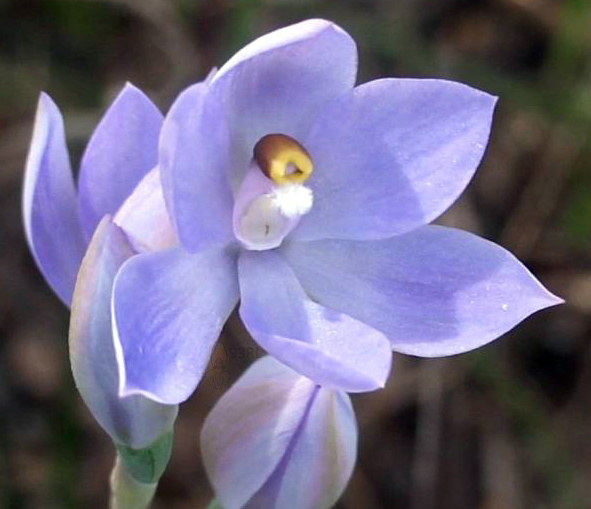
In this collage there are several species, but which is which?


For sun orchids the most important distinguishing feature will often be the column, details of which are described or illustrated in orchid keys.  For example Bates and Weber, Orchids of South Australia (1990) has an illustrated dichotomous keys showing the different types of columns.

As part of the key, drawings of the column were included
Images from Bates & Weber, Orchids of South Australia, pages 147 to 150; courtesy of the Board of the Botanic Gardens and State Herbarium.

With today’s cameras, it is possible to photograph the column, preferably from front, side and above.  This helps greatly with identification.

The following photographs illustrate the variety of columns.

Thelymitra alcockiae


Thelymitra grandiflora
Thelymitra brevifolia
Thelymitra cyanea
Thelymitra cyanea
Thelymitra peniculata
Thelymitra pallidifructus
Thelymitra juncifolia
Thelymitra inflata
Thelymitra inflata
Thelymitra arenaria
Thelymitra arenaria


Thelymitra megcalyptra
Thelymitra X truncata - a natural hybrid
Thelymitra X truncata – a natural hybrid

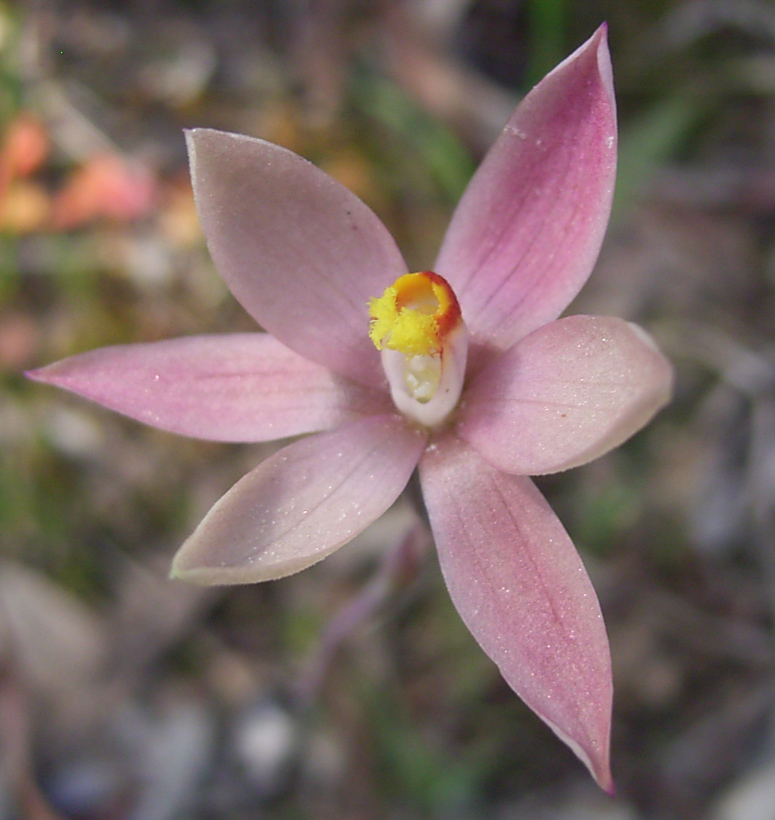
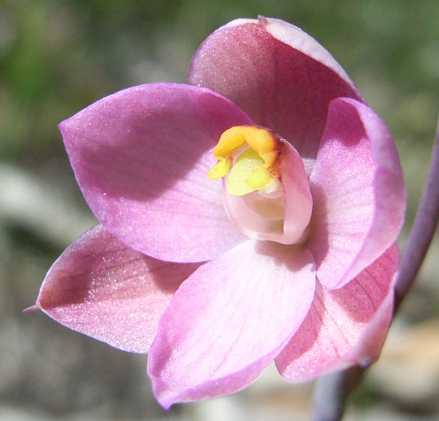
And it is not only the blue orchids that can be a problem, in South Australia; there are three pink orchids which are different in size and flowering time, features that are not obvious in a photograph,  so the column is a helpful identification tool.

Thelymitra luteocilium
Thelymitra luteocilium – has tufted hairy column arms
Thelymitra rubra
Thelymitra rubra – has finger-like column arms and no tuft
Thelymitra carnea
Thelymitra carnea – has smooth column arms


And just what is the column? It is the reproductive organ of the orchid flower and is unique amongst plants because it is the fusion of the male (stamens) and female (pistil) parts.  It is usually found in the centre of the flower and both releases and receives the pollen sac.


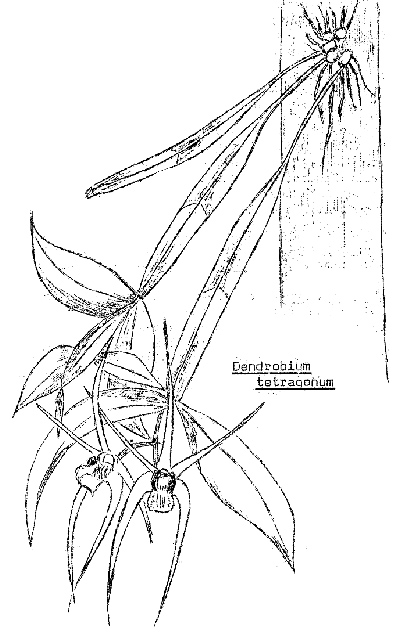
Growing Dendrobium tetragonum in Adelaide 1983 and Now

In 1983, Ron Robjohns, NOSSA’s first treasurer, wrote a comprehensive series of articles about growing epiphytes in South Australia. Thirty years on Ron’s information for growing is still helpful and applicable for today. Any updates or extra information are in black text.

NATIVE ORCHID SOCIETY OF SOUTH AUSTRALIA JOURNAL

Volume 7, No. 6, July, 1983

GROWING EPIPHYTIC ORCHIDS IN SOUTH AUSTRALIA – R.T. Robjohns

Dendrobium tetragonum (Tree Spider Orchid)

A variable epiphytic species growing mainly in rainforest areas from Illawarra in New South Wales to the Endeavour River in Queensland. A favourite haunt is on trees overhanging water, often in deep shade. It has a variety of hosts (including Myrtles, Eugenias, Water Gums and occasionally Melaleuca) on which it grows into small clumps. Altitude is of little concern as it is found from near sea level to approximately 1000 metres.

The stems, which are semi-pendulous and from 6 to 45 cm long, arise from a prostrate and branching rhizome They are round, thin and wiry at the base but thickening to become rectangular (hence the name tetragonum – derived from the Greek “tetra” meaning “four-sided”), then tapering slightly before the leaves. There are from 2 to 5 leaves up to 8 cm long at the end of the stems. They are deep green in colour and often with crinkled or wavy margins.

The racemes appear from between the leaves but are short and have from 1 to 5 flowers which are widely spreading and spidery in appearance. The colour is greenish/yellow with irregular and variable brown, red and purple markings. In size the flowers are from 4 to 9 cm from the top of the dorsal sepal to the tip of the lateral sepal and they have quite a pronounced fragrance.

The var giganteum is the tropical species and ranges from the Fitzroy to the Endeavour Rivers. The flowers are usually larger, but not always, and have a slightly different colour pattern.

The plant does not lend itself readily to pot culture and should be mounted. I have it growing on Melaleuca and cork slabs, but best results have been with one mounted on a hardwood slab.

I find that it needs little more than 50% shade plus humidity and, of course, plenty of air movement. Protect from frosts. Fertilise in the growing period with foliar fertiliser at half recommended strength. A number of interesting hybrids have been produced using D. tetragonum as one of the parents. They mostly flower well and have reasonably large flowers.

Dendrobium tetragonum

2015 July Winning Photograph

07 sm JP Anzybas unguiculatus 2

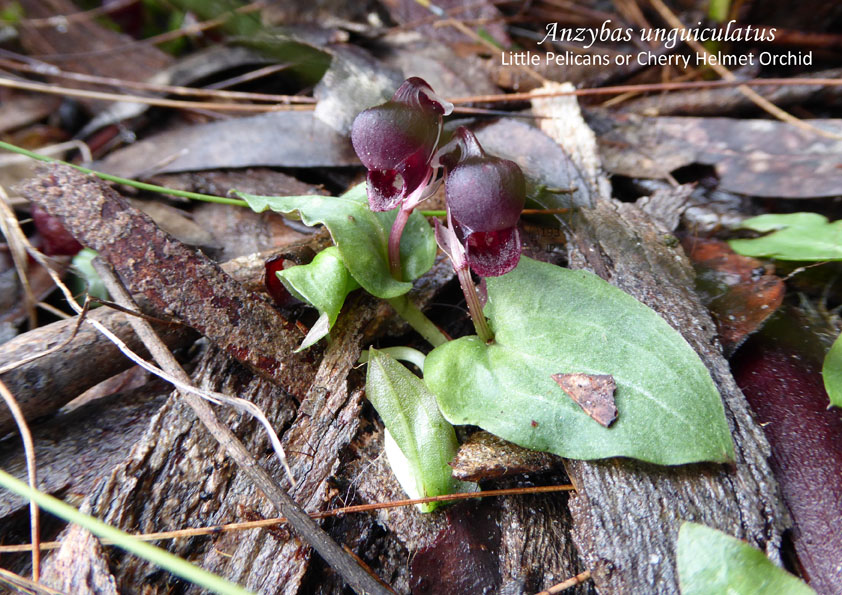
Anzybas unguiculatas (common name Little Pelican or Cherry Helmet Orchid) was the main focus for this month’s competition with three photographs of this diminutive flower.

The other photographs were Ed Lowrey’s close-up of a triggered Urochilus sanguineus labellum, John Badger’s first Diuris palustris sighting for this year and Pauline Meyer’s mass flowering of Leptoceras menziesii post fire. Of the Anzybas, Jenny Pauley entered two and Lorraine Badger one. Jenny Pauley’s photograph of two flowers was the outstanding winner.

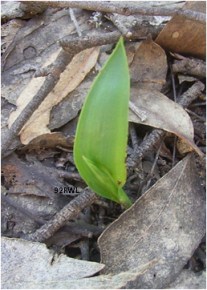
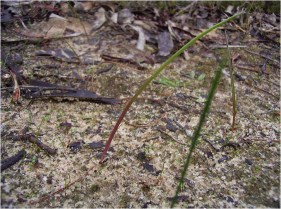
Originally named Corysanthes unguiculata (1810), then Corybas unguiculatus (1871), the genus name was changed in 2002 to Anzybas in recognition of its distribution both in Australia in New Zealand. Since 1945 it had been recognised that the New Zealand species Corybas cheesemanii was a synonym for Corybas unguiculatas although the juvenile plant can have two leaves unlike the Australian species which is single leafed.

An interesting feature of this flower is the prominent white ears at the rear of the helmet (not clearly seen in this photograph) which are part of the labellum.

These plants are small. The gum leaves and twigs give an idea of size but the engagement ring shows it very clearly.
These plants are small. The gum leaves and twigs give an idea of size but the engagement ring shows it very clearly.  Note also the prominent ‘white ears’ of the labellum.

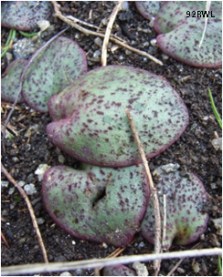
An unusual aspect of this photograph is that the colour of the underside of one of the leaves. It lacks the characteristic distinguishing feature of the purple underside of the leaves. According to orchid growers, the light affects the leaf colour. Heavy shade produces green leaves. It is possible that the heavy leaf litter where this plant was growing provided enough deep shade to cause the colour loss.

Bates (1990) states that it (has) not proved amenable to cultivation, but it has, on rare occasions, been benched at NOSSA meetings with the most recent occurrence was in July 2010 but it remains a very difficult plant to cultivate. The electronic version Vol 34 No 7 has a photograph of the plant just visible within the moss.

It is not always easy to photograph this species as not only is it rare with limited numbers but there are very few sites where it can be found. Added to that is that the window of opportunity is short in South Australia with a flowering time from June to August compared with those interstate which can range from May to October.

There has always been an interest in Australian orchids.  Over the years there have been many photographs of orchids.  This stereographic postcard from 1928 is a study in beauty – https://i0.wp.com/www.slv.vic.gov.au/pcards/0/0/4/im/pc004332.jpg

This postcard is held by the State Library of Victoria.

Although the distribution covers the Southern Lofty, Kangaroo Island and the South East regions of South Australia, it has become increasingly rare due to loss of habitat which consists of leaf litter on damp soils.  As a result, there are very limited localities where they can now be found.

It is one of our earliest helmets to flower which is from June to July.

References

http://www.flora.sa.gov.au/cgi-bin/speciesfacts_display.cgi?form=speciesfacts&family=&genus=corybas&species=unguiculatus&iname=&submit=Display accessed August 5 2015

Les Nesbitt personal communication

Jones, David L (2006) Native Orchids of Australasia, Frenchs Forest, NSW: Reed New Holland.

Bates, R.J. & and Weber, J.Z. (1990). Orchids of South Australia, Adelaide: Flora and Fauna of S.A. Handbooks Committee

https://biodiversity.org.au/nsl/services/instance/apni/499184 accessed August 5 2015
https://www.anbg.gov.au/cpbr/cd-keys/orchidkey/html/genera/Anzybas.htm accessed August 5 2015
Bates R, (Editor) 2011 South Australia’s Native Orchids (CD-ROM), Adelaide: NOSSA

Journal of the Native Orchid Society of South Australia Vol 34 No 7 August 2010

http://rsnz.natlib.govt.nz/volume/rsnz_76/rsnz_76_04_007280.html accessed August 5 2015
Rupp, HMR and Hatch, ED (1945) Relation of the Orchid Flora of Australia to that of New Zealand in Proceeding of the Linnean Society of New South Wales Vol 70 1945, pages 53 – 61

https://archive.org/stream/proceedingsoflin70linn#page/60/mode/2up accessed August 5 2015

Orchid Identification Quiz #1

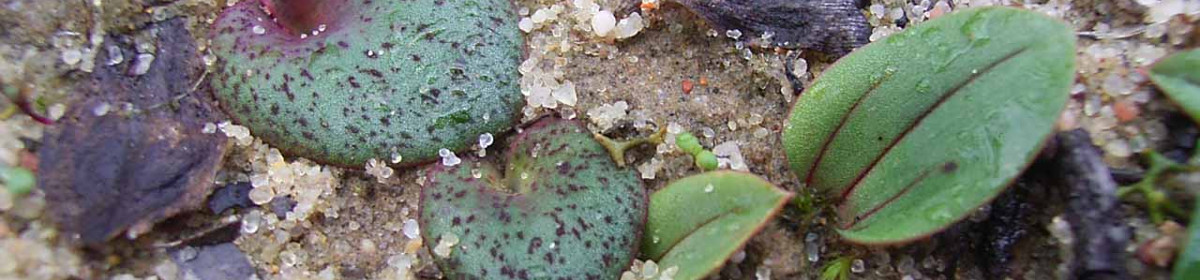
In 2006 the electronic version of the Journal of the Native Orchid Society of South Australia Volume 30 No 2 March contained a quiz – Do you Know Your Leaves? It featured photographs of the leaves of 15 different orchid. In 2011 Robert Lawrence produced a book titled Start With the Leaves which was based upon the premise that the flower is not always present but identification is still possible.

Many but not all can be identified to species level by the leaf alone.

So here is the web version of the original quiz – how well do you know your leaves?

Hint – 20 of them are South Australian, more specifically, the Mount Lofty Ranges region.  One is a weed.

Arachnorchis tentaculataThelymitra benthamiana Thelymitra antennifera Pyrorchis nigricans Plumatochilus sp Woodland Bearded Greenhood  Oligochaetochilus bisetusOrthoceras strictum Nemacianthus caudatus Eriochilus sp Hills Woodland  Leporella fimbriata Diuris palustrisGlossodia major

Diuris orientis

Diuris behrii

Cyrtostylis reniformisDisa bracteata - weed  Corunastylis spCaladenia prolata Calochilus robertsonii  Bunochilus sp non-fertile plant

Corysanthes diemenica

Did you get them?  Click on the image to go to the name and pictures of the flower. As a couple of the links are not working and until I have time to rectify them, click here to find the all answers in the Journal.
It will be on the last page.

More to come another time ………

Growing Dendrobium falcorostrum in Adelaide 1983 and Now

In 1983, Ron Robjohns, NOSSA’s first treasurer, wrote a comprehensive series of articles about growing epiphytes in South Australia. Thirty years on Ron’s information for growing is still helpful and applicable for today. Any updates or extra information are in black text.

NATIVE ORCHID SOCIETY OF SOUTH AUSTRALIA JOURNAL

Volume 7, No. 5, June, 1983

GROWING EPIPHYTIC ORCHIDS IN SOUTH AUSTRALIA – R.T. Robjohns

Dendrobium falcorostrum (Beech Orchid)

This is one of the most attractive of the New South Wales epiphytic orchids, the common name being derived from the fact that it is only found in the forests of the Antarctic Beech, which occur in the highlands, extending from the Barrington Tops in New South Wales northwards to the McPherson Ranges in southern Queensland. However, within those forests it does occasionally grow on other than beech trees.

Due to the clearing of those forests it is fast becoming an “endangered species”.

It is a plant of the highlands and is rarely found below 900 metres, consequently it will tolerate cold conditions, however, it requires protection from frosts and needs to be grown where there is plenty of air movement.

There are from two to six light green lanceolate leaves at the top of the stem which is from 12 to 50 cm high and the mature stems are ribbed. The flowers number from four to 20 in the raceme and are intensely fragrant during the warmer part of the day. They are from 3 to 5 cm in diameter.

Flower spikes are terminal and some stems will flower for two or three years.

They are a glistening pure white to cream with the exception of the labellum which is streaked with purple. The common name is derived from the labellum, which is short and broad, bearing a fanciful resemblance to a falcon’s beak. The flowering season is from August to October.

It can be grown using either slab or pot culture using a mixture of aged pine bark, scoria* and charcoal* in a plastic pot and grown under 50% shadecloth.

Fertilise lightly during the growing season using foliar fertilisers at half the recommended strength.

Propagation is usually by division. 

*NB Charcoal is no longer used and scoria can get cold and wet in winter.

Dendrobium falcorostrum

2015 June Winning Photograph

06 sm PM Arachnorchis argocallaOf the five entries this month, four featured winter orchids. Lorraine Badger entered a Diplodium robustum, whilst Claire Chesson, Robert and Rosalie Lawrence all entered Urochilus sangineus. Though not the winning photographs it was interesting to see the differences between the U. sangineus with one being no taller than the small Acianthus pusillus next to it and another being taller than the rapier sedge.

But the winning photograph was the spring flowering Arachnorchis argocalla (White Beauty Spider Orchid) by Pauline Meyers. This is amongst our most threatened orchids and is dealt with in depth in the Recovery Plan For Twelve Threatened Orchids in the Lofty Block Region of South Australia 2010. This fungi dependent endemic orchid is rated Endangered both at State and National level.

Found in the Southern and Northern Lofty regions, it range has been severely reduced by possibly 80%. Since 1918 no plant has been found south of Adelaide.

Flowering from September to October, it is often found in grassy woodlands often growing on gentle southerly-facing hill slopes. The soil is a clay loam with a high humus content.

This beautiful orchid has one to two non-perfumed white flowers with thickened but not clubbed drooping lateral sepals and petals. The strongly recurved broad labellum is usually white, sometimes crimson, fringed with short teeth.

This is one of our larger spider orchids reaching a height of 60cms. The size of the plant flower and leaf help to distinguish it from other similar appearing orchids such as A. brumalis and albino flowers of A. behrii.

Like many of the spider orchids it takes 2 – 5 years to reach maturity and then has a potential reproductive life of 10 years. With an average pollination rate of less than 10%, the potential to increase the population is low and any threat to survival of the individual plants needs to taken seriously.

Some threats are obvious such as weed invasion including the garden escapees such as Topped lavender (Lavandula stoechas spp. stoechas) and action is being taken to curb the spread of weeds through targeted weeding programs.

Another threat is habitat loss. This has been the result of land clearing but sites are being protected either through conservation legislation or Heritage Agreements. Habitat loss can also occur indirectly and that is through Phytophthora being introduced into the sites. Although the direct effect of Phytophtora on the orchid is unknown, it is known that it can affect the plants that grow in association with this orchid. This threat can be reduced by all of us implementing good hygiene practices.

These were some of the threats noted in the Recovery Plan. This plan was not just defensive, ie attempt to halt and minimalize the damage; but it was also proactive with measures outlined to increase the population. These included seed and fungi collection eventually resulting in germination and cultivation with a view to re-introduction.

It is good to see that there is a plan and active steps are being taken to bring this orchid back from threat of extinction.

June 2015 other entrants
Photographers from L to R: Claire Chesson, Rosalie Lawrence, Lorraine Badger, Robert Lawrence

References

Websites accessed 1 July 2015

White Beauty Spider Orchid (Caladenia argocalla) Recovery Plan
http://www.environment.gov.au/archive/biodiversity/threatened/publications/recovery/c-argocalla/index.html
Caladenia argocalla – White-beauty spider-orchid, biodiversity species Profile and Threats Database
http://www.environment.gov.au/cgi-bin/sprat/public/publicspecies.pl?taxon_id=54991
Recovery Plan For twelve threatened Orchids in the Lofty Block Region of South Australia
http://www.environment.gov.au/system/files/resources/e362cfd2-a37b-443a-b007-db3a2b7b64dd/files/lofty-block-orchids-recovery-plan.pdf

Bates R J, South Australia’s Native Orchids 2011 DVD

Growing Dendrobium linguiforme in Adelaide 1983 and Now

In 1983, Ron Robjohns, NOSSA’s first treasurer, wrote a comprehensive series of articles about growing epiphytes in South Australia. Thirty years on Ron’s information for growing is still helpful and applicable for today. Any updates or extra information are in black text.

NATIVE ORCHID SOCIETY OF SOUTH AUSTRALIA JOURNAL

Volume 7, No. 4, May, 1983

GROWING EPIPHYTES IN SOUTH AUSTRALIA – R.T. Robjohns

Dendrobium linguiforme (Tongue Orchid)

The plant is epiphytic or lithophytic, forming large masses on trees or rocks. Its range is from the extreme south-east of New South Wales to at least the Burdekin River in Queensland. It grows from sea-level to altitudes of around 1000 metres, but is confined mainly to the coastal areas, although it has been found up to 250 kilometres inland. The inland plants have smaller, tougher leaves than those of the coastal areas, due no doubt to the harsher conditions under which they exist. It is not confined to a specific host but is found on quite a large variety of trees.

The rhizomes are prostrate and branching with thick, tough ovate leaves, 3 to 4 cm long having distinctive longitudinal furrows on top.

The racemes, up to 15 cm long, grow from just below the base of the leaf and bears from six to 20 flowers. The flowers are usually white or cream with a number of faint purple markings on the labellum.

The flowering time is usually August-September here but earlier in the tropical areas.

It does not lend itself to pot culture but is very hardy and with a little care will grow freely on cork or hardwood slabs. I have had good success using pieces of Melaleuca on which it readily establishes itself. It receives approximately 75% shade. It should be protected from our frosts and can be fertilised using foliar fertilisers at half the recommended strength.

This is the variety of the species on which the genus Dendrobium was founded. It was first described by O. Swartz.

There are three varieties of this species, the best known of which is var. nugentii, which is a tropical form from about the Burdekin River north to Bloomfield River in the south-east of Cape York Peninsula.

This form has broader, thicker leaves which are more rounded at the apex and in addition to the longitudinal furrows it often has transverse furrows. The flowers of this form are slightly smaller and age quicker.

Dendrobium linguiforme

Why use a mulch on your potted terrestrial orchids?

Here in South Australia, it is very common to see a covering of She Oak needles (Allocasuarina sp.) on pots of terrestrial orchids.  According to Les Nesbitt, NOSSA founding member and experienced terrestrial orchid grower, there are four reasons for this

  • It keeps the leaves up off the soil.
    • Provides good air circulation
    • Helps prevent leaf rot.
  • It provides nutrients to the fungi
    • This is very important for the fungi dependent orchids.
  • It stops pitting into the soil when it rains.
    • This is most likely to occur when pots are under the drip line of a shade-cloth.
    • Pitting exposes the root system.
  • It allows the leaves to readily come through because of its small diameters.
    • Other mulches, such as gum leaves, smother seedlings.

She Oak needles are the choice of mulch because it is

  • Long lasting and takes more than year to break down
    • which means that it lasts the whole growing season.
  • Does not become mushy or spongy
    • unlike pine needles and grass cuttings which breakdown more quickly into a wet soggy mass and contribute to leaf rot.

It should be noted that it is necessary to replace this mulch yearly.

These two pots were in the same area under the shadecloth.  Notice the damage to the pot without the mulch.
These two pots were in the same area under the shadecloth. Notice the rain damage to the pot without the mulch.

Australia’s Most Popular Orchid?

Australia has some of the most varied, if not the most varied, terrestrial orchids.  This variety is reflected in the words used in their commons names – spiders, hoods, moose, cowslip, mosquito, comb, fingers, fairies, bearded, ant, bird, frog, helmet, midge, shell, donkey, bulldogs, parsons, bunnies, daddy long-legs, hare, rabbit, onion, leek, gremlin, duck.  This list is from words used for describing just the South Australian orchids.  The other states particularly Western Australia have even more common descriptive names!

With such a variety is there a favourite one?  From the searches and questions that come to this site, it would have to be the Flying Duck Orchid.  This orchid never fails to amaze people with its resemblance to a duck in full flight.

It was no surprise than to discover that the winner for the Australian Orchid Foundation 2014 Essay titled Our Favourite Orchid featured the Flying Duck Orchid.

The essay began “It all started with the arrival of an email ……. click here to continue reading

And just a reminder, it is only ever found in the wild.  No-one has ever been able to grow one and it cannot be bought or sold!  But so that we can all enjoy them, here is a short video clip …..

caleana major
Ducks in full flight
11sm C major actual size
To get an idea of the size of this superb orchid, bring this image up to A4 paper size