2015 April Winning Photograph: Calochilus cupreus

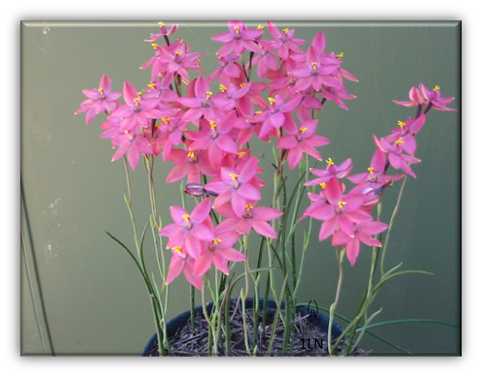
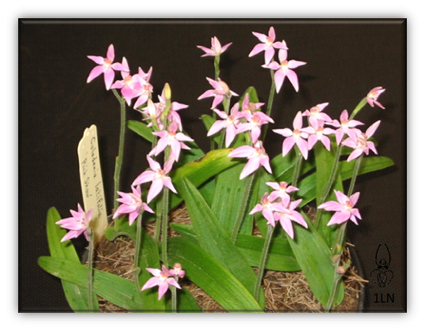
04 sm HL Calochilus cupreusDespite having five very different but high quality photographs, Helen Lawrence’s photograph of Calochilus cupreus (Aldinga Bearded Orchid) was the clear winner with the vast majority of votes.

In South Australia it is considered endemic and endangered. Researching it was interesting. For instance, there is no mention of it in Jones extensive book (2006) yet it was named by R S Rogers in 1918 with a description appearing in Black’s Flora of South Australia (1922 edition), including a drawing by Rosa Fiveash. Between then and now there was a shift. In the Third edition of Black’s (1978) C. cupreus is absent but C. campestris present. In Bates and Weber 1990 the authors describe C. campetris (C. cupreus). Currently, the eflora of South Australia (the electronic version of 1986 Flora of South Australia) considers it a synonym of C. campestris. This is reflected in the Census.

It would appear that as C. campestris was studied and its variations documented (e.g. article by Jones 1976 Orchadian 5:83) the distinction with C. cupreus was lost. Clements and Jones (2006) state “Calochilus cupreus R.S.Rogers = Calochilus campestris” which means that they are not using C. cupreus. But in Jones’ book an anomaly occurs – he does not include South Australia in the distribution of C. campestris and as result Bates, from 2008, states that it is not recognized as occurring in South Australia.

Though C. cupreus disappeared from the literature the name still continued to be discussed amongst orchid enthusiasts. So when in 1995 NOSSA members found a distinctively different colony at Aldinga they identified it as Rogers’ C. cupreus.

Below is a chart, based upon Dr Rogers’ description, of some of the differences that made him consider C. cupreus a separate species:

C. cupreus C. campestris C. robertsonii
Shorter leaf

Rather rigid or fleshy erect triangular section

Longer leaf

Crescentic section

Longer leaf

Crescentic section

Base of labellum oblong glabrous (without hairs) with several raised longitudinal line Base of labellum round thickened, smooth no raised longitudinal lines Whole of labellum hirsute (hairy)
8 – 15 flowers About 8 flowers maximum About 8 flowers maximum

It will be interesting to watch what happens.

References

Bates personal communications

Bates & Weber (1990) Orchids of South Australia

Bates (2011) NOSSA South Australia’s Native Orchids

Bates (2005 to present) Orchids of South Australia CDs various editions

Clements and Jones An Australian Orchid Name Index (27/4/2006)

https://www.anbg.gov.au/cpbr/cd-keys/orchidkey/html/AustralianOrchidNameIndex.pdf

Jones (2006) A Complete Guide to Native Orchids of Australia

NOSSA Journal Vol 25 No 10 November 2001

Rogers R S Transactions of the Royal Society of South Australia V42 (1918) Pages 24, 25

http://www.biodiversitylibrary.org/item/113409#page/40/mode/1up

Growing Epiphytic Orchids in Adelaide 1983 and Now

In 1983, Ron Robjohns, NOSSA’s first treasurer, wrote a comprehensive series of articles about growing epiphytes in South Australia. Thirty years on Ron’s information for growing is still helpful and applicable for today. Any updates or extra information are in black text.

NATIVE ORCHID SOCIETY OF SOUTH AUSTRALIA JOURNAL

Volume 7, No. 3, April, 1983

GROWING EPIPHYTIC ORCHIDS IN SOUTH AUSTRALIA – R.T. Robjohns

Epiphytes usually grow where there is plenty of air movement, ample light but also shade and to achieve this they are frequently found well above the ground storey in the forest from where, should they be dislodged from their host and fall to the forest floor they wither and die. With most plants the roots grow downwards, however, with epiphytes in their natural habitat, the roots may grow up, down or around their host, that is, in any direction in search of suitable conditions.

As a novice grower I urge you to learn all you can about the natural habitat of the plant and its principal host, bearing in mind that in accounts of plants that grow on rock faces, often they are growing with their roots in crevices into which any moisture drains and maybe in an accumulation of leaf litter. Frequently the rocks on which the lithophytic orchids grow are sandstone – a rock which can absorb moisture and consequently keeps cool longer than most other rocks. “In an exposed situation” should not be construed as being in full sun all of the time: usually they receive some shade.

With the possible exception of Cymbidium canaliculatum few epiphytes grow at their best in full sun in nature. Full sun in the hot dry South Australian summer will usually burn off the plants or at the best cause severe yellowing and loss of leaves. It is to be noted that this State has no native epiphytic orchids.

Most Australian epiphytic orchids grow in the coastal belt of northern New South Wales and Queensland where the average rainfall in their DRY season is much the same as the Adelaide winter or WET season with which it coincides, consequently advice that plants require to dry out during the winter should not be taken to the extreme and the plants left without water.

The three principal requirements of epiphytes are a free air circulation, a semi-shaded position and free drainage.

In South Australia epiphytes are grown in two ways, the most popular being pot culture and the other slab culture.

For pot culture the medium must be a free draining one and a mixture of “aged” pinebark, scoria and charcoal is quite effective.

Note 2015 – Today the potting media used is composted pine bark.  Charcoal is not used and scoria can get cold and wet in winter.

In choosing material for slab culture consider the conditions under which you intend to grow the plants. For humid conditions cork is ideal while tree fern, which holds moisture longer, is good for dry conditions, although any of our native trees with papery or corky bark is suitable. Perhaps you would wish to attach the plants directly to trees in your garden, for this purpose try Jacaranda, Melaleuca or trees with a similar bark.

Watering is important, slab culture requires more watering than pot culture and in summer water orchids on slabs at least every second day and every-day during a hot spell. Water according to the weather and watch for signs of stress – in wintertime the rain is usually sufficient.

Fertilising is best done using half of the recommended strength of commercial proprietary fertilisers.

As a last general recommendation – beware of frosts. Last year (1982) the frosts in some areas of Adelaide caused severe losses amongst plants of epiphytic native orchids. Large tubs of D*. speciosum, whose thick leathery leaves I mistakenly thought frost resistant, were reduced to a mass of leafless canes; even baskets of D. kingianum hanging three feet below the 50% shadecloth had all of the leaves burnt off. These were but two of the varieties which suffered, so be warned and ensure that your plants are protected from frosts.

*D. = Dendrobium

Dendrobium speciosum
Dendrobium speciosum in culture


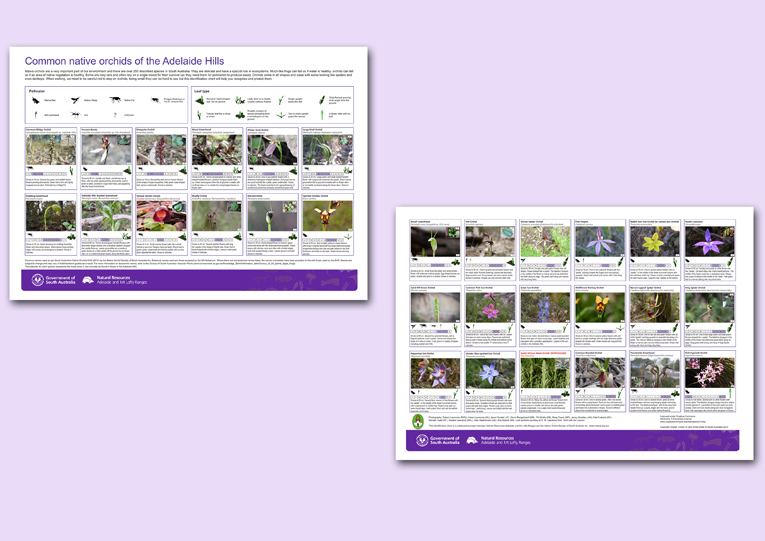
Native Orchid Identification Poster Launched

Over the years, Natural Resources Adelaide and Mount Lofty Ranges (NRM) have been involved with providing educational resources for schools and the community.  One resource has been A3 Identification Charts.

This week has seen the release of  another identification chart – Common Orchids of the Adelaide Hills.  Produced in collaboration with the Native Orchid Society of SA, it was launched at our general meeting on April 28.

These charts are available free from the NRM website.  To get a copy of the poster, click on the image below and scroll down to Identification Charts.  Whilst there have a look at some of their other posters.

NRM & NOSSA Orchid PosterPS the chart looks good on a smart phone which makes it convenient for out in the field.


March 2015 Winning Photograph

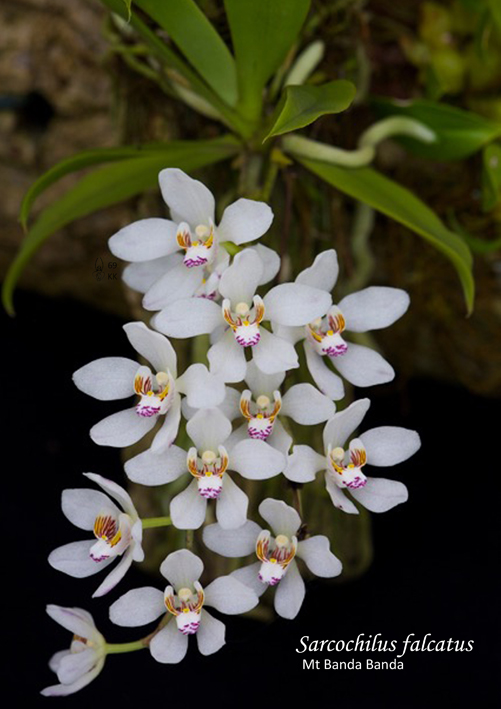
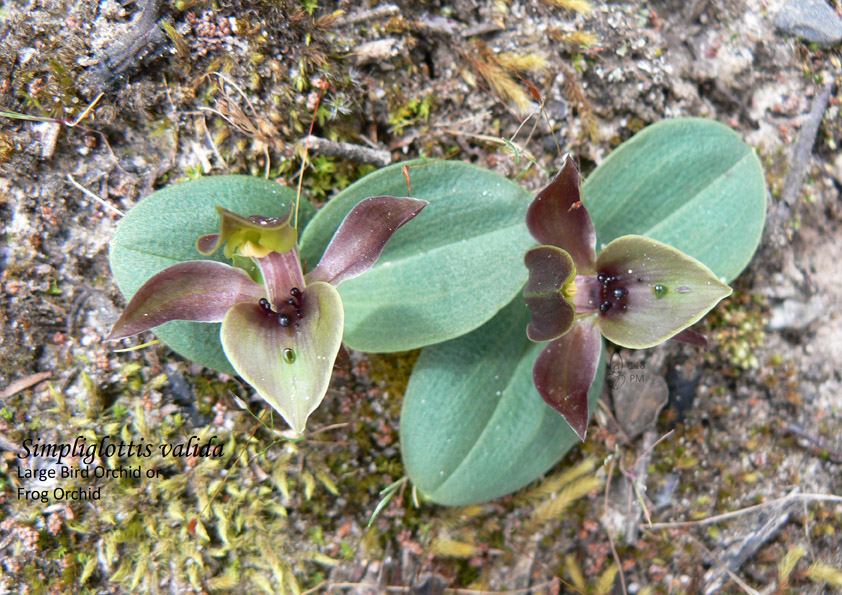
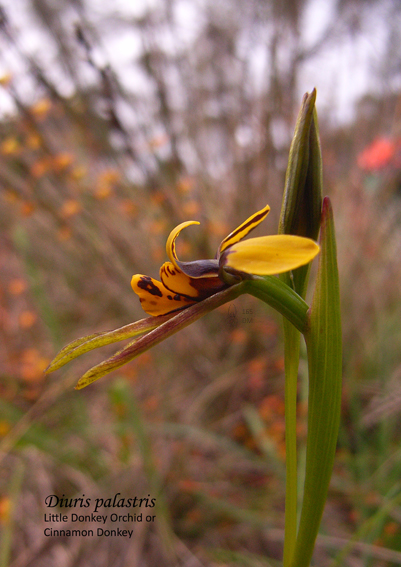
Three winners; three very different orchids but that is typical of Australian Orchids, there is no one species that you can point to and say that is a typical orchid as illustrated by the the winners which were Sarchochilus falcatus (Kris Kopicki), Diuris palustris (David Mangelsdorf) and Simpliglottis valida synonym Chiloglottis valida (Pauline Meyers).

Sarchochilus falcatus (common name Orange Blossom Orchid) is an epiphyte.  03 KK sm Sarcochilus falcatus Mt Banda BandaThe cultivated plant in this photo originated from the Blue Mountains just north of Macquarie.  Epiphytic/lithophytic orchids are found across northern Western Australia through the Top End and from a narrow band down the east coast to Tasmania; that is in all States except South Australia.  About a quarter of Australian orchids are epiphytes and despite the widespread distribution, 90% of epiphytic orchids are found primarily in the rainforests of northeastern Queensland.

S. valida (common name Large Bird Orchid or Frog Orchid) 03 sm PM Chiloglottis validaand D. palustris (common name Little Donkey Orchid or Cinnamon Donkey Orchid) are terrestrial, the larger of the two orchid groups.03 sm DM Diuris palustris  Terrestrials are mainly found across the southern part of the continent with some occurring in the north and tropics.  Their optimal habitat is the various types of sclerophyll forests found in Australia.

There is some distribution overlap but the two groups mainly occupy different habitats.

Concerning the habitat of the two terrestrials, S. valida ranges from tall moist closed forest to shaded places of drier open forests to sphagnum bogs and in the mature pine plantations of the South East.  Whereas D. palustris occurs in wet and swampy habitats in the Eastern states (hence it is named from the Latin palustre meaning swampy), in South Australia it is not so. Instead it is found in open terrain of grassland, grassy woodland, mallee and shrubland.

Some Odd Facts:

S. valida is a small ground hugging plant the scape (flowering stalk) of which elongates to 10cm or more after pollination.  Click on this video link to see these plants ‘talking’.  In New Zealand it is described as a vagrant having been introduced from Australia.

Sarchochilus falcatus is the most common and widely distributed species of this genus in Australia.  Occassionally it is lithophytic (grows on rocks). Though it had been rated Endangered and downgraded to Vulnerable in 2005, it is still under major threat from illegal collecting, trampling, water pollution, weeds and fire. New Zealand has epiphytes and the common name for them is Perching Orchids.

D. palustris is uncommon in South Australia and Tasmania; and rare in Victoria.  D. palustris was one of the subjects painted by Adelaide colonial artist and cartoonist Margaret Cochrane Scott in 1890s who had an affinity for native orchids.


References:

All internet references accessed on 31st March 2015

https://www.anbg.gov.au/cpbr/cd-keys/orchidkey/html/intro-c_habitat.html

http://anpsa.org.au/APOL19/sep00-1.html

http://www.nativeorchids.co.nz/Species/Simpliglottis_valida.html

http://data.rbg.vic.gov.au/vicflora/flora/taxon/4cebc1f9-38da-4c61-9c3c-37c2efc6da32

Mark Clements The Allure of Orchids 2014

http://www.iucnredlist.org/details/44392876/0

Bates 2011 South Australia’s Native Orchids DVD

Creating a Mosquito-free Micro Climate for Epiphytes

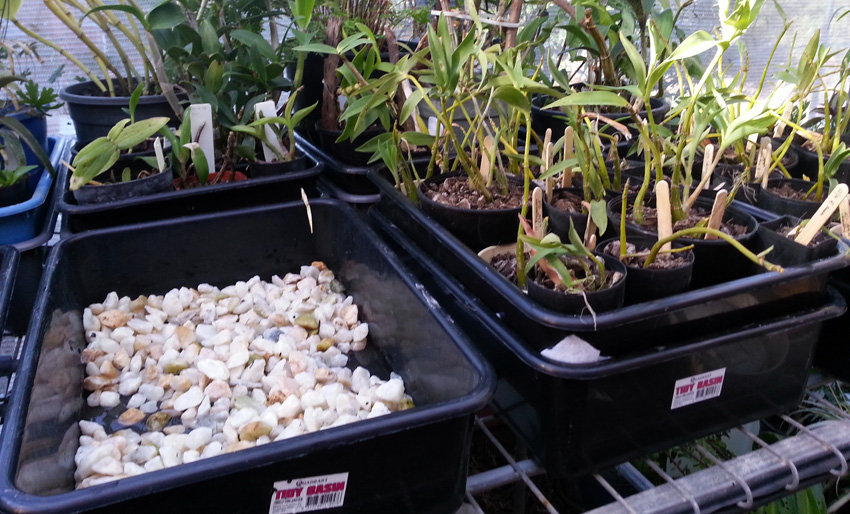
Adelaide in summer is very dry and hot with very little humidity or rain.  Since January 2015 there has been over 60 days without any significant rainfall.  This presents a problem for growing Australian epiphytes which come mainly from the eastern seaboard with its increased humidity and summer rain.  Therefore to grow ephiphytes in Adelaide, it becomes necessary to attempt to replicate these conditions through creating a micro climate with increased humidity.  To achieve this many growers will stand the pots on gravel in water-filled trays but this presents a problem.  Mosquitoes love it and rapidly breed up to the annoyance of us all.

The following system stops mosquitoes from breeding plus prevents pots getting water logged in Adelaide’s winter, particularly when the pots are not under a solid roof but shadecloth (in this instance, 50% shadecloth).

  • Equipment
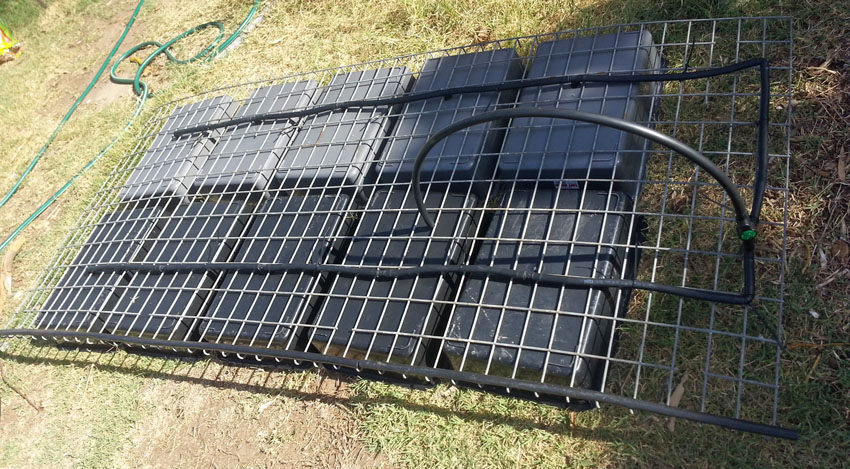
    • 10 Black trays – these were inexpensive trays from Cheap as Chips
    • Black irrigation tubing
    • 10 Grommets
    • 11 ‘T’ junctions and 2 angle junctions
    • Tap
    • Sealant
    • Gravel
    • Builders Landscape Fabric
  • Preparing the trays
    • One hole was drilled in each of the trays.  A grommet was placed in each hole and using ‘T’ and corner junctions the trays were joined with poly tubing including a tap.

      The trays connected.  To give stability the trays and hose were connected to the table top.
      The trays connected. To give stability the trays and hose were connected to the table top with the hose running under the table top. This allows free drainage as it stops the hose from being squashed.
  • Checking the system for leaks
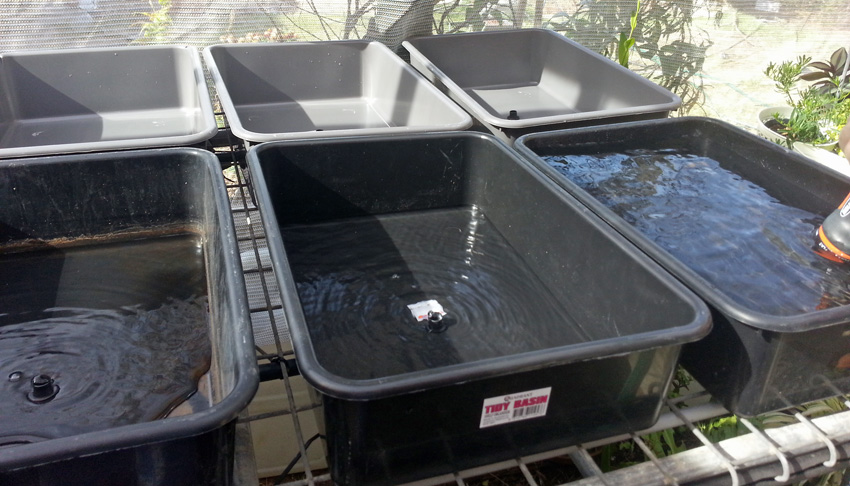
    • The next step was to check that the water flowed into all the trays and that there were no leaks.

      Filling all the trays from one tray.
      Filling all the trays from one tray.
    • There were leaks and these were sealed with an aquarium sealant.
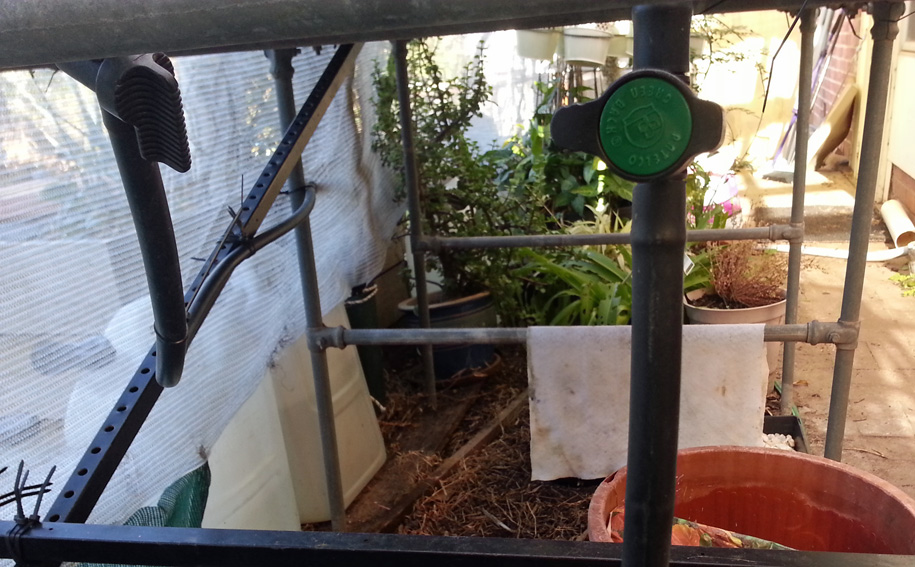
    • A hose with a tap was directed toward a raised garden bed on the other side of the shadecloth.

      Checking for leaks & the drainage system
      Tubing leading to the raised garden bed
  • Preparing the inner tray
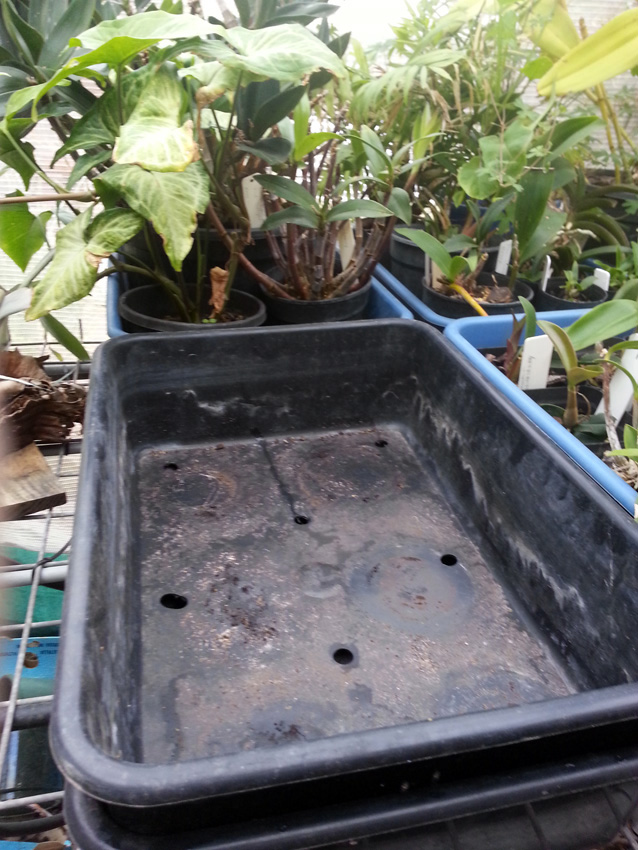
    • The system requires a second tray.  Drainage holes were drilled in the trays.

      Inner (upper) trays with holes to allow the water to come up into the pots.
      Inner trays with holes to allow the water to come up into the pots.
    • Gravel was placed in the outer (lower) tray.

      Gravel to support the inner trays
      Gravel to support the inner trays
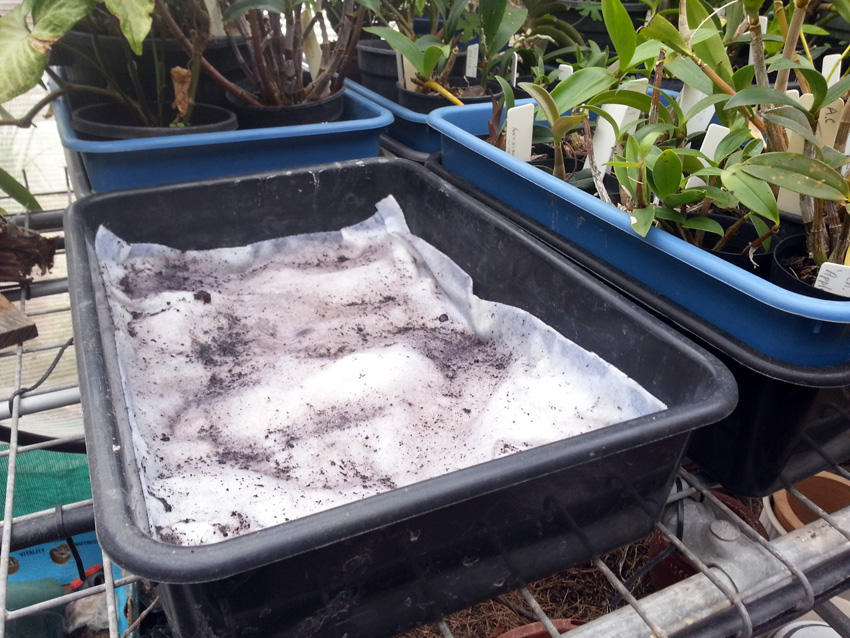
    • The reason was two-fold.  One was to make it easier to remove the inner tray with the pots insitu and the other was to hold the builder’s landscape fabric nearer the inner tray.  The purpose of the fabric is to keep the tubing clear of debris.

      Layer of cloth to stop debris entering the drainage pipes
      Layer of cloth to stop debris entering the drainage pipes
  • The finished system
    • Pots in place and ready to enjoy the new growth of those numerous plants that were divided previously – see the post Breaking up is ….. easy to do.

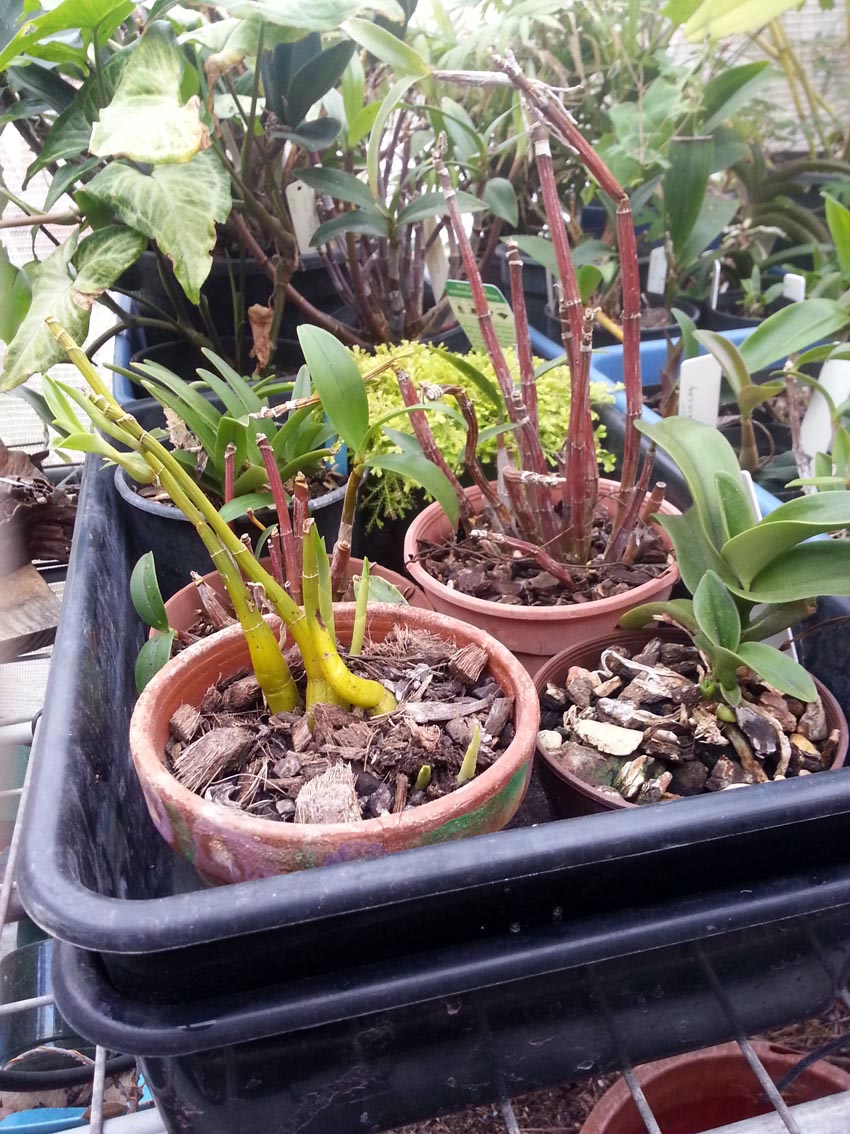
      The front pot originally consisted of just the pseudobulbs without leaves of Dendrobium kingianum.  After a few weeks in this system, new growth.
      The front pot originally consisted of just the pseudobulbs of Dendrobium kingianum. There were no leaves. After a few weeks in this system, new growth has appeared.
  • Using the system
    • Depending upon the conditions, the mosquito breeding cycle can be as short as four days from egg-laying to the larva emerging as a adult.  As a result, the water is fully drained every four days or less.  This regular drainage of water means that there is no stagnant water left lying around for any prolonged length of time.
    • The trays are allowed dry for a couple of days (less in a heat wave) before refilling again and the pots sit in a small amount of water.
    • By following this watering cycle there are no mosquitoes.
    • The shallow layer of water around the pots provides the necessary humidity.
    • In winter the taps are left open the whole time to prevent the plants from becoming water-logged.

NB This system is not suitable for the terrestrial orchids.


Advice from the past – Start Watering

In 1984, G.J.Nieuwenhoven was the editor of the NOSSA Journal.  In February of that year he wrote the following:

Welcome back to NOSSA.

 After the holiday break we are all looking forward to the next meeting to talk about our favourite plants and renew friendships.

Several members have reported an early start to the terrestrial season with Pterostylis species, a couple of Diuris species popping up already.  For some of the eastern states Pterostylis of the cauline group this is normal, especially if you keep the pots cool during the summer (a cellar is ideal but underneath a shaded bench in the shadehouse will do nicely). Very light watering should take place when the first shoots appear but do not overdo the watering or place pots in the sun for we are sure to get some more hot weather yet and this could cook your plants before you know it.

The Diuris are really out of season but it was probably the rain in late December and early January that started them off, anyway, these too should be kept slightly damp if they are up.

If you have not finished repotting by now it would be best to leave it until next year as the new shoots which are already beginning to grow from the tubers are very easily broken off while sifting them from the soil.

Apart from that all you can do is wait for the rains to come in March and then start searching for plants to appear – and keep those fingers out of the pots or you may damage one of your best plants looking for the new growths.

This is also the time to start taking notes when plants first appear, etc.:

  • when they flower and how many flowers from a given number of tubers;
  • what kind of soil; what conditions (i.e. shaded or not, damp or dry).
  • Anything that may assist in years to come to help you understand and grow our orchids better and, more importantly, multiply them.
  • A card index system would be a good way to store information, otherwise an exercise book will do.

                                                            Editor

The timing of the article tallies with the advice that was recently given at the end of February – start watering the terrestrials now if you haven’t already begun.  Hopefully by the flowering time you will have a lovely display of terrestrials such as the Thelymitra, Arachnorchis and Caladenia featured below.


Pot of Thelymitra Kay Nesbitt Cultivar copyPot of Arachnorchis argocallaPot of Caladenia latifolia cultivated by Les Nesbitt

2014 November Photograph Competition Part 2

Part Two of the November competition consisted of photographs of insects on orchids. There was quite a range of insects but the winner was a draw between Cyrtostylis robusta (Winter Gnat Orchid) with an ant and Pterostylis curta (Blunt Greenhood) with a midge fly; both taken by Doug Castle.

With today’s technology it is not only easier to take crisp images but fine details can be seen particularly when enlarging the image. Hence when the pictures are enlarged it is possible to see hairs on the ant and feathered antennae on the midge fly.

With identifying orchids, it is often the detail that is important. Both of these orchids are distinctive and can be readily identified but it is good to examine why this is the case.

Pterostylis curta (Blunt Greenhood)

With the greenhood, there is enough detail to see that the dorsal sepal and lateral petals have united to form a galea, ie hood, and that the lateral sepals are semi-fused and erect resulting in lateral orifices (side gap) between the two structures. These are some of the features that separate Pterostylis* from the other greenhoods such as Diplodium, Speculantha and Taurantha. This becomes apparent when browsing through the greenhood photographs, pages 286 to 339, in Jones “A Complete Guide to Native Orchids of Australia”. Having established that the plant is a Pterostylis, the twisted labellum is diagnostic of a P. curta as it is the only one that is described with a twisted labellum. Although not all the identifying features are present, enough information is available in this picture for identification.

In contrast the photograph of the Cyrtostylis robusta only has sufficient data to confidently identify it as a Cyrtostylis species, having a distinctive labellum that is larger than the lateral sepals and petals. In South Australia there are only two species and according to Bates (2011), the distinguishing features between the two

Cyrtostylis robusta (Winter Gnat Orchid)

appear to be the leaf, the bud and the labellum. In this picture, the angle of the image does not give a clear view of the labellum (it could possibly be damaged) and of course there is no bud or leaf. It is possible that the pale edges of the dorsal sepal may give a clue to species identification as C. reniformis has mainly darker buds than C. robusta. Obviously Doug was able to identify it from his observations of the other features not present in this photograph.

In summary, one image is not always sufficient for identification. As was discussed on the night, to confirm identification, orchids should always be photographed from more than one angle, including pictures of other parts of the plant.

*In South Australia, Pterostylis foliata is a possible exception as it has no obvious lateral orifice.

References

Jones, D.L., T. Hopley, S.M. Duffy, K.J. Richards, M.A. Clements & X. Zhang (2006) Australian orchid genera. An information and identification system. CSIRO Publishing: Collingwood, Vic.

Bates, R.J. (2011) South Australia’s Native Orchids. DVD-ROM. Native Orchid Society of South Australia Inc.: Adelaide.

Jones, D.L. (2006) A complete guide to native orchids of Australia, including the island territories. New Holland Publishers: Sydney.

Another Summer Orchid

Just on Christmas, NOSSA received an enquiry from Tim in the South East about an orchid he had photographed.  He knew about Dipodium roseum but in 20 years he had not seen one like this one.

From the photograph that he’d sent, it was obvious that it was a Gastrodia.  In South Australia there are three species ranging in size from the smaller G. vescula (Limp Potato Orchid) through to G. sesamoides (Cinnamon Bells or Common Potato Orchid) to the larger G. procera (Tall Potato Orchid).  Whilst G. vescula and G. procera are limited in South Australia to the South East, G. sesamoides is also found in the Southern Lofty and Kangaroo Island regions.

Tim’s orchid was G. procera.  The features that set it apart from the other two were the time of year – late December whereas both G. sesamoides and G. procera would have finished flowering (and for 2014 most orchids finished flowering earlier than usual); the spike was crowded and the plant was upright but G. sesamoides has a bent or droopy spike when in bud and G. vescula is small with very few flowers.

Though Tim considered the photographs to not be very good, he’d photographed the necessary features to help with identification. Another feature seen in his picture is the warty appearance of the plant compared with the photograph of the G. sesamoides.

Gastrodia procera or Tall Potato Orchid
Gastrodia procera (Tall Potato Orchid) Note the upright spike and the ‘wartiness’
Gastrodia sesamoides (Cinnamon Bells or Common Potato Orchid)


Although it is has no conservation rating federally and may even be considered secure in the Eastern States, in South Australia it is rated endangered, so well done to Tim for spotting it!

 It was possible to identify this orchid from the information found in South Australia’s Native Orchids, an electronic book produced and sold by the Native Orchid Society of South Australia.  Identification was confirmed by one of our most knowledgeable members.

2014 November Photograph Competition Part 1

11 sm CD Arachnorchis sp with hover fly

With a theme of Orchids and Insects for the November meeting it was hoped that there would be some entries with pollinators and therefore there would be two categories Insect Visitors and Pollinators. This month’s article will feature the Pollinator section and Insect Visitors in the next month.

In all there were four potential pollinator photographs. The insects were either scrounging around at the base of the column or else they had the pollinia attached to them. Unfortunately only one was a true pollinator so the category became Insects with Pollinia. The winning photograph of Arachnorchis brumalis with an unidentified hoverfly was taken by Chris Davey. Interestingly the other two pictures also featured Arachnorchis species with the hover fly Simosyrphus grandicornis. Resembling a wasp but minus the sting, this species is one of the common hover flies native to Australia.

Called Hover Flies owing to their ability to hover motionless in one spot, they are also known as Flower Flies because they are often found hovering around as well as pollinating flowers. It is not surprising, therefore, to find them around orchids. Yet instead of being called pollinators they are non-pollinators (Bates & Weber 1990). They visit the orchids, forage inside the flower and may even manage to collect some pollinia but that is all. They may not necessarily visit another flower of the same species but if they do, they will fail to deliver the pollinia to the stigma2.

Rudie Kuiter agrees with Bates that hover flies are not orchid pollinators but just when we think we have worked it out he adds “but we have at least one orchid in Victoria that is pollinated by hoverflies and witnessed now several times and this is Caladenia catenata” (synonym Petalochilus catenatus). Notwithstanding the case for this species, it would appear that in most cases hoverflies remove pollinia so that it is not available to a more specific pollinator.

Why then are the hover flies attracted to the orchids? Is it for food? An internet image search revealed that hover flies visit the flowers of many different genera including Thelymitra and Diuris. This is interesting because flowers are the food source for hover flies but though many orchids promise food, many species do not produce the nectar and pollen (as a food source) that they desire. Diuris and Thelymitra belong to this group of non-nectar producing flower. Other orchids that don’t produce nectar include Gastrodia, Dipodium and the Duck orchids. Again, there are orchids such as Crytostylis which produce minimal nectar and with Prasophyllum the nectar is hidden in cells that require puncturing – not a good food source!

Having discussed hover flies as non-pollinators, in this month’s competition, which photograph had a pollinator? – It came last and was Robert Lawrence’s photograph of a native bee on a Dipodium pardalinum, another non-nectar producing orchid. The story of this photograph was featured in Photographing Orchid Pollinators, April 2014 Journal as well as in a previous blog on Photographing Pollinators.

References:

Smith James, Information Centre, South Australian Museum, personal communications

Kuiter Rudie personal communications

Bates and Weber, Orchids of South Australia, 1990

Australian Museum, http://australianmuseum.net.au/Hover-flies Accessed 4th December 2014

Brown, et al, Field Guide to the Orchids of Western Australia, 2013

Jones, Native Orchids of Australia Including the Island Territories, 2006

Bates, South Australia’s Native Orchids 2011 DVD-ROM

Martin, The Vocabulary of Orchids: An Amateur’s Perspective, 2005

1Pollinia is basically a coherent compact mass of pollen that allows the pollen to be transported as a single unit

2The stigma is a sticky depression (or swelling) at the front of the column, the receiving surface for the pollinia that is necessary for germination.

Orchid Season

South Australia has some very interesting and unique orchids but it is not always possible see them  either because one cannot get out to see them or the season has been poor with inadequate rain at the right time.  So, one of NOSSA’s member has produced a video.  It starts in autumn and goes through to summer.

So sit back and enjoy ……