2017 February Winning Picture

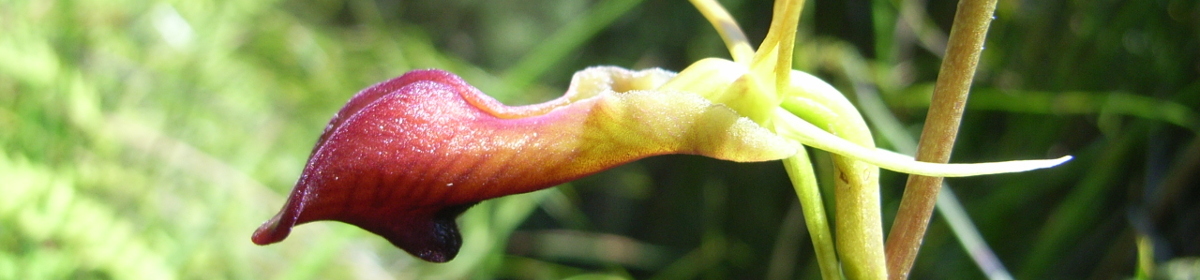
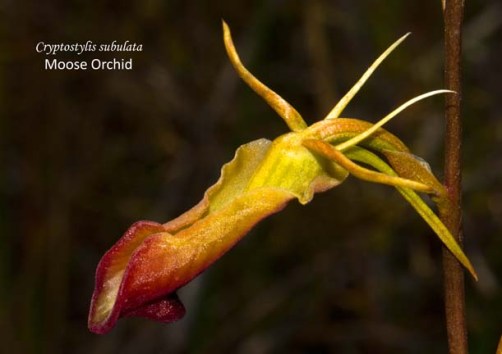
1702 sm CC Cryptostylis subulata

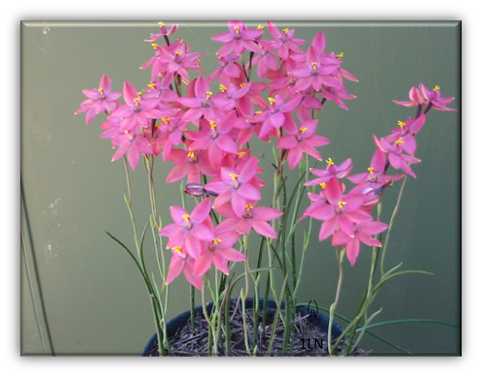
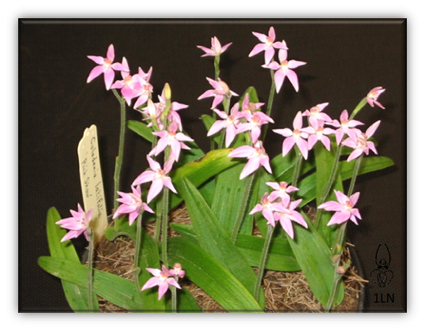
The first competition for the year followed a wet orchid theme with three of the orchids being South Australian swamp orchids and the fourth from Western Australia; though not a swamp dweller, it grows in shallow moist soil.

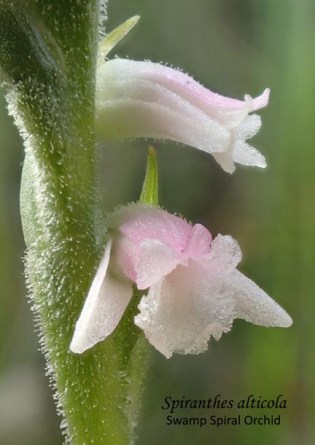
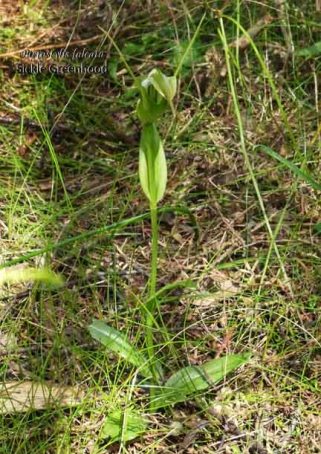
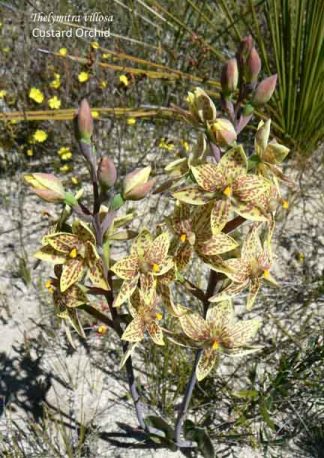
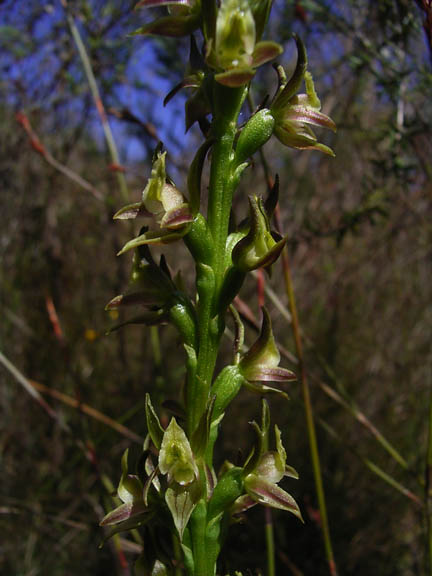
The outstanding winner was Claire Chesson’s Cryptostylis subulata, followed by Robert Lawrence’s Spiranthes alticola, Rosalie Lawrence’s Pterostylis falcata and Pauline Meyer’s Thelymitra villosa.

Known to South Australian’s as the Moose Orchid, elsewhere it is either Large Tongue Orchid or Cow Orchid. This tall (40 to 110 cms) evergreen orchid is common in the eastern states where it is commonly found in damp areas as well as swamps. but in South Australia it is limited to swamps and is rated as endangered.

Leo Davis makes some interesting observations about the structure of this flower in his article Upside Upside Down which is well worth reading (https://nossa.org.au/2017/03/03/upside-upsisdedown/).

Whilst not an easy orchid to grow it has been cultivated although seed set has not always occurred. Helen Richards, an experienced Victorian terrestrial orchid grower, shared in an email how she grows them.

Cryptostylis species grow from brittle rhizomes which can be quite long and they resent frequent disturbance. Mine are potted into a pot therefore that is large enough for the long roots and which will accommodate further growth for several years. My mix is ANOS basic mix, the same as I use for Pterostylis and many other genera. They need to be kept moist all year round, especially in summer when they flower and new leaves appear, their active growing period. I grow them in an area of moderate light. Others have seen pollinators active on the flowers but I haven’t. However seed capsules frequently develop without my assistance with a toothpick. Richard Thomson says they haven’t had success germinating the seed.”

Reference

https://nossa.org.au/2017/03/03/upside-upsisdedown/

http://bie.ala.org.au/species/http://id.biodiversity.org.au/name/apni/89052

http://saseedbank.com.au/species_information.php?rid=1288

Personal communications Helen Richards (OAM), Chairman Australian Orchid Foundation

Bates, R. J., ed. (2011). South Australian Native Orchids. Electronic version, 2011. NOSSA

The other entries :

1702 sm RWL Spiranthes alticola

1702 sm RAL Pterostylis falcata

1702 sm PM Thelymitra villosa

Q&A: How do I deal with mould in my orchid flasks?

Question:

I have recently been learning about propagating orchid via flasks but I have mould in some of the flasks.

Orchid Seeds in flask with mould
Flask with orchid seeds and mould

There is mould in the flask with orchid seeds and also in the flask with Diuris tricolour in bulbs.  The bulbs are almost ready for deflasking.

Diuris tricolour in flask
Flask of Diuris tricolour (no mould) – these will be deflasked later this year.


What can I do?

Answer:

With a home laboratory, no matter how careful one is, mould can still contaminate the jars of agar. If mould occurs when the orchids are still in seed, then the whole jar needs to be discarded.  The seeds will not survive.

With the Diuris flask, as they are almost ready for deflasking, pot them out straight away. This needs to be done within 10 days of the mould appearing. The weather (March, 2017, South Australia) is still a little too warm but if left in the flask, the plants will die.  Potting them out may give them a chance of survival.

When deflasking, it is important to rinse all the agar off the bulbs before potting on as normal. Once potted, it could help to cover the pot with a cut down clear drink bottle with the lid removed. This will allow some air to circulate. Keep the pot in a shady spot.

Diuris tricolour in pot with bottle top cover
Potted Diuris tricolour with protecting bottle cover

Will it survive in the pot? Hopefully it might but at least the plants have a better chance of survival then if left in the flask where it would surely die.


WATERING WHEN – CHILOGLOTTIS

Though Melbourne and Adelaide conditions are very different, in cultivation the watering is similar with the warning that in Adelaide it is a harsher environment for this genus.

The following information has been kindly supplied by Richard Thomson, an experienced terrestrial grower from ANOS Victoria.

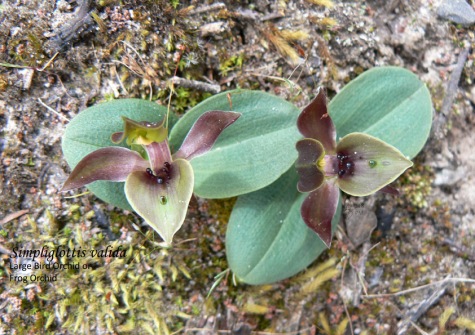
03 sm PM Chiloglottis valida
Chiloglottis valida

Generally, Chiloglottis are kept damper than Pterostylis, during the dormant period. As many Chiloglottis need the potting media and the tubers dampening in summer, the general action with water, is to have the tubers damp until leaves emerge. Then to commence normal pot watering.

Chiloglottis, can get infected with rust. The first thing usually noticed is some pairs of leaves sticking up in the air. When you look closely you will notice some whitish little lumps on the underside of the leaf. Please immediately take the pot away from your other orchids as it is contagious across Chiloglottis. There does not seem to be an effective way to treat the infection.

ANOS VICTORIA MEETINGS

CHILOGLOTTIS
Species State / Location Month Benched BUSH FLOWERING WATERING
chlorantha NSW July Aug Sept Sept to Oct Keep damper from early February. Water when leaves emerge
cornuta S NSW Vic Tas SA Nov Dec Nov to Feb – altitude Keep damp all year. Water when shoots emerge.
diphylla Qld NSW Feb Mar Apr May Jun Jul  Aug Feb to May mid to late January
sp affin diphylla Feb Keep damper from early February. Water when leaves emerge
formicifera NSW Jul Aug Sept Oct Nov Aug to Nov keep damper from early February, Water when leaves emerge
sp affin formicifera Jul Keep damper from early February. Water when leaves emerge
gammata Tas high Oct to Feb
jeanesii Vic Nov Dec Nov to Jan Keep damp all year. Water when shoots emerge.
longiclavata N Qld Feb Mar Apr May Jun Jul Aug April to June mid to late January
palachila N NSW Aug Sept Oct Nov Nov to Feb keep damper from early February, Water when leaves emerge
x pescottiana NSW ACT Vic Jun Jul Aug Sept Oct Aug to Nov keep damper from early February, Water when leaves emerge
platypetala Sept Keep damper from early February. Water when leaves emerge
platyptera N NSW Jul Aug Sept Oct July to Oct keep damper from early February, Water when leaves emerge
reflexa NSW Vic Tas Feb Mar Apr Dec to May mid January
sp affin reflexa Feb mid January
seminuda S NSW Feb Mar Apr May Jan to April keep damp all year
spyrnoides S Qld N NSW Feb Apr Dec Dec to April Keep damp all year. Water when shoots emerge.
sp affin spyrnoides Feb Oct Nov Dec Dec to Feb Keep damp all year. Water when shoots emerge.
sylvestris Qld NSW Feb Mar Apr May Jun Jul Aug Dec to May early to mid January
trapiziformis Qld to Tas Jul Aug Sept Oct Nov Aug to Nov keep damper from early February, Water when leaves emerge
triceretops Tas Oct Aug to Dec Keep damp all year. Water when shoots emerge.
trilabra NSW ACT Vic Feb May Dec Dec to March late December or earlier
trullata Qld Jul Aug Sept Oct Winter keep damper from early February, Water when leaves emerge
truncata S Qld Jun Jul Aug Sept Oct July to Sept Early to mid February
sp affin truncata Jul Aug Sept Autumn Keep damper from early February. Water when leaves emerge
vallida NSW ACT Vic Sept Oct Nov Sept to Jan – altitude Keep damp all year. Water when shoots emerge.

(As there is no January meeting, there is no information on flowering in cultivation for this month.)

From the chart, it can be seen that the cultivated flowering time does not always match the bush flowering time.

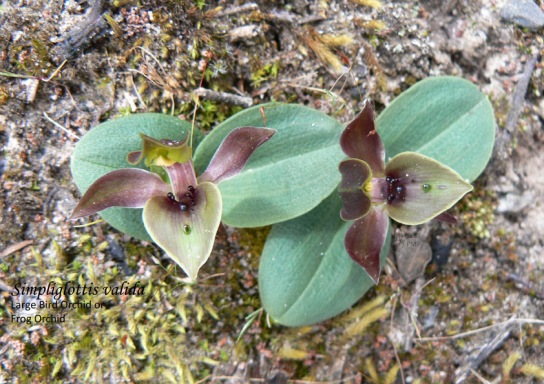
03 sm PM Chiloglottis valida
Chiloglottis valida

Growing Leek Orchids – Is it Possible?

The Native Orchid Society of SA has been involved with the Threatened Orchid Project which is attempting to propagate some of our most threatened orchids.  There has been some success such as Thelymitra epicaptoides (Metallic Sun Orchids) but others are proving elusive.  Marc Freestone, from the Orchid Conservation Project, Royal Botanic Gardens Victoria, is a PhD student who is researching one such difficult to grow orchid genus, the Prasophyllum.

Prasophyllum murfettii sm
Prasophyllum murfettii (Denzel’s Leek Orchid)

To assist with his research Marc has the sent the following request.

CAN ANYONE GROW LEEK ORCHIDS?

South Australia has about 40 species and Victoria about 74 species of the native Leek Orchids, Prasophyllum.  Some are on the brink of extinction.

A major problem hampering efforts to prevent our Leek Orchids from going extinct is that they have proven next to impossible to grow in cultivation.  They have proved extremely difficult, usually not germinating at all, or germinating but then dying soon after.  Occasionally some success has been had (particularly with symbiotic germination) but successful germination trials to our knowledge have so far proved un-repeatable.  Working out how to grow Prasophyllum is critical for the survival of many species at risk of extinction across southern Australia.

To try and change this, I will be studying Prasophyllum and their relationships with symbiotic mycorrhizal fungi.

But I need your help!

I am wanting to hear from as many people as possible who

  • have tried (either successfully or unsuccessfully) to grow Leek Orchids or the closely related Midge Orchids (Corunastylis).
  • have observed Leek Orchids (or Midge Orchids) recruiting from seed in the wild.

If you can help, or know of anyone who might be worth talking to, please contact me at: marc.freestone@rbg.vic.gov.au or 0428 304 299.

(Funding and support for this project: Australian National University, Federal Government National Environmental Science Programme, Royal Botanic Gardens Victoria, University of Tasmania).

I would encourage people to contact Marc with whatever information that you have, no matter how insignificant you may think it is.  Every little bit helps including unsuccessful attempts.

His eventual aim is to be able to work out how to grow them reliably from seed in cultivation.

Advice from the past – Start Watering

In 1984, G.J.Nieuwenhoven was the editor of the NOSSA Journal.  In February of that year he wrote the following:

Welcome back to NOSSA.

 After the holiday break we are all looking forward to the next meeting to talk about our favourite plants and renew friendships.

Several members have reported an early start to the terrestrial season with Pterostylis species, a couple of Diuris species popping up already.  For some of the eastern states Pterostylis of the cauline group this is normal, especially if you keep the pots cool during the summer (a cellar is ideal but underneath a shaded bench in the shadehouse will do nicely). Very light watering should take place when the first shoots appear but do not overdo the watering or place pots in the sun for we are sure to get some more hot weather yet and this could cook your plants before you know it.

The Diuris are really out of season but it was probably the rain in late December and early January that started them off, anyway, these too should be kept slightly damp if they are up.

If you have not finished repotting by now it would be best to leave it until next year as the new shoots which are already beginning to grow from the tubers are very easily broken off while sifting them from the soil.

Apart from that all you can do is wait for the rains to come in March and then start searching for plants to appear – and keep those fingers out of the pots or you may damage one of your best plants looking for the new growths.

This is also the time to start taking notes when plants first appear, etc.:

  • when they flower and how many flowers from a given number of tubers;
  • what kind of soil; what conditions (i.e. shaded or not, damp or dry).
  • Anything that may assist in years to come to help you understand and grow our orchids better and, more importantly, multiply them.
  • A card index system would be a good way to store information, otherwise an exercise book will do.

                                                            Editor

The timing of the article tallies with the advice that was recently given at the end of February – start watering the terrestrials now if you haven’t already begun.  Hopefully by the flowering time you will have a lovely display of terrestrials such as the Thelymitra, Arachnorchis and Caladenia featured below.


Pot of Thelymitra Kay Nesbitt Cultivar copyPot of Arachnorchis argocallaPot of Caladenia latifolia cultivated by Les Nesbitt

ABC Gardening – Terrestrial Orchids

Back in 2013, Gardening Australia of the ABC produced a video featuring Helen Richards, a Victorian who has in-depth knowledge of growing terrestrial orchids.  Though Helen lives interstate and adaptions do need to be made for different locations and conditions, this video of her shadehouse is very instructive for any South Australian’s wanting to grow their own terrestrials.

Click here to view the video and read the text.

Pot of Thelymitra Kay Nesbitt Cultivar copy
Pot of Thelymitra ‘Kay Nesbitt’ cultivar
Pot of Arachnorchis argocalla
Pot of Caladenia latifolia cultivated by Les Nesbitt
Pot of Caladenia latifolia

Bananas Trigger Flowering of Orchids


Some native terrestrial orchids only flower in the season after a bushfire.  They are stimulated by the hot gases given off during the fire.  One of those gases is ethylene.  Bananas are shipped down from Queensland to the southern states of Australia as green bananas to stop fruit fly outbreaks.  On arrival they are put in sealed rooms and exposed to ethylene gas.  The bananas ripen a few days later.  Traces of ethylene remain in the banana skin.  Overripe fruit also emits ethylene gas.  Orchid flowers do not last long if ethylene is present in a closed glasshouse.

We know that dormant tubers exposed to ethylene often flower the next season.  The best example is the Hare orchid Leptoceras menziesii.  In summer I put dormant tubers in a small dish in a plastic bag with a banana skin and seal the bag with a rubber band.  The skin may go mouldy so should not touch the tubers.  I leave the bag inside my shed for about 2 weeks then remove the tubers and pot them up.  The exposed plants make leaves almost twice as large as normal tuber leaves.  This procedure should not be carried out with the same plants the following year as they may get exhausted and die out.  I have found results with other shy flowering species are not so reliable.  Maybe they need a stronger does of ethylene.

Article by Les Nesbit

Banana & Banana PeelVol 38 No 5 June 2014

NOSSA Journal

A Revolution of a Sweet Kind

Ever since the Western world discovered the orchid in the 18th and 19th century there have been enthusiasts wanting to grow them but though an orchid may produce millions of seeds, for they are minuscule, only a relatively small number germinate.  The seeds do not have any stored food and are dependent upon fungi for germination.  This made it difficult for early orchid growers who relied on obtaining specimens from the wild – a most unsustainable practice!

Yet today cultivation of orchids is flourishing.  It is not dependent upon removing specimens from the bush.  In Australia it is illegal.

Today the orchid enthusiast can grow orchids from seeds at home.  The technique, invitro embryo germination, is popularly known as flasking.  It involves growing the seeds in a sterile agar medium to which the most significant ingredient was the addition of sugar.

At the time it was developed by Professor Lewis Knudson (1884 – 1958) of Cornell University in 1922 this method was revolutionary.


Reference:

Rasmussen J, April – June 1986, “Contact Dermatitis from Orchids” Clinics in Dermatology Volume 4 Number 2

Below are some examples of terrestrial orchids grown from seeds in flasks.

Flasking Terrestrial Orchid Seeds (3)  Flasking Terrestrial Orchid Seeds (2)  Flasking Terrestrial Orchid Seeds (1)

Photographs kindly supplied by Les Nesbitt.


South Australian Terrestrial Orchid Culture Notes Part Three of Four Parts

Maintenance throughout the year

Summer

  • During summer, very lightly water surface of pots weekly to prevent tuber desiccation especially if dormant seedlings are in the pot.
  • Divide overcrowded pots in summer. Tip out and break into slices like cutting a cake. Stand a slice in a new pot & fill spaces with fresh mix. Take care to keep the surface layer at the surface of the new pot.
  • Add fresh leaf litter to surface layer in January to February to March.
  • If surface moss gets too thick, peel it off and discard in summer.

Autumn

  • Start heavier watering of pots weekly from mid March.
  • Mix seed with fine dry sand and sprinkle on mother pots in April.
  • Water as required in autumn, winter & spring so that pots never dry out during the growing season yet are not soggy wet.
  • Leaves appear from Anzac Day to June.

Winter

  • Look for flower buds down inside the largest leaves from mid July onwards.
  • Look for new seedling leaves from August to October.

Spring

  • Enjoy and photograph flowers September to November.
  • Hand-pollinate flowers in September – October. Flowers collapse within days of fertilisation.
  • Collect seed pods as they turn brown just before they split open in November – December.
  • Dry & store seed over summer in paper envelopes kept indoors.
  • Allow pots to slowly dry out in mid – late November to induce dormancy and ripen tubers. Plants die down completely in summer to underground tubers.

For further information on growing fungus – dependent orchids refer to:

  • Orchids Australia’ February 2006, P58, or ‘The Orchadian’ Vol 15, Number 3, March 2006, P100.

Pot of Caladenia latifolia cultivated by Les Nesbitt

Caladenia latifolia cultivated by LN (Fast Multipler)

South Australian Terrestrial Orchid Culture Notes Part One of Four Parts

Les Nesbitt is a founding member of the Native Orchid Society of South Australia and is our most experienced terrestrial orchid grower.  The following four posts on growing are from his notes and pictures .


Introduction

Australian terrestrial orchids have been grown in pots in Adelaide for more than 50 years. Nowadays with a wider range of species and hybrids available there are an estimated 300 cultivars successfully growing here. When the cultivation of the fungus dependent terrestrials is fully understood this number will increase dramatically.

Australian ground orchids are cool climate plants that follow an annual growth cycle comprising 6 – 8 months as growing plants under cool (5 – 20°C max, 0 – 14°C min) moist conditions and 4 – 6 months as dormant tubers in hot dry (18 – 40°C max, 12 – 30°C min) conditions. All species like good air movement and will not thrive in a stuffy humid atmosphere especially if temperatures are high.

Growing Area

In South Australia, terrestrials are grown in shadehouses with 50% cloth on the roof and sides. This lets the rain soak the pots and flush out salts from tapwater use. Some growers add a second layer of 50% shadecloth in summer to lower pot temperatures.

It is very important that winter sun and breezes reach your plants so place the shadehouse away from the winter shadows of buildings and evergreen trees. A shadecloth cover or evergreen tree to the southwest and overhead will give protection from frost, hail and storms. Light frosts of -2°C do not worry the majority of species. Galvanised mesh benching about 750mm high will deter slugs and snails and is a convenient height for observing the pots. Watering with rainwater is better than Adelaide tap water. Fungi and orchids do not like salt.

Light

Some species prefer heavy shade, others full sunlight, but most will adapt to a wide range of light intensity. If the leaves and stems are weak and limp or if the rosettes are drawn up to the light, then the shading is too dense and the amount of light should be increased. The spring flowering species like higher light intensities at flowering time and flowers may have pale colours under dull conditions.

Watering

The soil should be kept moist at all times during active growth by watering gently if there is no rain. Hand watering is especially necessary in spring as soil in pots dries out more rapidly than in the garden. Watering must be done slowly so that the mat of needles on the surface of the pot is not disturbed. If pots are allowed to dry out during the growing season, the plants may go dormant prematurely.

Pests and diseases

Slugs and snails love these plants and must be kept under control. Raising the pots off the ground on galvanised steel benching is very effective in controlling these pests. Thrips, aphids, red spider and caterpillars may cause damage. Blackbirds can scratch out small orchids. Various rots can destroy plants. Orchids showing virus like symptoms should be burnt or dumped.

Fertilising

Be very careful with fertilisers because some terrestrials are easily burnt or even killed by overuse. Diuris and Pterostylis are very hardy and will benefit from weak applications of foliar feed in the early growth stages.

Repotting

The new tubers are produced in winter – spring. The fast multiplying types form several tubers per plant each year. Sometime in October – November, the leaves go yellow and then brown and dry, as the days get longer, hotter and drier in late spring. After the leaves have turned yellow, let the pot dry out completely to dry up the old roots and tubers otherwise they may turn into a soggy mouldy mess and rot may destroy the adjacent new tubers.

The pots can be knocked out and the tubers examined in summer without harm, in fact we find at the Nursery that the best results are obtained if the tubers are repotted in half fresh soil mix each year. Our soil mix is 40% loam, 50% sand and 10% organic matter with a little blood and bone fertiliser added. A 5 mm sieve is a useful tool for separating tubers from soil. Replant the dormant tubers with the tops 20 mm deep. Cover the soil surface with a mulch of sheoak needles, chopped to 20 – 50 mm lengths, to prevent soil erosion & aerate under the leaves. Repotting is normally done in November, December, January and February in South Australia. Ideal pot sizes are 125 – 150 mm standard plastic pots.

Keep the pots shaded and allow the pots to dry out between light watering until mid February when they should be set out in their growing positions and watered a little more often. The tubers of some species will rot if kept wet during the dormant period, others will produce plants prematurely which are then attacked by pests such as thrip and red spider and fungal diseases in the warm weather. Each tuber sends up a shoot to the surface in autumn and leaves grow rapidly in late autumn – early winter as temperatures fall and the rains set in. Pterostylis are usually the first to appear in March followed by Diuris and Thelymitra in April, Caladenia in May and Corybas in June – July.

Sun loving species like Diuris, Microtis and Thelymitra prefer a brighter location for good growth. Corybas like the shadiest corner in winter.


Pot of Thelymitra Kay Nesbitt Cultivar copy

Thelymitra ‘Kay Nesbitt’ cultivar (Fast Multiplier)